


Choosing the correct replacement logs for a gas fireplace requires verifying the specific fuel type and venting configuration of your existing unit. The logs must match the manufacturer’s specifications for heat resistance and dimensions to ensure safe operation and visual appeal. Mismatched components can lead to improper combustion, excessive soot, or damage to the firebox structure.
Homeowners often seek new logs to restore the aesthetic of a worn-out set or to upgrade the visual realism of their current installation. Whether you are using natural gas or propane, understanding the material composition and clearance requirements is essential.
This article outlines the key factors to consider when selecting these components, focusing on safety, compatibility, and long-term durability based on standard industry practices and product specifications. For broader context on heating options, you might also explore our gas fireplace guide to understand how different fuel types impact overall system design.

Pros
- Heat-resistant refractory ceramic construction resists thermal stress from gas flames.
- Eight distinct log pieces allow flexible stacking configurations in varied fire pit or firebox layouts.
- Compatible with both natural gas and propane fuel sources in vented setups.
- Eliminates wood ash, chimney sparks, and firewood storage concerns.
Cons
- Individual log lengths and widths are not specified in the product data, requiring careful measurement before ordering.
- Contains decorative logs only; burner pans, gas valves, grates, and embers must be acquired separately.
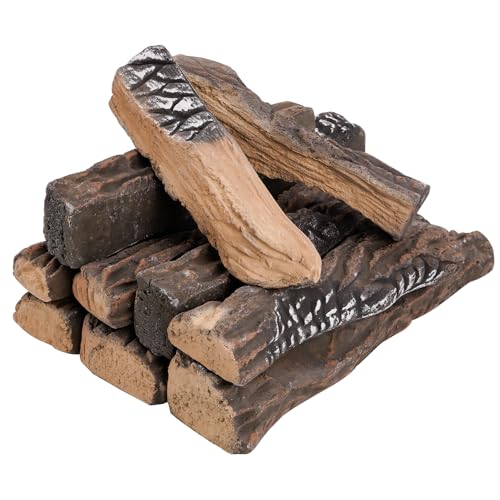
The Barton 8-Piece Realistic Ceramic Fireplace Log Set is a decorative media package designed for existing gas hearth appliances and outdoor fire features. Homeowners updating an existing gas firebox or building out a new outdoor fire pit often seek decorative firewood alternatives that capture a traditional hearth appearance without the labor of handling cordwood. This set consists of eight individual logs finished in an ash wood pattern, created specifically to sit over gas burners.
According to the product specifications, this log set is intended for use in vented gas fireplaces, propane or natural gas fireplace inserts, and outdoor gas fire pits. Because ceramic logs serve strictly as decorative media, they do not produce heat on their own; instead, heat output and fuel efficiency are determined by the underlying gas burner and valve assembly. These logs are compatible with both natural gas and propane systems, provided the appliance is properly vented to manage combustion byproducts.
The logs are crafted from refractory ceramic, a heavy-duty material formulated to withstand high operational temperatures without cracking, spalling, or fading over repeated burns. The total shipping weight is listed at 5.51 pounds across the eight assorted pieces. The exterior surfaces feature molded wood grain textures and an ash-style bark coloration, creating the visual impression of split ash firewood when resting above active flames.
Setting up the Barton log set involves stacking the eight individual pieces directly over or around an existing burner grate or fire pit media bed. The multi-piece design gives users the freedom to arrange the logs in a natural crisscross or campfire pattern suited to the dimensions of the firebox. When positioning ceramic logs over gas burners, it remains essential to follow the appliance manufacturer guidance to avoid blocking burner ports, which could interfere with proper gas flow or cause excessive carbon buildup.
While this set provides an accessible visual refresh, buyers should evaluate key constraints. The manufacturer data does not list individual dimensions for the eight pieces, making it difficult to guarantee fit in very small or unusually large fireboxes without trial arrangement. In addition, the set includes only the ceramic logs. Fireplace grates, burner kits, glowing embers, lava rock, and gas connection hardware are not included and must be supplied by the existing hearth system.
For homeowners and property managers with an existing, functioning vented gas fireplace, insert, or outdoor fire pit, the Barton 8-Piece Ceramic Log Set serves as a straightforward decorative upgrade. It offers durable refractory ceramic construction and realistic ash wood styling without the mess of real firewood. Buyers should verify their venting setup and ensure their burner footprint accommodates an eight-piece stack before purchase.
This log set is designed for use in vented gas hearth appliances, including natural gas and liquid propane indoor fireplace inserts, vented gas log burners, and exterior gas fire pits.
Because the product consists solely of decorative ceramic logs, it does not replace a functional burner assembly, valve, or pilot kit. Homeowners must ensure their existing fireplace or burner system is rated for ceramic log media and meets local venting codes.
Unlike traditional cordwood, refractory ceramic logs produce no wood ash, soot, or debris, substantially reducing routine hearth maintenance.
To keep the logs looking clean, allow the fire feature to cool completely before handling. Dust or light soot deposits can be gently brushed off using a soft-bristled brush according to standard ceramic log care practices, avoiding liquid cleaners or harsh abrasive chemicals.

Pros
- Integrated thermostat remote makes it simple to regulate room temperatures from across the room
- Vent-free burner design keeps generated heat inside the home rather than losing it up a chimney flue
- Oxygen depletion sensor provides an automated safety shutdown if ambient oxygen drops
- Includes essential setup media including realistic ceramic logs, burner assembly, receiver box, and lava rocks
Cons
- Engineered exclusively for natural gas lines and does not support liquid propane fuel or conversion kits
- Requires existing fireplace glass doors to remain completely open during operation to prevent overheating
- Ventless gas appliances are subject to regional building code restrictions and may not be permitted in all jurisdictions
The EROMMY 24-Inch Ventless Fireplace Log Set is designed for existing masonry or factory-built fireboxes that already have access to a plumbed natural gas supply. It suits homeowners who want the warmth and visual ambiance of a log fire without the labor, ash cleanup, or chimney maintenance of burning real wood. Because this system is engineered strictly for natural gas, it cannot be adapted or converted for use with propane, making fuel verification a critical first step.
Heating performance relies on a 32,000 BTU vent-free gas burner that the manufacturer rates at 99.9 percent efficiency. Since the set does not vent through an open chimney flue, most generated warmth remains inside the living area, with coverage listed for areas up to 1,100 square feet. Operation is managed through an electronic pulse ignition system and a multifunctional wireless remote. The remote features both manual and thermostat modes, customizable temperature targets, Fahrenheit or Celsius displays, a child lock, and a failsafe timer that shuts down the burner after two hours if signal transmission ceases for fifteen minutes.
Visually, the arrangement includes six hand-painted ceramic logs styled after South American silk floss wood. These logs are engineered to withstand high firebox temperatures without breaking down or burning away. The package also includes a bag of decorative lava rock to dress the burner base and conceal the underlying pan, along with the wireless remote transmitter and receiver box.
Fit and installation require careful planning before purchase. The manufacturer specifies minimum firebox dimensions of 14 inches deep, 32 inches wide at the front opening, 22 inches wide across the rear wall, and 24 inches high. Measuring your firebox taper and clearance is essential to ensure the assembly fits properly and allows adequate combustion air circulation. Additionally, manufacturer safety guidelines state that any glass doors on the fireplace must remain wide open during operation to prevent severe heat buildup within the enclosure.
Prospective buyers should check local municipal codes and homeowner association rules before investing in any vent-free gas appliance, as some jurisdictions restrict or prohibit unvented indoor burners. For homes that meet code requirements and have the necessary natural gas line and firebox dimensions, this EROMMY set provides a capable, supplemental zone-heating option backed by essential automated safety shutoffs.
This 24-inch log set requires a minimum firebox footprint of 32 inches across the front opening, tapering to at least 22 inches at the rear wall.
A minimum interior depth of 14 inches and an interior height of at least 24 inches are mandatory to maintain proper combustion airflow and clearance around the burner assembly.
Always verify your existing firebox measurements, damper condition, and nearby wall clearances against the manufacturer installation manual before purchasing.
An integrated oxygen depletion sensor (ODS) serves as a core safety mechanism, cutting off gas delivery immediately if room oxygen levels decrease below safe thresholds.
The unit features a pulse ignition system and an automatic failsafe that shuts the gas valve off if remote signal communication drops for 15 minutes.
Glass doors on the fireplace must remain completely open during use to maintain required ventilation and prevent thermal damage to the surrounding enclosure.

Pros
- Durable heat-resistant ceramic construction holds its shape under high flame temperatures
- Ten separate pieces permit customized stacking across a variety of firebox or fire pit layouts
- Approved for use in both vented indoor fireplaces and outdoor gas fire pits
- Detailed bark texture provides an attractive traditional wood aesthetic without ash or wood cleanup
Cons
- Individual log dimensions and lengths are not specified in the manufacturer documentation
- Burner pan, fireplace grate, and gas connection components are not included and must be sourced separately
- Intended only for vented gas systems and outdoor pits, making it incompatible with unvented or vent-free indoor fireboxes
The Barton 10-Piece Ceramic Gas Fireplace Log Set is a decorative accessory designed to enhance the visual appeal of compatible vented indoor gas fireplaces, fireplace inserts, and outdoor gas fire pits. This set appeals to homeowners looking to upgrade worn decorative media or replace an aging log display without altering their existing gas infrastructure. Because it is purely decorative media, it serves fire features that already have an operable burner system, grate, and venting setup in place.
This decorative log set does not generate heat independently, nor does it include a burner or control valve. Instead, it is engineered to rest over or around an existing gas burner assembly where gas flames can flow between the ceramic pieces. The manufacturer specifies compatibility with vented gas fireplaces, fireplace inserts, and outdoor gas fire features. It is not designated for vent-free indoor setups, where precise factory-engineered log placement and specific emissions ratings are strictly regulated by appliance certifications.
Each set includes ten individual ceramic logs finished in a realistic wood style with molded bark textures and organic branch shapes. Made from heat-resistant ceramic material, the pieces are built to withstand direct exposure to gas flames while retaining their physical structure over time. Weighing approximately 7.4 pounds altogether, the collection provides enough pieces to build a layered, three-dimensional stack on a standard fireplace grate or fire pit burner pan.
Because the logs are separate, users can customize their arrangement by layering larger pieces at the base and stacking smaller branches across the top. When positioning the logs, it is necessary to follow the burner manufacturer instructions regarding flame impingement, burner port clearance, and pilot assembly access to prevent improper combustion or excessive soot accumulation. Handling ceramic logs requires care to avoid chipping or surface breakage, and routine maintenance generally involves gently brushing away loose carbon or dust while the system is cool and completely shut off.
A key consideration before purchasing is that specific dimensions for each of the ten logs are not provided, meaning buyers must estimate how the 7.4-pound collection will fill their specific firebox or fire pit opening. Additionally, buyers must supply their own burner pan, grate, and gas plumbing, as this product consists solely of decorative media. For homeowners and patio owners with an existing vented gas burner seeking an attractive, reconfigurable wood-style arrangement, this Barton set provides a straightforward aesthetic upgrade.
The Barton 10-piece log set is designed specifically for vented indoor gas fireplaces, fireplace inserts, and outdoor gas fire pits. It is intended to function as decorative media placed atop existing burner pans or grates.
Because indoor vent-free fireplaces require certified, manufacturer-specific log positioning to ensure proper combustion and prevent carbon monoxide accumulation, these loose ceramic logs should not be used in unvented appliances unless explicitly permitted by the appliance manufacturer. Always verify that log placement does not obstruct burner ports, pilot assemblies, or safety sensors.
Routine care for ceramic gas fireplace logs helps maintain their appearance and clean operation. Before handling the logs, ensure that the gas supply is turned off and the entire fire feature has cooled completely.
Ceramic logs can be cleaned by gently brushing away surface dust and carbon deposits using a soft-bristle brush. Avoid using harsh chemical cleaners, abrasive scrubbers, or soaking the logs in water, which can damage the ceramic material or affect its heat resistance during subsequent burns.


Pros
- Hand-painted ceramic fiber logs and glowing ember bed provide an authentic, mature fire presentation.
- Included LCD remote control offers convenient thermostatic temperature adjustments from across the room.
- Built-in Oxygen Depletion Sensor automatically shuts off gas flow if oxygen levels drop below safe thresholds.
- High heat rating of 33,000 BTUs delivers substantial supplemental warming capacity.
Cons
- Configured strictly for natural gas lines and cannot be used with liquid propane without an approved conversion setup.
- Ventless gas appliances are subject to regional building codes and municipal regulations that may restrict indoor installation in certain jurisdictions.
The Duluth Forge DLS-N24R-1 is a 24-inch ventless natural gas log set engineered to fit compatible existing masonry fireplaces or vent-free firebox enclosures. Homeowners looking to convert an open wood-burning fireplace or upgrade an outdated gas burner often select vent-free log sets to gain supplemental warmth without losing heat through an open chimney damper. With a manufacturer-listed output rating of 33,000 BTUs, this unit is rated to heat spaces up to 1,300 square feet, making it a functional option for larger living rooms and open floor plans.
Operation relies on a dedicated natural gas supply line, delivering fuel to an ember burner system that channels gas along a single flame row. The set includes loose ember material that rests across the burner bed, creating a realistic glow alongside the active flames. Managing the fire is straightforward thanks to the included LCD remote control, which features a built-in thermostat. This allows users to set a preferred temperature target, prompting the system to modulate flame operation automatically to maintain consistent comfort without requiring continuous manual adjustments at the hearth.
The log arrangement consists of nine ceramic fiber logs cast from natural wood pieces and painted by hand to reflect authentic bark textures, split timber, and char marks. Ceramic fiber is widely used in gas hearth appliances for its durability and its ability to radiate heat efficiently into the living space. For safety, the burner is equipped with an Oxygen Depletion Sensor (ODS) and an automatic shut-off device. The appliance carries ANSI and PFS safety certifications for indoor residential installations, ensuring the burner meets established standards for unvented hearth appliances.
The log set assembly measures 24 inches wide, 12.5 inches deep, and 11.5 inches high. Before purchasing, property owners must measure their existing firebox dimensions, including front width, rear width, depth, and height, to ensure adequate physical clearance around the burner and logs. Connecting to an active natural gas supply line requires compliance with local plumbing and mechanical codes, and hiring a qualified gas professional is recommended to verify gas pressure, inspect fittings, and secure leak-free connections. Prospective buyers should also consult municipal ordinances, as some jurisdictions and homeowner associations restrict or regulate ventless gas heating equipment.
For households with an active natural gas hookup and a suitable fireplace opening, the Duluth Forge DLS-N24R-1 offers an efficient way to add supplemental heat and hearth ambiance. Because it operates vent-free at a listed 99.9% efficiency, all combustion heat stays within the home rather than escaping outdoors. Buyers should ensure their room volume matches manufacturer guidelines for unvented appliances and verify local code permissions before completing the installation.
The burner and log assembly measures 24 inches in width, 12.5 inches in depth, and 11.5 inches in height. Proper installation requires verifying that your existing firebox meets the manufacturer minimum opening width, depth, and clearance requirements to allow sufficient airflow around the burner assembly.
Always measure the front opening, the narrower rear wall width, the floor depth, and the interior height of your existing fireplace before selecting a 24-inch log set. Ensuring adequate space prevents the ceramic fiber logs from contacting the firebox walls and maintains safe clearance for the gas controls.
This model is factory-configured exclusively for natural gas and is not compatible with liquid propane without an approved conversion kit. Connecting to a natural gas line requires correct supply pressure and safe pipe threading according to local building codes.
Safety features include an integrated Oxygen Depletion Sensor (ODS) and automatic shut-off valve designed to extinguish the burner if room oxygen falls below safe levels. The unit is certified to ANSI and PFS standards for indoor vent-free use, but local installation regulations should always be verified prior to purchase.
Selecting the right logs involves more than just picking a realistic-looking set. The primary concern is compatibility with your specific burner system. Gas fireplaces are engineered with precise clearances between the flame and surrounding materials. Using logs that are too large, too small, or made from the wrong material can disrupt this balance.
The material must withstand high temperatures without cracking, warping, or releasing harmful fumes. Most modern replacement logs are made from refractory ceramic, which is designed to handle sustained heat exposure. However, not all ceramic products are created equal; the density and finish of the material affect how it interacts with the flame.
| Log Type | Fuel Compatibility | Typical Use Case |
|---|---|---|
| Vented Ceramic Logs | Natural Gas or Propane | Indoor fireplaces with chimney or direct vent |
| Ventless Ceramic Logs | Natural Gas (usually) | Indoor fireplaces without external venting |
| Outdoor Ceramic Logs | Propane or Natural Gas | Patio fire pits and outdoor features |
The distinction between vented and ventless systems is critical. Vented systems expel combustion byproducts outside, while ventless systems release them indoors, relying on oxygen depletion sensors for safety. The log sets for these systems are often not interchangeable. A log set designed for a vented fireplace may not fit the burner configuration of a ventless unit, or vice versa.
Always check the product description for the specific fuel type and venting requirement. For example, some sets are strictly for natural gas, while others are compatible with both natural gas and propane. This distinction prevents potential safety hazards and ensures the logs perform as intended.
Before purchasing, measure your firebox and the existing log set. The dimensions of the new logs must fit within the firebox without obstructing the glass doors or damper. You should also consider the aesthetic style you prefer. Logs come in various designs, from realistic ash wood textures to stylized split oak appearances. The finish should complement your fireplace surround and room decor. Here are the key measurements and checks to perform before ordering:
- Measure the width, depth, and height of your firebox interior.
- Check the burner type: vented, ventless, or direct vent.
- Confirm the fuel source: natural gas, propane, or both.
- Inspect existing logs for cracks, warping, or paint peeling.
- Verify the required clearance between logs and glass doors.
- Note the number of pieces in the original log set.
Material Quality and Heat Resistance
The core material of gas fireplace logs is typically refractory ceramic. This material is chosen for its ability to withstand high temperatures without degrading. However, the quality of the ceramic varies. Premium sets often use dense, high-temperature ceramic that maintains its shape and color over many years of use. Lower-quality materials may crack, chip, or fade after repeated heating cycles.
A cracked log can expose the underlying material, which may not be heat-resistant, leading to further damage or safety issues. Look for logs that are described as “heat-resistant” or “refractory ceramic” in the product specifications. Avoid sets made from materials that are not explicitly rated for gas fireplace use, such as standard clay or unglazed pottery.
The finish on the logs also plays a role in performance. Realistic bark textures and charred ends are usually achieved through hand-painting or molding processes. These finishes should be durable enough to withstand the heat of the flame without peeling or flaking. Peeling paint can release particles into the air or fall into the firebox, causing blockages or uneven burning.
When evaluating a log set, check reviews for mentions of paint durability or material integrity. A well-made set will have a consistent finish that does not compromise the log’s structural integrity. The material should also be non-toxic, meaning it does not release harmful fumes when heated. This is particularly important for ventless fireplaces, where combustion byproducts remain in the room.
Venting and Fuel Compatibility Checks
One of the most common mistakes homeowners make is assuming that all gas fireplace logs are interchangeable. They are not. The burner system inside your fireplace dictates the type of logs you can use. Vented fireplaces require logs that are compatible with the specific burner design. These logs are often arranged in a specific pattern to direct the flame correctly.
Ventless fireplaces, on the other hand, have different burner configurations that may require a specific log set to function safely. Using the wrong logs can lead to incomplete combustion, which produces carbon monoxide. This is a serious safety hazard. Always confirm that the replacement logs are listed as compatible with your specific fireplace model or burner type.
Fuel type is another critical factor. Natural gas and propane have different flame characteristics and heat outputs. Some log sets are designed specifically for natural gas, while others are universal. If you switch from natural gas to propane, you may need to replace the logs along with the burner orifices.
Check the product description for the fuel compatibility. A set that says “for natural gas only” will not work correctly with propane, and vice versa. This mismatch can cause the flame to burn too hot or too low, damaging the logs or the firebox. When in doubt, consult your fireplace manufacturer’s manual or contact a qualified professional for advice.
Installation and Clearance Requirements
Proper installation of replacement logs is essential for safe and efficient operation. The logs must be placed in the correct position relative to the burner. Most manufacturers provide specific instructions for log placement, including the angle and spacing of each piece. Follow these instructions carefully.
Incorrect placement can cause the flame to impinge on the glass doors or the firebox walls, leading to cracking or discoloration. You should also ensure that the logs do not block the vent opening or the oxygen intake. This can cause the fire to burn improperly or shut off due to the oxygen depletion sensor. Take your time during installation and double-check the clearance requirements.
Clearance to the glass doors is a particular concern. If the logs are too close to the glass, the heat can cause the glass to crack or the seal to fail. This is a common issue in ventless fireplaces, where the heat is concentrated in the room. Use the manufacturer’s recommended clearance measurements when arranging the logs.
If your fireplace has a glass front, ensure that the logs do not touch the glass or come within the specified distance. You may need to adjust the log position or use spacers if necessary. Regularly inspect the glass for signs of heat stress, such as discoloration or cracks. If you notice any issues, stop using the fireplace and contact a professional for inspection.
- Follow the manufacturer’s log placement diagram exactly.
- Maintain the recommended clearance to glass doors and walls.
- Ensure the logs do not block the vent or air intake.
- Check for even flame distribution across the log set.
- Inspect the glass for heat stress after the first use.
- Keep the firebox clean of debris before installing new logs.
Maintenance and Longevity of Ceramic Logs
Ceramic logs are durable, but they still require maintenance to ensure long-term performance. Over time, soot and ash can accumulate on the surface of the logs, reducing their visual appeal and potentially affecting combustion. Clean the logs regularly with a soft brush or vacuum attachment to remove loose debris.
Avoid using water or chemical cleaners, as these can damage the ceramic finish or seep into the material. If the logs are heavily soiled, you may need to remove them from the firebox and clean them thoroughly. Allow them to dry completely before reinstalling them. This process helps maintain the realistic appearance of the logs and ensures they continue to function correctly.
Inspect the logs for signs of wear or damage before each heating season. Look for cracks, chips, or peeling paint. If you notice any damage, replace the affected logs immediately. Damaged logs can break apart during use, creating hazards or blocking the vent. You should also check the burner and orifices for clogs or blockages. A clean burner ensures that the flame is distributed evenly across the logs.
If you are unsure about the condition of your fireplace, consider having it inspected by a qualified technician. Regular maintenance not only extends the life of your logs but also ensures the safe and efficient operation of your entire fireplace system. For more information on general fireplace care, see our guide on fireplace draft control to understand how environmental factors impact maintenance needs.
Visual Aesthetics and Room Integration
Beyond functionality, replacement logs are a key design element in your living space. The style of the logs should complement your fireplace surround and overall room decor. Realistic ash wood logs offer a classic, natural look that suits traditional and rustic interiors. Split oak logs provide a more rugged appearance, while stylized logs can add a modern touch.
Consider the color and texture of the logs when making your selection. A well-chosen log set can enhance the visual appeal of your fireplace and create a cozy atmosphere. You can also experiment with different arrangements to achieve the desired look. Some homeowners prefer a neat, stacked arrangement, while others like a more natural, random placement.
The size of the logs also affects the visual impact of your fireplace. Larger logs can make a small firebox look crowded, while smaller logs may appear lost in a large space. Choose a log set that is proportional to your firebox. You can also use accessories like fire glass or lava rocks to add color and texture to the display.
These accessories can be placed under or around the logs to create a layered effect. However, ensure that any accessories you use are compatible with your fireplace and do not interfere with the flame or venting. The goal is to create a visually appealing display that also functions safely and efficiently. Take time to experiment with different arrangements before settling on a final look.
When to Replace Your Log Set
Knowing when to replace your gas fireplace logs is important for maintaining safety and aesthetics. If the logs are cracked, warped, or significantly faded, they should be replaced. Damaged logs can pose a safety risk and may not burn correctly. You should also replace the logs if they no longer fit properly in the firebox or if the flame pattern has changed.
This can indicate that the burner or orifices need cleaning or adjustment. In some cases, replacing the logs may be the best solution if the existing set is worn out or no longer available. Regularly inspect your logs and keep a record of their condition. This will help you determine when replacement is necessary and ensure that your fireplace continues to operate safely and efficiently.
Before purchasing new logs, take precise measurements of your firebox and the existing log set. This will help you select a replacement set that fits correctly. Consider the material, fuel compatibility, and venting requirements when making your choice. By following these guidelines, you can ensure that your new logs enhance the beauty and safety of your gas fireplace. Always prioritize safety and compatibility over aesthetics, and consult a professional if you have any doubts about the installation or operation of your fireplace.





Write Your Review
No reviews yet. Be the first to share your experience!