


Introduction
Uneven room temperatures can make it tempting to turn up the heat throughout the home, even if only one office, bedroom, or sitting area feels cold. A portable infrared heater may offer a more targeted way to warm people and nearby surfaces, but its heating method alone doesn’t mean it uses less electricity than another electric resistance heater with the same wattage. The real question behind do infrared heaters use less electricity is whether the heater can help you use less total energy by warming an occupied zone instead of heating unused rooms.
These products vary in controls and design, from infrared quartz models with adjustable power to a mica panel with a programmable thermostat and app control. A 1,500-watt setting draws substantial power while active, so circuit capacity, thermostat behavior, and how long the heater runs all matter. The open-plan room heating guide can help frame the challenge of distributing warmth through a larger space, while this article focuses on electricity use and infrared heat.
Product Shortcode

Pros
- Excellent heating performance with dual infrared and ceramic technology for quick, even warmth
- Built-in humidifier helps combat dry winter air, enhancing overall comfort
- Oscillation feature ensures heat reaches all corners of the room
- Electronic thermostat allows precise temperature adjustment from 50°F to 85°F
- Quiet enough for use in bedrooms or offices without disturbing sleep or work
Cons
- Weighs nearly 25 pounds, making it less portable than lighter models
- Some users may find the fan noise noticeable on higher settings
- Humidifier requires regular cleaning to prevent mineral buildup
The Dr. Infrared Heater DR998 is a versatile 1500W portable space heater designed to tackle the challenges of winter heating while adding comfort to your indoor environment. Unlike basic heaters, this model combines infrared quartz tube and PTC ceramic heating elements in a dual system that warms up quickly and distributes heat evenly. It also includes a built-in humidifier and an oscillation fan, making it a multifunctional appliance suitable for homeowners, apartment dwellers, and anyone seeking supplemental warmth in a large room, living room, bedroom, or home office.
Heating performance is where the DR998 truly shines. The dual heating system delivers rapid warmth that feels natural and consistent, similar to the gentle heat of sunlight from the infrared component. According to product specifications, it can effectively heat spaces up to 1,000 square feet, making it a strong option for open-concept living areas or spacious basements. The electronic thermostat allows you to set your desired temperature between 50°F and 85°F, and the unit automatically maintains that level for energy-efficient operation. Many homeowners may appreciate the ability to use it as a primary heat source for a single room or as a supplement to central heating during extremely cold days.
What sets this heater apart is its built-in cool mist humidifier. Winter air often becomes dry and uncomfortable, leading to dry skin, static shocks, and respiratory irritation. The humidifier adds much-needed moisture to the air, creating a more pleasant indoor environment. You can run the humidifier with the heater or independently when using the fan-only mode during summer. This year-round versatility adds value beyond just heating, especially for those living in dry climates or using other heating sources that dry out the air.
Build quality feels solid, with a walnut finish that blends well with most home decor. The unit measures 16 x 11 x 16 inches and weighs about 25 pounds, so it's not the most lightweight portable heater, but it's manageable for moving between rooms. The oscillation function helps distribute warm air more evenly, reducing cold spots. Safety features include tip-over protection and overheat protection, giving peace of mind in households with children or pets. The lifetime filter reduces maintenance hassles, though the humidifier will need periodic cleaning to prevent mineral deposits.
Setup is straightforward: just plug it in, fill the humidifier tank, and adjust settings using the included remote control or onboard controls. The remote makes it easy to change temperature, fan speed, or oscillation from across the room. One realistic limitation is that the fan can be audible on higher settings, which might be noticeable in a quiet bedroom. Also, the weight makes it less ideal for frequent transport, but for a dedicated spot in a living room or office, it's perfectly fine.
Overall, the Dr. Infrared Heater DR998 is a practical choice for anyone wanting a powerful, feature-rich space heater that also improves air quality. It's especially well-suited for large rooms, open floor plans, and those who suffer from dry winter air. While it's not the most portable option, its combination of efficient heating, humidification, and oscillation makes it a standout for creating a cozy, comfortable home environment during colder months.
The Dr. Infrared Heater DR998 uses a dual heating system that combines infrared quartz tube and PTC ceramic technology. This allows it to heat up quickly and maintain consistent warmth across large areas up to 1,000 square feet. The infrared component provides a gentle, sun-like heat that warms objects and people directly, while the ceramic element helps circulate warm air. The electronic thermostat lets you set a precise temperature between 50°F and 85°F, and the unit automatically cycles on and off to maintain it. This not only keeps the room comfortable but also helps save energy compared to running the heater at full power constantly.
One standout feature of the DR998 is its built-in cool mist humidifier. During winter, indoor air often becomes dry due to heating systems, which can cause dry skin, irritated sinuses, and static electricity. The humidifier adds moisture back into the air, making the room feel more comfortable. You can run it alongside the heater or independently when using the fan-only mode, which is great for summer. The water tank is easy to fill and clean, though regular maintenance is recommended to prevent mineral buildup. This integrated humidifier adds significant value, especially for those living in dry climates or using other heating methods that dry out the air.
The DR998 comes with a remote control and an intuitive control panel on the unit. You can adjust the thermostat, fan speed, oscillation, and humidifier settings without leaving your seat. The oscillation function helps distribute heat more evenly across the room, reducing cold spots. The electronic thermostat maintains your desired temperature automatically, so you don't have to constantly adjust it. The remote has a good range and works reliably from across the room. For those who like to set and forget, this heater offers convenient, hands-free operation.
Safety is a priority with the Dr. Infrared Heater DR998. It includes tip-over protection, which automatically shuts off the unit if it's knocked over, and overheat protection that turns it off if internal temperatures get too high. These features make it suitable for use in homes with children or pets. The exterior remains cool to the touch during operation, reducing the risk of burns. The lifetime filter is easy to clean and helps maintain safe, efficient operation over time. While no heater is completely risk-free, these safety measures provide added peace of mind.
Pros
- Versatile indoor/outdoor use with IP55 weatherproof rating
- Instant, silent infrared heat - no noisy fan
- Easy wall or ceiling mount saves floor space
- Remote control adds convenience for adjusting settings
Cons
- No built-in thermostat, so you may need to manually adjust settings to maintain comfort
- At 1500W, it's best for spot heating or supplementing an existing system, not whole-home heating
- Some users may find the heat output less effective in very large, open outdoor areas
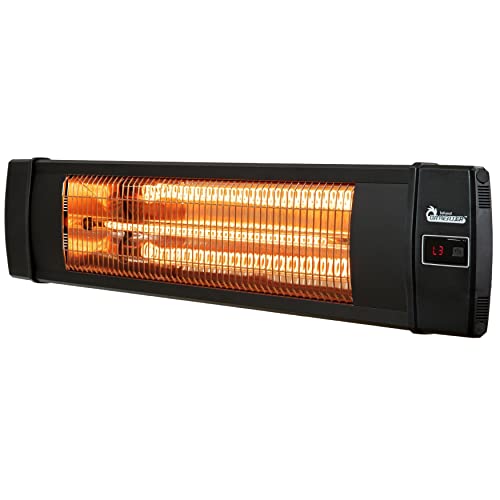
The DR. INFRARED HEATER Portable Infrared Space Heater is a versatile heating solution that works both indoors and outdoors, making it a great option for homeowners, apartment dwellers, and anyone looking to add warmth to a patio, garage, or workshop. Unlike many space heaters that rely on noisy fans, this unit uses infrared technology to deliver clean, instant heat that warms people and objects directly, not the air. That means you feel the warmth quickly without stirring up dust or creating a loud hum.
This heater is particularly well-suited for spot heating in areas like a living room corner, a bedroom, or a home office where quiet operation matters. The three power settings (900W, 1200W, 1500W) let you adjust the heat output based on the size of the space and how much warmth you need. For example, on a chilly evening in a small apartment, the lower setting may be enough to take the edge off, while the higher setting can provide more noticeable warmth on a cold winter night. Just keep in mind that there is no thermostat, so you will need to manually switch between settings or use the remote to find your comfort level.
Build quality appears solid, with a weatherproof aluminum body that carries an IP55 rating. This means it can handle moisture and dust, which is why it is also suitable for covered patios, decks, or garages. The included wall and ceiling mounting bracket is a nice touch, allowing you to install the heater up and out of the way, saving valuable floor space. Setup is straightforward if you have basic DIY skills, though you will need to mount it securely to a wall or ceiling joist.
In terms of performance, the high-efficiency aluminum reflector is designed to maximize heat output, and many users find the infrared warmth comfortable and natural. Because it does not rely on a fan, there is no air movement, which can be a plus for people with allergies or those who prefer a draft-free environment. However, the lack of a thermostat means you may need to keep an eye on the temperature and adjust settings as needed, especially if the room heats up or cools down throughout the day.
One realistic limitation is that this heater is best for supplemental or spot heating rather than as a primary heat source for a large home. In a typical 150-square-foot room, it can provide noticeable warmth, but in an open-concept living area or a very large garage, you may need additional heating. The remote control is a handy feature, letting you turn the unit on or off and change power settings from across the room without getting up.
For anyone looking for a quiet, efficient, and flexible heating option that can transition from indoor cozy spaces to outdoor entertaining areas, the DR. INFRARED HEATER is a practical choice. It works well for apartment dwellers who want to warm up a bedroom or living area without a bulky unit, and for homeowners who want to extend their outdoor season on a covered patio or deck. Just be prepared to manage the heat manually since there is no automatic thermostat.

Pros
- Rapid heating with wide 180-degree coverage for large rooms
- Energy-efficient design with smart thermostat and app controls
- Quiet operation ideal for bedrooms, offices, and nighttime use
- Versatile placement: freestanding on casters or wall-mounted
Cons
- Heater may be overkill for very small spaces like bathrooms or closets
- WiFi setup may require initial app download and pairing steps
- Some users might prefer a more traditional space heater appearance
The Ballu Mica Infrared Space Heater is a versatile, smart heating solution designed for large rooms in homes, apartments, offices, and even greenhouses. Unlike traditional fan heaters that blast hot, dry air, this unit uses premium mica panels to generate far-infrared warmth that gently heats objects and people, not just the air. This results in a more comfortable, even heat that doesn't dry out the air, making it a great choice for those with allergies or sensitive sinuses.
For homeowners and apartment users, the standout feature is the 180-degree panoramic heating. The heater warms up in just 10 seconds, then distributes warmth across a wide area, from floor to ceiling. This means no more cold corners or chilly drafts. The programmable thermostat, combined with an exposed temperature sensor, helps maintain a consistent room temperature while reducing energy waste. According to the product description, this can lead to up to 37% energy cost savings compared to less efficient models.
Convenience is a major strength. You can control the heater three ways: via the intuitive digital panel, a handy remote, or the Ballu WiFi app. The app allows you to set schedules, adjust temperature, and even use voice commands with Amazon Alexa. This is perfect for busy families who want to warm up the living room before coming home, or for office workers who want to pre-heat their home office on cold mornings.
Build quality is robust, with an all-metal casing that feels durable. The heater comes with a flame-retardant cord and a secure plug for added safety. It can be used freestanding on four smooth-rolling casters, making it easy to move from room to room. Alternatively, you can mount it neatly on the wall, saving floor space in smaller apartments or bedrooms. Safety features are comprehensive: auto shut-off if tipped over, overheat protection, and a 24-hour timer give peace of mind, especially in households with children or pets.
One realistic limitation is that the heater is designed for larger spaces and might feel too powerful for a tiny bathroom or closet. Also, while the WiFi setup is straightforward for tech-savvy users, a few may find the initial app pairing slightly fiddly. However, once connected, the smart controls work reliably.
Overall, the Ballu Mica Infrared Space Heater is a well-rounded, energy-efficient choice for anyone looking to supplement their main heating system with quiet, even warmth in large rooms. It's ideal for homeowners upgrading their living room comfort, apartment dwellers wanting to reduce heating bills, office workers needing silent warmth, or RV owners looking for an efficient, space-saving heater. If you value consistent heat, smart controls, and safety, this heater is worth serious consideration.
The Ballu Mica Infrared Heater uses advanced mica heating elements to produce far-infrared warmth. Unlike convection heaters that stir up dust, infrared heat is absorbed by objects and people, giving a feeling of natural sunlight. This heater warms up in approximately 10 seconds and provides 180-degree coverage, meaning it can heat a large room efficiently from a single position. The heat output is consistent and even, with no hot or cold spots, making it comfortable for long periods.
This heater is designed for large rooms. The 180-degree panoramic heating ensures that warmth reaches every corner, from floor to ceiling. While exact coverage area is not specified, the unit is suitable for open-plan living areas, large bedrooms, finished basements, home offices, and even greenhouses. It's best used as a supplemental heat source to take the chill off a big space quickly.
The Ballu heater combines an all-aluminum heating element with a programmable thermostat and an exposed temperature sensor. This trio works together to maintain a steady room temperature without constantly running at full power. The result is claimed to save up to 37% on heating costs compared to less efficient models. The WiFi scheduling feature further helps by allowing you to only heat rooms when they are occupied.
You have full control via three methods: the touch panel on the unit, a remote control, or the Ballu WiFi app. The app allows you to set a 24-hour schedule, adjust the thermostat, and turn the heater on or off from anywhere. It is also compatible with Amazon Alexa for voice commands. This flexibility is great for busy lifestyles, letting you preheat your space before arriving home or waking up.
Setting up the Ballu Mica Infrared Heater is quick and easy. It comes with four casters that simply screw into the base, so you can roll it from room to room. If you prefer a permanent fixture, wall-mounting is also an option, though you will need to provide appropriate wall anchors (not included). The heater is lightweight enough for one person to handle, and the 120-volt plug fits standard outlets.
Safety is a priority with this heater. It features an insulated all-metal case that stays cool to the touch, a flame-retardant cord, and a secure plug that reduces fire risks. Automatic safety shut-off activates if the unit tips over, and overheat protection prevents it from getting too hot. The 24-hour timer also helps prevent accidental prolonged use, making it a safe choice for families with children or pets.

Pros
- Versatile wall-mount or freestanding design fits small spaces like apartments, RVs, and offices.
- Infrared heat feels natural and doesn't dry out the air like traditional fan heaters.
- Safe to touch even the grill, with overheat protection for added safety.
- Quiet enough for bedrooms and workspaces, with no loud fan noise.
- Energy-efficient with two power settings and a responsive thermostat.
Cons
- No visible flame effect, so it lacks the cozy ambiance of a fireplace.
- Heating coverage is limited to small rooms (up to about 200 sq ft) – not suitable for large spaces.
- Fan noise, while low, may still be noticeable to some users in very quiet environments.
The Heat Storm Phoenix Infrared Space Heater (HS-1500-PHX) is a compact and versatile heating solution designed for those who need efficient warmth in smaller spaces. Unlike traditional space heaters, this model uses infrared technology to heat objects and people directly, rather than just circulating hot air. The result is a gentle, even warmth that feels natural and doesn't strip moisture from the room. It's an excellent choice for homeowners, apartment dwellers, RV owners, and anyone looking to supplement their primary heating in a bedroom, home office, or cozy living nook.
Heating performance is where the Phoenix shines. With a 1500-watt output (5200 BTU) and a lower 750-watt eco mode, you can tailor the heat to your needs. The built-in thermostat with an LED display shows the current room temperature and helps maintain your desired comfort level automatically. Many users appreciate that the infrared heat doesn't create drafts or stir up dust, making it a clean option for those with allergies. While it's not designed to heat a whole house, it handles small to medium rooms (roughly 200 square feet) effectively, providing consistent warmth without the hot-and-cold cycles of some fan heaters.
Build quality and practicality are strong points. At just 9 pounds and measuring 18.75 x 4.5 x 12.75 inches, the heater is small enough to tuck into a corner or mount flush on a wall. The included removable feet let you use it as a freestanding unit, while the back brackets allow for simple wall installation. The grill stays cool to the touch, a key safety feature for homes with children or pets. Overheat protection and a tip-over shutoff add further peace of mind. The remote control makes it easy to adjust settings from your couch or bed, and the quiet operation means it won't interrupt your movie night or sleep.
Setting up the Heat Storm Phoenix is straightforward. If you choose to wall-mount it, the brackets are already on the back – just screw it into studs or use appropriate anchors. For floor use, snap on the feet and plug it in. There's no complicated assembly or special wiring required. Maintenance is minimal: occasional dusting of the intake vents keeps it running efficiently. The heater's small size also makes it easy to move from room to room or store during warmer months.
Of course, no product is perfect. The Phoenix lacks a flame effect, so if you're seeking the ambiance of a fireplace, this won't provide that visual warmth. Its heating range is best for smaller spaces – don't expect it to warm an open-concept living area or a large basement. Some users have noted a faint fan hum when the heater is running, though it's generally quieter than most space heaters. The power cord is also on the shorter side, so you may need an extension cord or a nearby outlet.
Overall, the Heat Storm Phoenix is a practical, safe, and energy-efficient choice for targeted heating. It's ideal for apartments, RVs, home offices, and bedrooms where you want consistent comfort without the bulk of a larger heater. For those who prioritize quiet operation, safety, and flexible placement over flame effects, this infrared heater delivers reliable warmth at a reasonable price.
The Heat Storm Phoenix uses infrared quartz heating to warm people and objects directly, creating a comfortable environment without the dry air typical of fan-forced heaters. With two power modes (750W and 1500W), you can adjust output to match your room size and energy goals. The thermostat maintains your set temperature, cycling the heater on and off as needed. Coverage is best in small rooms up to about 200 square feet, where it provides steady, even heat. The 5200 BTU output is sufficient for supplemental heating in a bedroom, office, or small living space.
Setting up the Heat Storm Phoenix is simple and tool-friendly. For wall mounting, the heater comes with brackets already attached to the back – just screw them into wall studs or use drywall anchors. It hangs flush and takes up minimal space. If you prefer a freestanding setup, snap the included feet onto the bottom and place it on any flat surface. The unit weighs only 9 pounds, so moving it between rooms is easy. No special wiring or professional installation is needed – just plug it into a standard 120V outlet.

Pros
- Fast, quiet infrared heat ideal for supplemental heating in small rooms
- Lightweight and portable with foldable holder for easy storage
- Two heat settings offer flexibility for different comfort needs
- Safety features (overheat protection, tip-over switch) add peace of mind
Cons
- Heating coverage may be limited to small to medium rooms (not suitable for large open spaces)
- Lacks a thermostat or timer for precise temperature control
- Some users may prefer a fan-forced heater for quicker whole-room circulation
The SONBION Infrared Heater is a portable electric space heater designed to deliver fast, quiet, and energy-efficient warmth for indoor spaces. Unlike traditional fan heaters, this model uses infrared quartz heating elements to radiate heat directly to people and objects, creating a cozy, natural warmth without the noise or dry air often associated with forced-air heaters. It's a practical choice for homeowners, apartment dwellers, RV owners, and office users looking for supplemental heating in small to medium rooms.
In terms of heating performance, the SONBION heater warms up quickly thanks to its high-quality quartz heating elements. The infrared technology provides consistent, gentle heat that feels like sunlight, making it ideal for use in bedrooms, living rooms, home offices, or even a basement nook. With two heat settings, you can choose between a lower output for maintaining comfort or a higher setting for faster warmth on chilly days. While it's not designed to heat large open areas, it works well as a spot heater for personal use or to supplement your main heating system.
Build quality is solid for a portable heater in this price range. The unit is made from ABS V0 fireproof material, and the compact, lightweight design (just 3.5 pounds) makes it easy to move from room to room. The foldable holder is a thoughtful touch, allowing you to store the heater neatly when not in use. Safety is a priority here: the heater includes overheat protection and an automatic tip-over switch that shuts it off if knocked over, which is especially reassuring for households with kids or pets.
One of the standout features is its quiet operation. Because it uses radiant heat rather than a fan, the SONBION heater runs silently, making it perfect for use while sleeping, working, or watching a movie. It also doesn't dry out the air, so you can enjoy long hours of warmth without discomfort. The energy efficiency is another plus, with the manufacturer claiming up to 95% of power is converted directly to heat, which can help keep electricity bills in check.
Setup is straightforward: just plug it in, choose your heat setting, and enjoy. There's no complicated installation or assembly required. The foldable holder makes it easy to store in a closet or under a bed when not in use. However, it's worth noting that this heater lacks a thermostat or timer, so you'll need to manually adjust or turn it off. Also, its heating coverage is best suited for small to medium rooms; larger spaces may require a more powerful unit.
Overall, the SONBION Infrared Heater is a reliable, affordable option for anyone needing quiet, efficient supplemental heat in a compact package. It's especially well-suited for apartment living, RV trips, home offices, or bedrooms where noise and space are concerns. If you're looking for a simple, safe, and effective way to take the chill off a small room, this heater is worth considering.

Pros
- Dual heating system provides efficient, even warmth across large areas without drying the air
- Quiet fan at 39 dB won't disrupt daily activities or sleep
- Lifetime filter reduces maintenance and keeps the air clean
- Caster wheels make it easy to move from room to room
Cons
- Weighs 19 lbs, so not as lightweight as some compact heaters
- Power cord is 6 feet long, which may limit placement in some rooms
- Some users may find the cherry color finish less versatile for modern decor
The Dr Infrared Heater DR-968 is a portable space heater designed for homeowners and renters who need efficient supplemental heating in larger rooms. With a dual heating system that combines infrared quartz tubes and PTC ceramic technology, this 1500-watt unit delivers around 5,200 BTUs of warmth — 60% more than traditional models. It's a solid choice for living rooms, basements, home offices, or even a spacious bedroom setup where consistent, comfortable heat matters.
Warmth distribution is one of this heater's strong points. The infrared quartz heats objects and people directly, while the PTC fan circulates warm air throughout the room. The built-in electronic thermostat lets you set a target temperature between 50 and 85°F, and the heater maintains it automatically. The auto energy-saving mode with high and low settings helps reduce electricity use without sacrificing comfort. For apartment dwellers or homeowners looking to zone-heat a large area, this setup works well as a primary heat source during milder weather or as a boost alongside central heating.
Build quality feels practical and home-friendly. The cherry wood finish gives it a furniture-like appearance that blends into living spaces rather than standing out as a utility appliance. It sits on caster wheels, making it easy to roll from one room to another. The 12-hour auto shut-off timer and IR remote control add convenience — you can set it to turn off after you fall asleep or warm up the room before you get home. At just 39 dB, the blower operates quietly, so it won't interfere with conversations, TV watching, or sleep.
Safety features are well covered. Tip-over protection and overheat protection automatically shut off the heater if it's knocked over or gets too hot. The exterior remains cool to the touch, which is reassuring if you have kids or pets. The lifetime washable filter means you won't have to buy replacements, just occasional cleaning to keep air quality high. Setup is straightforward: attach the wheels, set the thermostat, and start heating. No wall mounting or professional installation required.
That said, there are a few limitations to consider. At 19 pounds, it's not the lightest portable heater, though the wheels help with mobility. The 6-foot power cord may restrict placement if your outlet is far from where you want the heater. And while the cherry color adds warmth, it may not match every decor style. Also, because it uses a fan, you'll hear some airflow noise, though at 39 dB it's generally considered quiet.
Overall, the Dr Infrared Heater DR-968 is a reliable option for those needing powerful, quiet, and energy-efficient supplemental heating in larger spaces. It's especially suited for homeowners who want to warm up a cold basement or living room, apartment dwellers looking for a freestanding heater that doesn't scream 'appliance,' and anyone who appreciates the comfort of infrared warmth without the drying effect of traditional forced-air heaters. If you're shopping for a durable, feature-packed space heater that balances performance with safety, this model is worth considering.
The Dr Infrared Heater DR-968 uses a dual heating system that combines infrared quartz tube technology with a PTC ceramic element. This design heats objects and people directly with infrared waves while a quiet fan circulates warm air throughout the room. According to the manufacturer, it produces 60% more heat than standard 1500-watt heaters, roughly equivalent to 5,200 BTUs. The electronic thermostat allows you to set a precise temperature between 50 and 85°F, and the heater cycles on and off to maintain that level. On high, it provides fast warmth for larger rooms up to about 1,000 square feet. On low, it maintains comfort in smaller spaces with less energy. The auto energy-saving mode further reduces power consumption by adjusting output based on room temperature.
Safety is a priority with the Dr Infrared Heater DR-968. It includes tip-over protection, which automatically shuts off the unit if it's knocked over. Overheat protection prevents the heater from running too hot and causing damage or fire risk. The exterior stays cool to the touch even during operation, reducing the chance of burns if someone brushes against it. These features make it suitable for households with children or pets. Additionally, the heater has a stable base on caster wheels, reducing the likelihood of accidental tipping during daily use.
How Infrared Heat Affects Electricity Use
Infrared electric heaters don’t automatically consume fewer watts than other electric resistance heaters. A heater’s wattage describes the rate at which it uses electricity while operating, not the total energy it will use over a day or month. At the same wattage and run time, two electric heaters use roughly the same amount of electricity, even if one delivers warmth differently.
Infrared energy warms objects and people in its path, rather than relying only on warmed air to carry heat around a room. That can make the warmth feel direct when you’re near the heater and facing its output. A fan-forced heater, by contrast, moves heated air around, while a panel heater can provide a broader, gentler source of warmth.
Those differences affect comfort and where warmth is felt, not the basic electricity-to-heat conversion of a plug-in electric heater. The heaters in this guide are electric resistance appliances, so nearly all the electrical energy they draw ends up as heat in the space. A claim that one model is inherently much more electrically efficient should be treated cautiously unless it explains the comparison and conditions.
Wattage and run time determine consumption
To estimate energy use, multiply the heater’s power in kilowatts by the hours it actually runs. For example, a 1,500-watt heater uses 1.5 kilowatt-hours for each hour it operates continuously at that output. A thermostat may cycle the element off after the space reaches its set temperature, reducing operating time, but the exact pattern depends on the room and the control system.
This is why advertised energy-saving language isn’t enough to estimate a household bill. A programmable thermostat or timer can help limit operation to occupied periods, but it doesn’t make the heater draw less power while its element is actively heating at a particular wattage. Your utility’s rate and the heater’s actual operating schedule determine the cost.
Compare the heater’s listed wattage and settings before comparing energy claims. The Heat Storm Phoenix, for instance, is listed with 750-watt and 1,500-watt modes. The lower setting draws less power while running, though it also supplies less heat, so it may take longer to maintain comfort in a room with substantial heat loss.
Infrared warmth is directional, not a wattage discount
Direct radiant warmth can be useful when you spend time in a defined area, such as at a desk or in a chair. If the heater warms the occupied zone adequately, you may be able to reduce heating elsewhere or avoid running a larger heating system as hard. That possible saving comes from changing the area or hours heated, not from infrared producing more heat per watt than another resistance element.
Line of sight and room layout matter. Furniture, walls, and other obstructions can limit which surfaces receive radiant energy, while people outside the direct path may not feel the same immediate warmth. A portable radiant heater therefore may work better as personal or supplemental heat than as the sole source for a large, divided, or high-ceiling room.
Infrared also doesn’t remove the need to warm the room when the goal is a stable air temperature throughout the space. If you expect warmth in every corner, a thermostat-controlled panel or a heater that circulates air may better match that preference. The useful comparison is not simply infrared versus non-infrared; it is how much heat a room needs and how the occupants want to feel it.
What the listed models show about controls and output
The listed specifications illustrate why product features need to be evaluated individually. The Dr. Infrared Heater, 1500W uses an infrared quartz tube and PTC heating elements, and its description lists an electronic thermostat with a 50 to 85 degree range. The Dr Infrared Heater DR-968 is also listed at 1,500 watts, with high and low settings, a thermostat, and a timer.
Those controls can support practical operating choices, but they don’t establish a particular reduction in electricity use. The thermostat can switch heating on and off to pursue its setpoint, while a timer can limit scheduled operation. The savings, if any, depend on whether those features lead to shorter run time or a lower overall heating demand in your actual routine.
The Ballu Mica Infrared Space Heater Indoor Use,Large is a mica panel model with a programmable thermostat and app control listed in its product information. Scheduling may be convenient for a room used at regular times, and the panel format differs from a portable quartz radiant unit. Neither feature should be read as proof that a given household will use less electricity than with another heater.
The DR. INFRARED HEATER Portable Infrared Indoor model lists three settings: 900, 1,200, and 1,500 watts. Adjustable output lets a buyer choose a lower power level when it provides enough warmth, while its wall and ceiling mounting options may suit a fixed location. Consider the installation position and manufacturer instructions before choosing a mounting setup.
The SONBION portable infrared model lists two heat settings, but the supplied specifications don’t give their wattages. That means a precise comparison of its power draw with the watt-rated models isn’t possible from the available information. A buyer focused on electricity use should check the product label or manufacturer documentation for the actual wattage and any thermostat or cycling details.
When Zone Heating Can Reduce Total Use
Zone heating is the main situation in which an infrared space heater may help reduce total household energy use. If one occupied room is chilly while other areas don’t need extra heat, a portable heater can direct supplemental warmth where it is wanted. The potential benefit depends on whether you can lower heating elsewhere without making the rest of the home uncomfortable or creating a safety issue.
For example, warming a home office during work hours may be more targeted than raising the whole-home thermostat for a room-specific problem. But running a 1,500-watt heater for many hours can add meaningful electricity consumption, especially if the main heating system continues operating at its previous setting. A focused heater is not automatically a bill-saving device; the overall schedule and heating strategy determine the outcome.
A commonly used starting point for standard insulated rooms is about 10 watts per square foot, but it is only a rough sizing reference. Drafty windows, poor insulation, open doorways, high ceilings, and cold exterior walls can increase the heat needed to maintain comfort. A heater that is too small may run nearly continuously without solving the problem, while a larger unit can reach its thermostat setting sooner but may still draw more power at its higher setting.
Room size alone can hide important differences. A compact bedroom with a closed door and insulated walls has a different heat-loss profile from an open-plan living area with tall ceilings. Infrared may feel effective near a seating area in the latter, yet it won’t make distant corners or adjoining spaces equally warm simply because its output is directed.
Room heat loss can outweigh the heater’s technology
Warm air and radiant energy both have to contend with heat escaping through the room’s envelope. Drafts around windows and doors continually replace warm indoor air with colder air, increasing the heating load. Closing doors to unused areas, addressing ordinary drafts safely, and selecting a realistic thermostat setting can matter more than choosing a heater based on an efficiency slogan.
Concrete floors, uninsulated walls, and large openings can also absorb or lose heat quickly. In a cold garage or workshop, a small plug-in heater may provide welcome warmth at a workbench but struggle to maintain an even temperature throughout the building. A product’s infrared designation doesn’t override the building’s insulation, air leakage, or the electrical capacity available.
Consider whether the goal is warming a person, a defined work area, or the whole room. A radiant model may serve the first two goals well because it directs warmth toward its surroundings. For broader ambient comfort, a thermostat-controlled panel or a heater designed to circulate warmed air may be a closer match, depending on room layout and product specifications.
Electrical Limits and Safe Everyday Operation
Many of the products listed are rated up to 1,500 watts, and the Dr-968 specification lists 12.5 amps at that output. On a standard 120-volt household circuit, a 1,500-watt heater is a substantial load. Other appliances on the same branch circuit can contribute to an overload and cause a breaker to trip.
Check the circuit and heater instructions rather than assuming a nearby outlet is available for any load. Plug electric space heaters directly into an appropriate wall outlet, not a power strip or light-duty extension cord, and avoid sharing a circuit with other high-demand appliances. If a breaker trips repeatedly, stop using the arrangement and have the circuit and appliance evaluated by a qualified professional.
Place a portable heater on a stable surface and follow the clearance distances stated by its manufacturer. Keep at least three feet between the heater and bedding, curtains, clothing, or other combustible materials. Tip-over protection and overheat shutoff are useful safeguards, but they don’t remove the need for careful placement or justify leaving a heater unattended.
Several supplied product descriptions list tip-over and overheat protection, including the Dr. Infrared Heater, 1500W and Heat Storm Phoenix. Treat those as product-specific listed features, not proof that every model has the same protection or a particular safety certification. Verify recognized safety testing marks such as UL, ETL, or CSA on the exact heater before purchase; the supplied product details do not confirm those listings.
Bedrooms and work areas also have different comfort priorities. Infrared models without a fan may avoid fan noise, while the Dr. Infrared Heater, 1500W includes an oscillation fan and the DR-968 lists a blower. The supplied data doesn’t provide comparable noise measurements, so anyone sensitive to sound should confirm how the selected model operates and where it will sit.
Use control features for comfort, not assumed savings
A thermostat is useful when it can maintain a comfortable temperature without requiring constant manual adjustments. Some models in this group list electronic, programmable, or app-based controls, while others offer power settings or remote operation. A more advanced interface may make schedules easier to manage, but it doesn’t guarantee lower consumption if the heater runs for the same amount of time at the same output.
Try a lower setting if it supplies adequate warmth in the occupied area, and use timers to avoid heating an empty room. Avoid setting a portable heater to compensate for severe drafts or a room beyond its realistic capacity. If the unit runs continuously and comfort remains poor, reassess room heat loss and heater suitability rather than assuming infrared technology will solve the mismatch.
People who experience dry air should also separate comfort perceptions from energy efficiency. Infrared heating doesn’t add moisture to a room by itself. One supplied Dr. Infrared model includes a built-in humidifier, but that is a separate feature and should not be generalized to other infrared heaters or interpreted as evidence of lower electrical consumption.
Making a Fair Comparison Before Buying
Compare the wattage at each setting, whether the unit has a thermostat, and how its heat reaches the intended area. A 750-watt mode uses less power while active than a 1,500-watt mode, but a lower output may run longer in a chilly room. Look for clear product documentation rather than relying on broad phrases such as energy efficient or low energy.
For a focused seating area, directional radiant heat may be appealing; for a room where several people move around, broader distribution and thermostat placement may matter more. A wall-mounted unit can keep floor space clear, while a portable model can be repositioned as needs change. The supplied product descriptions list a range of options, including wall mounting, portable stands, casters, remotes, and scheduling, but those conveniences don’t establish an energy advantage by themselves.
Inspect the exact specifications for voltage, wattage, controls, and safety features before purchase. Don’t infer a coverage area from a product title or assume all models bearing an infrared label provide the same output. Product claims about cost savings should be weighed against the stated power draw, the room’s heat loss, and how long the heater is expected to operate.
If you’re considering infrared heat for an outdoor sitting area, the outdoor heater selection guide discusses that different use case. Outdoor heating has different heat-loss conditions from an enclosed room, so don’t assume the same heater or operating pattern will deliver comparable comfort or electricity use indoors and outside.
Ultimately, an infrared heater may help lower total heating use when it lets you warm an occupied zone and reduce other heating, but it does not inherently use fewer watts than a comparable electric resistance heater. Match wattage and controls to the room, use zone heating deliberately, and base any cost expectation on actual run time and your utility rate. That is a more reliable way to judge electricity use than the word infrared on the label.



Write Your Review
No reviews yet. Be the first to share your experience!