


A chilly bedroom or home office can make supplemental heat appealing, but unfamiliar odors from a heater can raise a serious question: do electric space heaters give off toxic fumes? A conventional electric space heater does not burn fuel to make heat, so it does not produce combustion exhaust or carbon monoxide as part of normal operation. That does not mean every smell is harmless: dust, damaged wiring, overheated materials, or another nearby source can create odors that deserve attention.
Understanding the difference between a brief dusty smell and a persistent electrical odor helps you make a safer decision without guessing. The products listed below include ceramic fan heaters and an infrared model, with features such as tip-over shutoff and overheat protection on some units. For other room-heating ideas, see our open-plan room heating guidance and fireplace heater options.
Top Products


Pros
- Heats small to medium rooms quickly and efficiently
- Quiet fan noise level suitable for bedrooms and offices
- Compact size with carry handle for easy moving and storage
- Safety features including tip-over and overheat shutoff
Cons
- Heating coverage limited to 200 sq ft, not suitable for large open spaces
- 2-prong plug and 6-foot cord may limit placement options
- No remote control or timer, requiring manual adjustment
The GiveBest Portable Electric Space Heater is a versatile ceramic heater designed for targeted warmth in smaller indoor areas. Unlike larger central heating systems, this compact unit excels at providing supplemental heat exactly where you need it - whether that's a chilly home office, a drafty bedroom, or a compact apartment living space. Its 1500W output warms up to 200 square feet quickly, making it a practical choice for anyone looking to boost comfort without raising the whole house thermostat.
This heater is best suited for homeowners wanting to reduce heating bills, apartment dwellers with limited space, RV owners needing extra warmth on cold nights, and office workers who prefer a cozy desk environment. The adjustable thermostat lets you set your preferred temperature, and the heater automatically cycles on and off to maintain it - a feature that helps save energy compared to running the unit constantly. For winter evenings, it creates a comfortable microclimate while you read, watch TV, or work from home.
Build quality is solid for the price point. The upgraded ABS flame-retardant material adds a layer of safety, and the tip-over protection automatically shuts off the heater if it gets knocked over - a crucial feature for homes with pets or children. Overheat protection provides additional peace of mind. At only 3.2 pounds with a built-in carry handle, you can easily move it from the bedroom to the living room or pack it for RV trips. The small footprint (6.2 x 7 x 9.2 inches) means it won't clutter your space.
In terms of performance, the PTC ceramic heating element and high-speed fan deliver warmth quickly. According to product specifications, it can heat the room in minutes. The fan noise is rated under 45 decibels, which many users find acceptable for sleeping or working - not completely silent but unobtrusive. The two heat settings (1500W and 750W) plus a cool air fan option give flexibility for different seasons or room sizes. However, the 6-foot cord and 2-prong plug may limit where you can place it; you'll need to be near an outlet.
Limitations are worth noting. This heater is designed for spot heating, not whole-house warmth. The coverage of 200 square feet means it won't effectively heat large living rooms or open-concept spaces. There's no remote control or programmable timer, so you'll need to adjust settings manually. Some users may prefer a wider oscillation or quieter operation, but for the price, the GiveBest delivers reliable targeted heat.
Overall, the GiveBest Portable Electric Space Heater is a practical, affordable solution for anyone needing extra warmth in small spaces. It's especially well-suited for apartment living, bedroom comfort, office desk use, and RV winter trips. If you're looking for a simple, safe, and efficient way to stay cozy without breaking the bank, this heater is worth considering for your home heating setup.
The GiveBest space heater uses PTC ceramic technology and a high-speed fan to deliver quick, consistent heat. It offers two power levels: 1500W for maximum warmth and 750W for more moderate heating. The adjustable thermostat lets you set your desired room temperature; once reached, the heater cycles off and on to maintain it. This helps save energy while keeping the space comfortable. The heater can warm up to 200 square feet in minutes, making it effective for small rooms, offices, or as a supplementary heat source. For best results, place it in the center of the room or near the area you want to heat.
This heater is rated to heat up to 200 square feet, which corresponds to a small bedroom, home office, RV interior, or compact apartment living area. It works best as a supplemental heater - taking the chill off a single room rather than replacing central heating. Users in larger spaces may need multiple units or a more powerful heater. The 1500W setting provides enough warmth for most standard-sized rooms, but open-concept layouts or rooms with high ceilings may require additional heating sources.
Safety is a priority with the GiveBest heater. It is constructed from flame-retardant ABS material to reduce fire risk. The unit includes automatic overheat protection, which shuts off the heater if internal temperatures get too high. Tip-over protection immediately cuts power if the heater is knocked over, and it automatically restarts once uprighted. For optimal safety, avoid using this heater on the same circuit as other high-power appliances. These features make it suitable for homes with children, pets, or in high-traffic areas like living rooms or bedrooms.
This portable heater is ideal for apartment dwellers and small-space living. Its compact size fits easily on a desk, nightstand, or corner of the room without taking up much floor space. The built-in carry handle makes it simple to move from the bedroom to the living area or even take it on an RV trip. Because it plugs into a standard outlet (2-prong plug), no special installation is needed. For renters who cannot modify their heating system, this heater offers a flexible way to add warmth where needed without permanent changes.
With fan noise rated under 45 decibels, the GiveBest heater operates quietly enough for most sleepers and office workers. It produces a gentle hum similar to a small desk fan, but not loud enough to be disruptive during conversations or TV watching. Some users may prefer a completely silent heater, but for the price point, the noise level is acceptable. The fan runs continuously when the heater is on, so you'll hear a steady low sound. If absolute silence is critical for sleep, consider placing the heater farther from the bed or using a heating setting that cycles less frequently.


Pros
- Adjustable thermostat with low, high, and fan modes gives versatile heating for various seasons and comfort levels
- Extremely portable – lightweight with a sturdy carry handle makes it easy to move from basement to bedroom to RV
- Safety features like overheat protection and tip-over shutoff make it suitable for use around children and pets
- Quiet operation allows for use in bedrooms, offices, or during movie nights without distracting noise
Cons
- Heating coverage is limited to small spaces like a desk or personal area – not ideal for large rooms or whole-room heating
- Fan mode provides air circulation but no heat; some users may prefer a true infrared or convection heater for more even warmth
- 6-foot power cord may be short for some room layouts, requiring a nearby outlet or extension cord
The BLACK+DECKER Portable Space Heater is a versatile and practical solution for anyone needing supplemental heat in small spaces. Designed as a compact 1500W electric heater, it works well for apartment dwellers, homeowners, RV users, and office workers who want to warm a desk area, bedroom, or small living space without cranking up the central heating.
Heating performance is straightforward with two power settings: low heat (750W) for gentle warmth and high heat (1500W) for faster, stronger heat. There is also a fan-only mode, which is useful for year-round air circulation. The thermostat is adjustable, so you can dial in your preferred comfort level. According to product specifications and user feedback, the heater warms up quickly and maintains a consistent temperature in small rooms, though it is best suited as a personal or spot heater rather than for large open areas.
Build quality reflects the trusted BLACK+DECKER brand, with a sturdy plastic body and a convenient carry handle that makes it easy to move from room to room. At only 2.8 pounds, this heater is highly portable and can sit on a desk, nightstand, countertop, or RV shelf. The 6-foot power cord is adequate for most setups, though some users may wish it were longer. The heater is flameless and safe for indoor use, with overheat protection and an automatic tip-over shutoff that activates if it gets knocked over – an especially nice feature for households with children or pets.
Setting up the heater is as simple as plugging it in and turning the dial. There are no complicated controls or assembly required. The compact size (7.3 x 6.3 x 9.2 inches) makes it easy to store when not in use. Maintenance involves occasional dusting and ensuring the air intake is clear. The heater runs quietly, so it won’t disturb you during a workday or while sleeping. The fan does produce some noise, but it’s comparable to most small desk fans and generally not bothersome.
A realistic limitation is that this heater is not designed for whole-room heating in large living rooms or open basements. It shines as a personal heater for a home office, dorm room, or small bedroom. Also, the heat distribution is more directional from the front grille, so you need to place it aiming toward you for best results. Some users might prefer an oil-filled radiator or infrared heater for more even warmth across a larger area.
Overall, the BLACK+DECKER Portable Space Heater is a reliable, affordable choice for anyone needing quick, safe, and portable heat in small spaces. Whether you’re working at a desk, relaxing on a couch, or heating a chilly RV, this heater offers convenience and peace of mind. It’s a practical addition to any cozy home setup and a great value for the price.

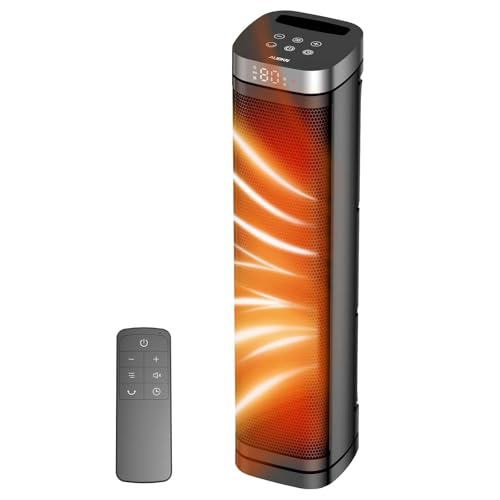
Pros
- Fast heating in seconds with 1500W ceramic technology
- Wide oscillation helps warm larger areas more evenly
- Remote control and timer add convenience for daily use
- Safety features like tip-over and overheat protection provide family-friendly operation
Cons
- Remote uses infrared line-of-sight – may need to point directly at heater
- Fan noise may be noticeable in very quiet environments (typical for fan heaters)
- 2-prong plug may limit use in older outlets without grounding
The AUBKN Portable Space Heater is a practical 1500W ceramic fan heater designed to bring quick warmth to any indoor space. While it’s not a fireplace, it serves as an excellent supplemental heating solution for homeowners, apartment dwellers, RV owners, and office workers who want to take the chill off a room without cranking up the central thermostat. With its tall, slim profile and 70-degree oscillation, this heater can fit into tight corners and still distribute heat effectively.
Heating performance is where this unit shines. The PTC ceramic element provides near-instant heat – the product description says it warms up in just three seconds. That means you won’t be shivering while waiting for the room to get comfortable. The three heating modes (likely low, high, and fan-only) give you flexibility, while the adjustable thermostat helps maintain a steady temperature. For a bedroom, home office, or small living area, this heater can easily take the edge off a cold morning or evening. It’s not meant to heat an entire house, but as a spot heater it works well.
Build quality and practicality are solid for the price. The heater stands about 23 inches tall on a stable base, and the flame-retardant materials plus ETL certification add to safety confidence. The remote control makes it easy to change settings from your desk or bed – though it uses infrared, so you’ll need to aim it at the unit. The 1-12 hour timer is great for setting the heater to turn off after you fall asleep or leave for work, saving energy. Safety features include tip-over and overheat automatic shut-off, which is essential for any space heater used around pets or children.
Setup is straightforward: just plug it into a standard outlet and press the power button. There’s no assembly required. The 6-foot flat cord is long enough for most room layouts, and the unit is lightweight enough to move from room to room. Maintenance is minimal – occasional dusting of the intake grille keeps it running efficiently. One limitation is that the fan does produce some noise; it’s not silent, but it’s typical for a ceramic fan heater and shouldn’t be disruptive for most users.
For apartment dwellers or RV users, this heater is a great option because it’s compact, portable, and doesn’t require permanent installation. It can also serve as a backup heat source during winter outages. The 12-hour timer and auto-off after 24 hours add an extra layer of energy savings and safety. Overall, the AUBKN portable space heater offers reliable warmth and modern conveniences at a reasonable price, making it a smart choice for anyone needing targeted heating in a small to medium room.
If you’re looking for an affordable way to stay cozy during cold months without running the central heat all day, this heater is worth considering. It delivers on its promises of fast heat, oscillation, and easy controls. Just keep in mind that it’s a fan heater – it works best in well-insulated spaces and may not satisfy those seeking silent operation or infrared radiant warmth. For most home, office, or RV heating needs, though, it’s a solid performer.

Pros
- Dual heating system provides efficient, even warmth across large areas without drying the air
- Quiet fan at 39 dB won't disrupt daily activities or sleep
- Lifetime filter reduces maintenance and keeps the air clean
- Caster wheels make it easy to move from room to room
Cons
- Weighs 19 lbs, so not as lightweight as some compact heaters
- Power cord is 6 feet long, which may limit placement in some rooms
- Some users may find the cherry color finish less versatile for modern decor
The Dr Infrared Heater DR-968 is a portable space heater designed for homeowners and renters who need efficient supplemental heating in larger rooms. With a dual heating system that combines infrared quartz tubes and PTC ceramic technology, this 1500-watt unit delivers around 5,200 BTUs of warmth — 60% more than traditional models. It's a solid choice for living rooms, basements, home offices, or even a spacious bedroom setup where consistent, comfortable heat matters.
Warmth distribution is one of this heater's strong points. The infrared quartz heats objects and people directly, while the PTC fan circulates warm air throughout the room. The built-in electronic thermostat lets you set a target temperature between 50 and 85°F, and the heater maintains it automatically. The auto energy-saving mode with high and low settings helps reduce electricity use without sacrificing comfort. For apartment dwellers or homeowners looking to zone-heat a large area, this setup works well as a primary heat source during milder weather or as a boost alongside central heating.
Build quality feels practical and home-friendly. The cherry wood finish gives it a furniture-like appearance that blends into living spaces rather than standing out as a utility appliance. It sits on caster wheels, making it easy to roll from one room to another. The 12-hour auto shut-off timer and IR remote control add convenience — you can set it to turn off after you fall asleep or warm up the room before you get home. At just 39 dB, the blower operates quietly, so it won't interfere with conversations, TV watching, or sleep.
Safety features are well covered. Tip-over protection and overheat protection automatically shut off the heater if it's knocked over or gets too hot. The exterior remains cool to the touch, which is reassuring if you have kids or pets. The lifetime washable filter means you won't have to buy replacements, just occasional cleaning to keep air quality high. Setup is straightforward: attach the wheels, set the thermostat, and start heating. No wall mounting or professional installation required.
That said, there are a few limitations to consider. At 19 pounds, it's not the lightest portable heater, though the wheels help with mobility. The 6-foot power cord may restrict placement if your outlet is far from where you want the heater. And while the cherry color adds warmth, it may not match every decor style. Also, because it uses a fan, you'll hear some airflow noise, though at 39 dB it's generally considered quiet.
Overall, the Dr Infrared Heater DR-968 is a reliable option for those needing powerful, quiet, and energy-efficient supplemental heating in larger spaces. It's especially suited for homeowners who want to warm up a cold basement or living room, apartment dwellers looking for a freestanding heater that doesn't scream 'appliance,' and anyone who appreciates the comfort of infrared warmth without the drying effect of traditional forced-air heaters. If you're shopping for a durable, feature-packed space heater that balances performance with safety, this model is worth considering.
The Dr Infrared Heater DR-968 uses a dual heating system that combines infrared quartz tube technology with a PTC ceramic element. This design heats objects and people directly with infrared waves while a quiet fan circulates warm air throughout the room. According to the manufacturer, it produces 60% more heat than standard 1500-watt heaters, roughly equivalent to 5,200 BTUs. The electronic thermostat allows you to set a precise temperature between 50 and 85°F, and the heater cycles on and off to maintain that level. On high, it provides fast warmth for larger rooms up to about 1,000 square feet. On low, it maintains comfort in smaller spaces with less energy. The auto energy-saving mode further reduces power consumption by adjusting output based on room temperature.
Safety is a priority with the Dr Infrared Heater DR-968. It includes tip-over protection, which automatically shuts off the unit if it's knocked over. Overheat protection prevents the heater from running too hot and causing damage or fire risk. The exterior stays cool to the touch even during operation, reducing the chance of burns if someone brushes against it. These features make it suitable for households with children or pets. Additionally, the heater has a stable base on caster wheels, reducing the likelihood of accidental tipping during daily use.
Why Electric Space Heaters Usually Do Not Produce Toxic Fumes
Electric space heaters do not produce toxic fumes through combustion during normal operation. A plug-in ceramic, fan-forced, or infrared electric heater uses electricity to warm an element or heating surface, rather than burning propane, kerosene, natural gas, or another fuel. Without fuel combustion, it does not create combustion byproducts such as carbon monoxide in the way a fuel-burning heater can.
That distinction matters when choosing supplemental heat for an occupied room. It does not make an electric heater risk-free: hot surfaces, combustible materials, damaged cords, electrical faults, and blocked air inlets can still create fire or burn hazards. Electric heating also draws substantial power, so a heater and other high-load appliances sharing a circuit can create an overload risk.
Fuel-burning heaters are different because combustion can affect indoor air quality and may produce carbon monoxide if the appliance is faulty, improperly vented, or used contrary to its instructions. Electric heaters avoid that combustion pathway, but they should not be treated as devices that clean or improve indoor air. Their purpose is to provide heat, not ventilation or air purification.
Why a new heater can smell dusty at first
A mild, temporary dusty odor can occur when an electric heater warms dust that has settled on or near its heating element. This is more likely after storage or a period without use, and it may fade as the dust burns off. The smell itself does not establish that toxic fumes are being produced, but a strong, persistent, or worsening odor should not be dismissed as ordinary dust.
Read the owner’s manual for the specific unit and follow its startup and cleaning instructions. If the odor continues, becomes sharp or chemical-like, or is accompanied by smoke, unusual noise, visible damage, or a hot or discolored plug, turn the heater off and unplug it if you can do so safely. Do not keep running a heater to see whether a concerning smell will disappear.
Odors that call for caution
A burning-plastic or electrical smell can point to overheated materials, a damaged plug or cord, or another fault. The odor alone cannot identify the source, and it is not possible to confirm a heater is safe simply because it still produces warmth. Stop using the unit if the smell is persistent or concerning, and contact the manufacturer or a qualified repair professional rather than opening the housing or attempting an internal repair.
Also consider whether something near the heater is warming or melting. Curtains, bedding, paper, furniture, and clothing can release odors or ignite if placed too close to a hot appliance. Keep combustible items at least 3 feet away, follow any larger clearance specified by the manufacturer, and never cover a heater or use it to dry clothing.
How Heater Design Affects Odors and Indoor Comfort
Ceramic fan heaters move warmed air
Ceramic fan heaters warm air at an electric heating element and use a fan to circulate that air. The airflow can help distribute heat through an occupied area, but it can also stir up settled dust. A dusty smell may therefore be more noticeable as the fan starts, especially if the unit or nearby surfaces have accumulated dust during storage.
Several products in this roundup use ceramic heating elements and offer multiple heat settings. The GiveBest Portable Electric Space Heater, for example, lists 750-watt and 1,500-watt heat settings and a cool-air fan mode. NEWBULIG models list low and high heat settings, with one product also listing an ECO mode; those features describe operating options, not a guarantee that odors or safety concerns cannot occur.
Fan heaters can be less suitable for people who find moving air irritating or who need especially quiet heat during sleep. The supplied specifications list 48.5 dB for the NEWBULIG 23-inch model and less than 45 dB for the GiveBest unit. Those manufacturer-listed figures can help with a noise comparison, but room acoustics, distance, and operating mode affect what a person hears.
Infrared electric heat still is not combustion
Infrared describes a method of transferring heat, not a fuel-burning process. The Dr Infrared Heater DR-968 lists an infrared quartz tube together with a PTC heating component, plus a thermostat and tip-over and overheat protection. Because it is electric, it does not create fuel-combustion fumes during normal operation, though its surfaces, electrical components, and surrounding materials still require sensible safety precautions.
Radiant warmth can feel direct on people and objects in its path, while fan-forced convection moves warmed air around the room. Neither method removes the need for clear space around the heater. Consider how heat reaches the people using the room, where the unit can sit safely, and whether fan noise or airflow will bother occupants.
What to Do When You Notice a Heater Smell
Separate a brief dusty odor from a warning sign
Think about the odor’s timing, strength, and persistence. A light dusty smell at startup that quickly fades may have a different cause from a sharp chemical or electrical odor that grows stronger while the heater runs. Smoke, sparks, melted-looking plastic, a damaged power cord, or a plug that appears discolored are reasons to stop using the heater, not to test it again.
Look around the unit for dust buildup and nearby items that may be touching or too close to it, but do not reach into a hot heater or remove panels. If cleaning is permitted by the product instructions, switch the heater off, unplug it, and let it cool before carrying out the manufacturer’s stated cleaning steps. Do not use a heater with a damaged cord or plug, and do not try to repair internal electrical parts yourself.
If the source remains unclear or the smell returns, discontinue use and ask the manufacturer or a qualified repair service for guidance. If there is visible smoke or a fire, follow emergency guidance and leave the area if needed. A smoke alarm is an important household safeguard; electric heat does not remove the need for fire detection.
Check the electrical connection and nearby materials
Many portable heaters draw up to 1,500 watts. At 120 volts, that is about 12.5 amps, a substantial load on a household circuit, particularly if other high-power appliances are connected to the same branch circuit. A tripped breaker or warm, damaged connection should be treated as an electrical issue, not as evidence that fumes are coming from the heater’s heating method.
Follow the heater’s instructions for its electrical connection. The supplied product information for several models specifically warns against using extension cords, power strips, or multi-outlet adapters and says to plug the unit directly into a standard wall outlet. Do not run a heater cord under a rug or where it can be pinched, and do not keep resetting a breaker that trips repeatedly.
Safety features can help reduce certain hazards, but they are not substitutes for safe placement and correct use. Some listed models have tip-over shutoff and overheat protection; product descriptions also mention child locks on some options. Check the individual product listing and manual rather than assuming that every heater has the same safeguards or certification.
Choosing Supplemental Heat With Indoor Air and Safety in Mind
Match the heater to the room, not to an odor claim
For a small personal zone, a compact portable unit may be easier to position than a larger room heater, provided its clearances and electrical requirements can be met. The BLACK+DECKER Portable Space Heater lists 750-watt and 1,500-watt heat settings, a fan mode, and tip-over and overheat shutoff. Its product information describes it for indoor use; it should not be assumed suitable for damp areas, outdoor locations, or any use the manual does not allow.
A larger room may call for broader heat distribution, but a portable electric heater cannot make up for every draft, open doorway, or poorly insulated wall. As a rough planning reference for ordinary insulated rooms, 10 watts per square foot is commonly used as an initial sizing estimate; ceiling height, air leakage, insulation, and room layout can change the result. Check the manufacturer’s stated coverage and use case rather than relying on a general estimate alone.
Zone heating can make sense when people spend time in one room and can lower heat to other areas, but a resistance heater still uses electricity while it runs. A thermostat or ECO mode can help regulate operation, yet actual energy use depends on the selected setting, runtime, room heat loss, and electricity rates. There is no universal bill-saving guarantee.
Keep electric heaters out of wet and cluttered locations
Bathrooms and other wet areas add electric shock concerns that a standard indoor space heater may not address. Do not place an ordinary portable heater where it can get wet, near a bath or shower, or where water can splash onto it. Use only equipment specifically listed and approved for the intended location, and follow applicable local requirements and manufacturer instructions.
Keep the heater on a stable, level surface and away from foot traffic, pets, and children who could knock it over or touch a hot grille. Leave at least 3 feet between the heater and bedding, curtains, paper, and other combustible materials, unless the manufacturer requires a greater distance. Never leave clothing or other objects on top of the unit.
Product features can inform a decision, but a feature list is not the same as proof that a heater is appropriate for every household. The NEWBULIG 23-inch model lists a tip-over shutoff, overheat cutoff, child lock, and ETL and FCC certification; certification details should be verified against the exact unit and its documentation. A safety label does not permit use contrary to the manual or remove the need for clearance.
Electric Heater Odors Versus Fuel-Burning Heater Risks
People sometimes group all portable heaters together, but an electric room heater and a combustion heater do not have the same indoor-air considerations. Electric models do not burn fuel to create heat, while fuel-burning appliances require attention to ventilation, installation, and the specific indoor-use instructions. Never treat the absence of an electric heater’s combustion exhaust as permission to use a fuel-burning heater indoors without the safeguards its manufacturer requires.
For any fuel-burning supplemental heater, use only a model specifically intended for the location and follow its instructions about venting and operation. Maintain working carbon monoxide and smoke alarms when operating fuel-burning heating equipment. A carbon monoxide alarm is particularly relevant to combustion risk; it is not a reason to ignore smoke, burning odors, or other warning signs from an electric appliance.
The supplied electric product descriptions do not establish that these models are approved for bathrooms, garages, or outdoor use, and they do not provide a universal clearance for every unit. Verify the exact heater’s label, instructions, intended environment, and safety certification before buying or operating it. For more room-specific fireplace context, our supplemental fireplace heater overview offers another option to consider alongside electric space heaters.
A Practical Answer to the Fume Question
Under normal operation, an electric space heater does not produce toxic combustion fumes because it does not burn fuel. A brief dusty odor may come from dust warming, while a persistent chemical, plastic, or electrical smell can signal a problem that warrants stopping use and seeking guidance. Odor alone cannot prove that the heater is safe or identify the fault.
Choose a model that suits the room and electrical supply, follow its manual, keep combustibles at least 3 feet away, and connect it as directed, usually directly to a wall outlet. Treat repeated breaker trips, damaged cords, smoke, and persistent burning smells as reasons to stop and investigate safely. Those habits address the real risks without confusing electric heat with fuel combustion.


Write Your Review
No reviews yet. Be the first to share your experience!