


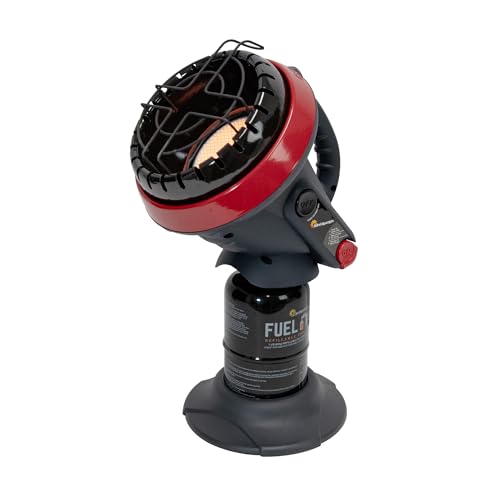
Cold-weather camping can make a warm meal appealing, but a portable propane heater and a cooking appliance have different jobs. A Buddy-style heater is designed to provide heat, not to support cookware or serve as a burner, so placing a pan or pot on it can create a burn, fire, or appliance-damage risk. The practical answer to how to cook on a buddy heater is not to cook on the heater itself: use a separate appliance designed for cooking and follow that appliance’s instructions.
Some products listed below are propane hoses or refill adapters, not cooking devices, and one is a kitchen spoon rest. A hose can change how a compatible appliance connects to a fuel cylinder, but it does not turn a heater into a stove or confirm that a particular heater setup is approved. For broader outdoor warmth considerations, see our guide to outdoor supplemental heating options. Keep cooking and heating equipment separate, and verify compatibility and safety details in the appliance manuals before use.


Why a Buddy Heater Is Not a Cooking Surface
A portable propane heater provides supplemental space heat through its intended heating assembly. That does not make its face, grille, reflector, or top a cooking surface. Cookware can block airflow, contact hot components, shift unexpectedly, or expose food and nearby materials to heat in ways the heater manufacturer did not design for.
Even if a pot appears stable, the arrangement may interfere with combustion or heat dissipation, and the heater’s safety systems are not a substitute for a cooking appliance’s controls. A tip-over switch or overheat cutoff, if a particular model includes one, is meant to address specific heater hazards; it does not certify a heater for cooking. Never treat a safety shutoff as permission to modify the appliance’s use.
The manufacturer’s manual is the authority for approved uses, fuel connections, clearances, and operating environment. If the manual does not explicitly approve cooking, do not place cookware on the unit or use it as a burner. The safe default is simple: heat the occupied area with the heater as directed, and prepare food with a separate cooking device made for that task.
Heat output does not equal cooking capability
A heater may produce enough warmth to make nearby cookware feel hot, but that observation says nothing reliable about controlled cooking temperature. Cooking requires a suitable burner or element, stable cookware support, and controls intended to regulate food preparation. A space heater’s heating output and safety design serve a different purpose.
Uncontrolled heat can scorch food while leaving it unevenly heated, and a vessel can spill if it rests on a sloped or vibrating surface. Oil, grease, and food debris also create cleanup concerns around a heater’s hot components. Avoiding that improvised setup protects the appliance and makes the meal preparation process more predictable.
Use a Separate Cooking Appliance
Choose a stove or other cooking appliance whose manufacturer specifically lists the intended fuel and setting. Confirm that its instructions cover the planned location, ventilation, cylinder type, and cookware. Do not assume an outdoor camp stove is suitable for a tent, vehicle, enclosed porch, or indoor room; use only in locations expressly permitted by its instructions.
Set up the cooking device and heater as separate appliances, each with the clearances and placement required by its own manual. Keep cooking flames, hot cookware, and food preparation away from the heater and combustible materials. Maintain at least 3 feet between a space heater and bedding, curtains, or other combustibles, and follow any greater clearance stated by the manufacturer.
Fuel-burning equipment can create carbon monoxide, a dangerous gas that cannot be reliably detected by smell. Operate propane appliances only in the locations and conditions their manufacturers approve, and use working carbon monoxide and smoke alarms where fuel-burning heating or cooking equipment is operated. An alarm does not make an otherwise prohibited indoor setup acceptable.
Before lighting a cooking appliance, read its instructions rather than relying on a heater manual or an online description of a hose. Confirm the cooking appliance is stable, the fuel connection is the specified type, and the area is appropriate for that model. If the setup cannot meet those requirements, choose a different meal plan or location instead of improvising.
Keep warmth and food preparation separate
Separation reduces the chance that a person will bump a hot pot while adjusting a heater or trip over a fuel line while carrying food. It also helps preserve access to heater controls and air openings. Arrange the space so each appliance can be used, monitored, and shut down according to its own instructions, without cookware resting on or leaning against the heater.
Keep children and pets away from hot cooking surfaces and heater outlets. Do not drape clothing, towels, or other items over a heater to dry them, and do not use the heater as a warming shelf for food. If the heater is used in a garage or workshop, keep it away from stored fuels, solvents, cardboard, and other combustibles, following the listed clearances.
What the Listed Propane Accessories Can and Cannot Do
The products in the listing are not equivalent to a stove. Several are adapter hoses described as connecting a larger propane cylinder to an appliance with a small-cylinder connection. Their descriptions mention use with portable heaters and cooking appliances, but that is not enough to establish suitability for every heater model, cylinder, regulator arrangement, or operating condition.
For example, the CALPOSE 3 Feet Propane Adapter Hose with Gauge is described as a connection hose with a gauge, and the GrillAce listing describes a longer hose with a gauge and compatibility with specified equipment. The available listing text does not replace the appliance manual, nor does it establish that a particular connection is approved for every Buddy heater. Check the exact model instructions and adapter documentation before purchasing or connecting an accessory.
A hose is not a pressure regulator unless the manufacturer identifies it as one, and a pressure gauge is not a guarantee that a connection is correctly matched or leak-free. Product listings may describe intended uses, but compatibility depends on the appliance’s required connection and fuel specifications. If those details conflict or are unclear, contact the heater or accessory manufacturer rather than guessing.
The product set also includes refill adapters intended to transfer propane into small cylinders. Their presence does not establish that refilling a disposable cylinder is safe, permitted, or approved by the cylinder manufacturer. Do not refill a disposable cylinder unless its labeling and applicable requirements explicitly permit refilling; never rely on an accessory listing alone to make that determination.
The supplied descriptions mention valves, gauges, caps, and different hose lengths on some adapters. Those features describe the accessory, not a cooking function or proof of heater compatibility. Select accessories only after identifying the exact appliance connection and following the accessory and appliance instructions. Do not alter fittings or use an adapter to defeat a required safety component.
Separate the hose question from the cooking question
A fuel hose may let a compatible appliance draw from a different cylinder configuration, but it does not supply burner controls, a stable cooking grate, or cooking approval. If the goal is to cook, shop for a cooking appliance specified for the desired setting. If the goal is longer heater operation, investigate only fuel arrangements that the heater manufacturer explicitly permits.
Do not decide compatibility from a shared brand phrase, a product photo, or a general claim that an accessory works with portable appliances. Confirm the heater’s exact model, connector type, approved fuel source, and any restrictions in the manual. The documentation should also clarify whether a regulator or other component is required and whether an added hose is allowed.
If any connection leaks, smells of gas, appears damaged, or does not tighten as specified, stop and follow the manufacturer’s safety directions. Do not test a questionable connection with a flame. Replace damaged components with parts approved for the appliance, and seek guidance from the manufacturer when the correct part is uncertain.
Plan for Ventilation, Placement, and Fuel Safety
Portable propane heaters and cooking appliances require careful attention to the use environment. Indoor approval varies by model, and a product that is acceptable in one setting may be prohibited in another. Follow the exact instructions for the appliance rather than treating all propane equipment as interchangeable.
For any fuel-burning appliance, use working carbon monoxide and smoke alarms as an added safety layer. Keep the equipment away from combustible materials and follow all listed clearances. Never operate an appliance in a confined space if its instructions do not permit that use, and do not assume that opening a door or window makes a prohibited setup safe.
Propane cylinders should be handled, stored, and connected according to their labels and manufacturer directions. Keep cylinders away from heat sources and do not leave them where they can be struck, tipped, or exposed to conditions prohibited by the instructions. Avoid improvised extensions, altered fittings, or attempts to combine parts that were not specified for the appliance.
Place a space heater on a stable surface and preserve its air openings. Keep it out of traffic paths where someone could knock it over, and maintain the manufacturer’s clearance from walls and combustibles. Never leave an operating heater unattended unless its manual explicitly permits the intended use and conditions.
Outdoor cooking and outdoor heating also need sensible separation. Wind can affect flames and move lightweight equipment, while nearby tents, awnings, and vehicle interiors can create confined or combustible surroundings. Use each appliance only in the conditions its instructions allow, and shut it down as specified before packing it away.
Reading the Product Options Without Confusing Their Roles
The CALPOSE hoses listed here come in different lengths and descriptions, including versions with a gauge. The GrillAce product description identifies a hose intended for certain portable propane appliances, while the konros and Detoypapa entries describe refill adapters. These are different accessory roles, so compare them by the connection and use expressly documented, not by assuming that all propane accessories perform the same job.
The 2025 Upgraded Propane Refill Adapter with Valve is also a refill accessory, not a cooking tool. The Funny Spoon Holder by OTOTO is a kitchen utensil rest and has no heater fuel connection. Distinguishing these products matters because a search phrase can produce listings that mention “Buddy” in unrelated contexts.
Before ordering, verify the exact product name, intended function, included fittings, and manufacturer instructions. Product titles can include broad compatibility language, but the supplied information may not answer whether an accessory is approved for a specific heater configuration. Confirm the full details directly with the relevant manufacturer if the listing leaves a material safety question unanswered.
For readers comparing supplemental warmth in a room rather than cooking equipment, the site’s open-plan supplemental heating overview addresses a different heating problem. It should not be used as a substitute for propane appliance instructions, but it can help distinguish room heating decisions from cooking decisions. Keeping those purposes separate prevents an accessory purchase from being mistaken for a safe cooking solution.
A Simple Decision Path Before You Use Either Appliance
Start by deciding whether the task is heating a space or cooking a meal. Use the heater only for supplemental warmth within its approved operating conditions, and use a purpose-built stove for food preparation. If a product listing is ambiguous, identify the appliance model and consult its manual before connecting anything.
Next, check the cooking device’s approved fuel, location, and ventilation requirements. Confirm that the cylinder and connector match the appliance instructions, and do not use a refill adapter to bypass restrictions on a disposable cylinder. Keep the heater and cooking appliance physically separate, with clear access to controls and required clearances.
Finally, inspect equipment for visible damage and make sure alarms are working wherever fuel-burning appliances are used. A damaged hose, uncertain connection, missing instructions, or unclear indoor-use approval is a reason to pause, not improvise. The safer choice is a separate, properly specified cooking appliance and a heater used only for the purpose its manufacturer permits.
So, do not cook on a Buddy heater unless the exact manufacturer documentation explicitly identifies a cooking function, and the supplied information here does not establish that approval. Use a separate stove designed for the setting, verify its fuel and location requirements, and treat propane adapters as connection accessories rather than cooking equipment. That distinction is the most useful answer to the search, and it avoids turning supplemental heat into an unapproved cooking setup.




Write Your Review
No reviews yet. Be the first to share your experience!