

A fireplace can make the room around it feel warmer, but heating every room evenly is a different challenge. If you’re asking will a fireplace heat a whole house, the practical answer is: sometimes, but it depends on the fireplace, the home’s layout and insulation, how heat moves between rooms, and whether the system was designed to distribute warmth beyond its immediate area. An open fireplace, a sealed gas unit, a wood stove, and a plug-in electric fireplace do not distribute heat in the same way.
Start by identifying the fireplace type and checking its manual, rather than judging it by flame size or appearance. Fuel or electrical access, venting, installation, and operating instructions all affect what it can do. A compact electric unit may provide localized supplemental warmth, while a properly sized, installed, and configured heating appliance may serve a broader role. For related room-planning context, see our fireplace heater options for compact rooms and corner fireplace placement ideas.

Pros
- Infrared quartz heating elements help warm living spaces while preserving natural air humidity.
- Three-sided glass design provides wide viewing angles for the simulated ember and log display.
- Lightweight construction under 13 pounds enables straightforward relocation between living areas, offices, and bedrooms.
- Multi-agency certified with ETL, UL, and CSA safety listings alongside automatic overheat and tip-over protections.
Cons
- Provides 1500W supplemental zone warmth and is not engineered to serve as a primary whole-home heat source.
- Compact stove dimensions may appear undersized if placed inside large, existing masonry fireplace openings.
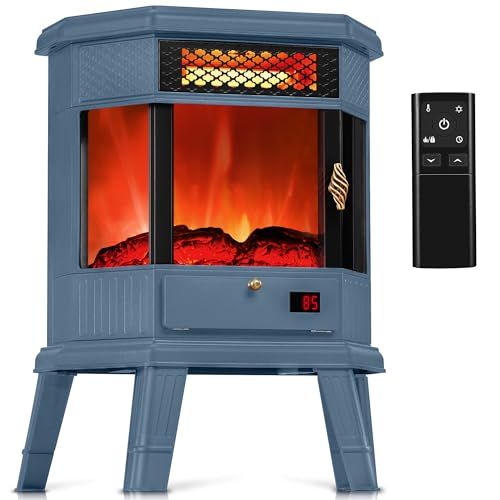
The RealSmart 22-inch electric fireplace heater offers a compact, freestanding heating solution designed for supplemental zone warmth and fireside ambiance. Finished in a distinctive serene blue color, this stove-style appliance appeals to apartment dwellers, renters, and homeowners who want the aesthetic appeal of a hearth without chimney flues, gas hookups, or remodeling. Its three-sided viewing cabinet gives occupants in bedrooms, home offices, or living areas a wide vantage point of the simulated flame display without requiring permanent wall framing.
Operation centers around an infrared quartz heating assembly generating up to 5,118 BTUs. Users can switch between 1000-watt and 1500-watt heating levels, powered through a standard 120-volt, 60 Hz electrical connection. The onboard thermostat allows target temperature adjustments between 50°F and 90°F, while a 1 to 12-hour timer gives owners scheduling control. The resin logs and ember bed produce a rolling 3D flame effect with four brightness settings that can run independently from the heating element, allowing decorative use regardless of outdoor temperatures.
Measuring approximately 15.75 inches wide, 9.06 inches deep, and 21.65 inches tall, the unit weighs roughly 10.5 to 12.6 pounds, allowing an adult to reposition it across living spaces as heating needs shift. The stove rests on four stabilizing support legs and operates quietly at noise levels under 48 decibels. Safety safeguards are integrated directly into the electronics, including an automatic power shut-off triggered by excessive internal heat or accidental knock-downs. The unit carries ETL, UL, and CSA safety certifications for operation in North American households.
Because this is an electric appliance, installation does not require chimney inspection, venting pipes, or professional gas fitting. Setup mainly involves securing the support legs and positioning the heater on a firm, level surface near a standard wall outlet. As with any high-draw 1500-watt electric heater, standard electrical precautions apply: plug the unit directly into a dedicated wall receptacle rather than an extension cord, and maintain adequate clearance from soft furnishings, curtains, and combustible materials. Routine maintenance remains minimal, primarily requiring occasional dusting of the exterior surfaces and air intake grills using a soft, dry cloth while the unit is completely cool and unplugged.
While the RealSmart stove delivers responsive supplemental warmth and visual charm, buyers should recognize its functional boundaries. With a maximum 1500-watt output, it is built to warm individual rooms or designated living zones rather than heat an entire home or offset uninsulated drafty architecture. Its compact 22-inch profile also means it will not fill an oversized masonry hearth opening if placed inside an existing traditional firebox. For residents seeking a portable, certified electric fireplace with flexible timer settings, remote operation, and charming three-sided flame visuals, this model presents an adaptable, low-maintenance option.
The RealSmart electric fireplace features dual heat output settings of 1000 watts and 1500 watts, managed through an integrated digital thermostat adjustable from 50°F to 90°F. The included handheld remote control lets users adjust heat output, thermostat levels, and the 1 to 12-hour shut-off timer from across the room.
Visual customization is supported by four flame brightness settings, illuminating resin logs and an ember bed through the three-sided window. The flame display operates with or without the infrared heating elements engaged, offering year-round aesthetic enjoyment without warming the space.
This freestanding stove measures 15.75 inches in width, 9.06 inches in depth, and 21.65 inches in height, supported by four bolt-on legs that provide a stable, elevated base. The lightweight profile of under 13 pounds facilitates easy movement between bedrooms, home offices, and living rooms.
When planning your space, ensure the heater is situated on a level floor with ample clearance around the intake vents and exterior panels. While its compact footprint allows easy placement in modest spaces, verify that the front and side viewing windows have unobstructed clearance from drapery, furniture, and other household objects.

Pros
- Three-sided viewing panels offer wide flame visibility from multiple angles across the room
- Flame effects run independently of heat, providing visual appeal throughout all seasons
- Infrared quartz elements warm spaces while helping to preserve natural room humidity
- Built-in tip-over and overheat shut-off mechanisms provide enhanced peace of mind for indoor use
- Quiet operation rated below 48 decibels minimizes disturbance in bedrooms and quiet home offices
Cons
- Intended strictly as a supplemental heat source rather than a primary whole-home heating solution
- Manufacturer documentation does not list specific square-footage room coverage
The RealSmart 22-Inch Freestanding Electric Fireplace Stove is a compact supplemental heating appliance designed for indoor residential spaces. Styled with a classic stove profile and a three-sided viewing window, it appeals to renters, apartment dwellers, and homeowners seeking the cozy visual appeal of a hearth without the complex venting, gas lines, or masonry work required by traditional fireplaces. Its lightweight design and four support legs make it straightforward to place in living rooms, home offices, or guest bedrooms where localized warmth and fireside character are desired.
Heating performance is driven by three infrared quartz heating elements capable of generating up to 5,118 BTUs of heat output. The unit operates on standard 120V household electricity at 60Hz and offers two operational modes at 1,000 watts and 1,500 watts. Because infrared technology warms objects and occupants directly rather than simply circulating dry ambient air, it helps maintain natural indoor humidity levels. Visually, the stove utilizes resin logs and an ember bed to simulate a 3D rolling flame. The flame display features four adjustable brightness levels and can be operated independently of the heating function, allowing year-round fireside ambiance.
Operating the stove is managed either through onboard controls or the included remote control. Users can set an adjustable thermostat between 50 degrees Fahrenheit and 90 degrees Fahrenheit to maintain a comfortable baseline temperature, as well as set an automatic shut-off timer anywhere from 1 to 12 hours. For indoor safety, the fireplace is TUV-certified for North America and includes built-in protection mechanisms: an automatic overheat sensor shuts off power if internal temperatures spike, while an integrated tip-over switch cuts electrical supply if the unit is accidentally knocked over. The operating noise level remains under 48 decibels to avoid disrupting conversations, television viewing, or sleep.
Measuring roughly 15.75 inches wide, 9.06 inches deep, and 21.65 inches high, this stove features a compact footprint suitable for tight corners, small hearth extensions, or freestanding floor locations. Weighing between 10.5 and 12.6 pounds, the appliance is easily repositioned between rooms as heating needs change. When planning placement, buyers must verify clear access to a grounded 120V standard electrical outlet and ensure adequate clearance from combustible furnishings, curtains, and bedding, keeping air intakes and heat discharge vents unobstructed at all times.
This freestanding electric stove serves best as a targeted supplemental heat provider and decorative hearth feature rather than a replacement for primary central heating. While the manufacturer specifies a 5,118 BTU output, overall thermal comfort will depend on ceiling height, room insulation, and local climate. For buyers seeking an attractive three-sided flame presentation, quiet operation, and adjustable heat settings with standard plug-in convenience, this RealSmart fireplace represents a practical, low-maintenance option for seasonal comfort.
The RealSmart electric fireplace provides flexible control options through both onboard controls and a convenient remote control. Users can select between two heat output stages at 1,000 watts and 1,500 watts, tailoring electrical draw to comfort requirements.
An integrated digital thermostat lets occupants set temperatures ranging from 50 to 90 degrees Fahrenheit, cycling the heating elements to maintain the desired comfort level. A built-in timer can be scheduled from 1 to 12 hours for automated shut-off, making it well suited for overnight use in bedrooms or timed sessions in home offices.
The decorative 3D rolling flame effect includes four distinct brightness settings. Because the visual display functions independently of the heating elements, the fireplace stove can be enjoyed strictly for ambiance during warmer months without generating unwanted heat.
Featuring an exterior footprint of 15.75 inches in width, 9.06 inches in depth, and 21.65 inches in height, this 22-inch stove is designed to fit comfortably in compact living quarters. Its modest size makes it an adaptable accent for hearth extensions, alcoves, or flat floors against interior walls.
With a portable weight of around 10.5 to 12.6 pounds, the unit can be lifted and repositioned by a single adult. Four sturdy support legs elevate the firebox off the floor surface, providing steady footing across flat, level indoor flooring.
Owners should ensure ample clearance around the top, sides, and front of the fireplace to allow unhindered air circulation and heat dispersal. Always keep combustible materials such as blankets, rugs, and drapery safely distanced from the heating discharge zone.

Pros
- Integrated humidifier addresses dry indoor air while operating supplemental heating
- Plug-and-play freestanding installation requires no chimney, venting, or architectural modifications
- Multiple control options via the front-facing LED display panel or the included remote control
- Equipped with verified safety shutoffs including tip-over and overheat sensors
Cons
- Vertical tower profile presents a narrower viewing window compared to traditional wide mantel fireboxes
- Active humidifier usage introduces regular maintenance requirements for water refilling and reservoir cleaning
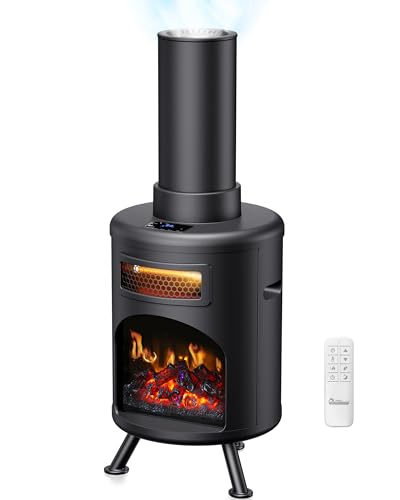
The Dr. Infrared Heater DR-991 is a freestanding electric fireplace heater engineered to deliver supplemental warmth and ambient flame visuals without the construction demands of traditional hearths. Designed for renters, homeowners, and apartment dwellers who face restrictions on venting or chimney access, this unit offers a self-contained alternative. It plugs directly into a standard 120V wall outlet, providing a straightforward option for spaces where installing a gas line or masonry hearth is impractical.
At the core of the appliance is a 1500W infrared heating element paired with an integrated 3D flame effect. The flame display features two adjustable brightness levels to tailor visual ambiance independently or alongside the heater. Users can select from three heat settings, including High, Low, and an Auto mode that works in tandem with the built-in digital thermostat. Adjustments can be managed directly on the unit through its LED display panel or across the room with the included remote control, which also governs a 12-hour shutoff timer.
A notable functional distinction of the DR-991 is its built-in humidifier. Supplemental heating appliances frequently lower indoor relative humidity, leading to dry air during colder months. By incorporating an active moisture reservoir, this unit works to balance ambient room comfort while warming. For safety, the unit holds an ETL listing and incorporates automatic tip-over and overheat protection sensors that cut power if the heater is knocked askew or exceeds internal operating temperatures.
With dimensions measuring 14.2 inches long, 14.2 inches wide, and 36.8 inches tall, the unit takes up a compact, vertical floor footprint. Weighing 19.4 pounds and equipped with a 6-foot electrical cord, it can be relocated between rooms as heating needs change. As with any high-wattage electrical appliance, proper clearance should be maintained around the heater cabinet to ensure unobstructed airflow, and the manufacturer instructions should be consulted regarding placement near walls, curtains, and furniture.
Potential buyers should recognize that the vertical tower styling differs significantly from traditional wide mantel fireplaces, catering more to modern space-saving setups. In addition, utilizing the humidifier function introduces routine maintenance, as the water tank requires regular refills and occasional cleaning to prevent mineral buildup. For shoppers seeking an all-in-one zone heater that combines flame ambiance, infrared warmth, and air moisture management, the DR-991 represents a practical, low-maintenance hearth alternative.
The DR-991 provides flexible operation through either its onboard LED display panel or the included handheld remote control. Users can toggle between High, Low, and Auto operational modes to match immediate comfort requirements. In Auto mode, the built-in digital thermostat actively cycles the 1500W heating element to maintain a selected ambient temperature.
A built-in 12-hour timer allows homeowners to set scheduled shutoffs in advance, which can prevent unnecessary overnight electrical consumption. The 3D flame effect operates with two distinct brightness levels, allowing users to tailor the visual display to daytime or evening lighting preferences.
Setup for the DR-991 requires no venting, gas connections, or permanent wall framing. The freestanding design sits directly on flat interior flooring and plugs into any standard 120V electrical outlet via its 6-foot cord. Because this model draws up to 1500W, users should ensure the circuit can accommodate high-draw appliances without tripping breakers.
While the exterior footprint is compact at 14.2 by 14.2 inches, adequate clearance must be kept around the intake and exhaust grilles as outlined in the manufacturer documentation. Combustible materials like drapes, bedding, and loose papers should remain clear of the unit during operation.

What Determines Whether a Fireplace Can Heat the Whole House?
A fireplace can contribute to whole-home heating, but many fireplaces are best understood as supplemental or room-focused heat sources. Whether one can keep an entire house comfortable depends on its heat output and distribution, the building’s heat loss, room arrangement, and the appliance’s intended use. A fireplace that raises the temperature near the hearth may not deliver enough warmth to distant bedrooms or rooms behind closed doors. The appliance’s specifications and installation instructions are more useful than a general promise that a fireplace can heat a particular number of rooms.
Even a fireplace with substantial output does not automatically provide even temperatures throughout a home. Heat needs a path from the room where the fireplace sits to other parts of the house, and that path may be limited by walls, stairs, doors, or the way the home is arranged. Insulation, air leakage, ceiling height, window area, and outdoor conditions also affect how quickly rooms lose warmth. Those factors make a single square-foot estimate an incomplete way to predict whole-house performance.
The key distinction is between making one room more comfortable and acting as a home’s primary heat source. A fireplace can be useful for taking the chill off a room or adding comfort during use, but that does not establish that it can maintain safe, suitable temperatures everywhere in the home. If you plan to rely on it for more than occasional supplemental heat, ask a qualified professional to assess the appliance, installation, and home conditions. A manual, product label, and inspection history can help clarify what the system is intended to do.
How fireplace design changes heat delivery
An open wood-burning fireplace sends some heat into the room, but its primary design and performance cannot be inferred from a visible flame alone. Heat may be concentrated close to the fireplace, and the amount of useful warmth reaching a room depends on the fireplace design and operating conditions. The fireplace also needs a suitable, properly maintained venting path. Do not assume an open hearth will heat a whole house simply because it burns a large fire.
A wood stove or an insert is a different appliance from an open fireplace. A stove is a freestanding heating appliance, while an insert is fitted into an existing fireplace opening according to its specific requirements. Either can have different heating characteristics from an open hearth, but suitability depends on the exact model, installation, fuel, venting, and home. An existing fireplace opening does not by itself prove that a stove or insert can be installed there safely or legally.
Gas fireplaces also vary by design and intended use. A direct-vent model, a vent-free model where permitted, and a gas log set are not interchangeable descriptions, and the installation and operating requirements differ. Check the appliance label and manual to identify the type, fuel, venting, and listed use. A qualified professional can assess whether the existing gas supply and venting arrangement are appropriate for a particular unit and location.
Electric fireplaces use electrical power and do not burn wood or gas at the appliance. Many portable units are intended to provide supplemental heat to the area where they are placed, while flame effects on some models can operate separately from the heating function. For example, the supplied product specifications list the RealSmart 22-inch freestanding heaters as infrared electric units with two heat settings and a stated maximum output of 5,118 BTU. That is manufacturer-listed information for those products, not independent testing or a guarantee of whole-house coverage.
Other supplied electric models illustrate why product details matter. The HOMCOM freestanding stove is listed with 750-watt and 1,500-watt settings, while the DR. INFRARED HEATER DR-991 is described as a portable, 1,500-watt electric heater with a thermostat and timer. These are different product configurations, not evidence that either can heat every room in a particular home. Check the product manual for electrical requirements, intended use, placement restrictions, and any limits on operation.
Why a warm living room can leave other rooms cold
Warm air does not distribute itself evenly through a home simply because a fireplace is burning. A closed door can limit circulation, and a room separated from the fireplace by hallways or several walls may receive little of its heat. Stairs can affect how air moves between floors, but the result depends on the home’s design and conditions. A fan may help circulate air within a room, yet it does not increase the fireplace’s rated output or establish that distant rooms will receive adequate heat.
The JossaColar Wood Stove Fan Heat Powered Fireplace in the supplied products is described as a heat-powered fan intended to move warm air around a room. Its stated purpose is air circulation near a wood stove or fireplace, not whole-house heat distribution. Confirm that any accessory is intended for the specific appliance and use it only as directed by its manufacturer. A fan cannot correct a venting problem, poor installation, or an appliance that is too small for its intended role.
Household conditions matter just as much as air movement. A drafty room, open stairwell, large footprint, or closed-off floor plan can change how warmth reaches other areas. If the fireplace room becomes uncomfortably hot while bedrooms remain cold, increasing the fire or turning up a heater may not solve the distribution problem. Consider whether the fireplace is supplemental by design and whether the home has a separate heating system for rooms beyond its practical reach.
Check the Fireplace and the Home Before Relying on It
First identify the exact appliance rather than treating every fireplace as the same kind of heater. Look for a nameplate or model information and locate the manufacturer’s operating and installation documents. Determine whether it burns wood, uses gas, or runs on electricity, and note whether it is an open fireplace, insert, stove, or electric unit. If the label is missing or the appliance’s history is unclear, a qualified fireplace professional may help identify it and assess its condition.
Next, compare the appliance’s stated purpose and specifications with the role you need it to perform. A manufacturer’s listed heating output, room guidance, or control settings apply to that product under its specified conditions; they are not a universal forecast for every home. Ask how the unit should be operated, what kind of fuel or power it needs, and what venting it requires. If those details do not match the existing installation, do not assume an adjustment or accessory will make the setup suitable.
Consider the home’s layout and the rooms that must remain comfortable. A fireplace located in a central, open living area may have a different opportunity to share warmth than one in a separate room with a closed door. But room position alone cannot establish heating capacity. Building insulation, air leakage, ceiling height, weather, and the number of exterior walls also affect heating needs, so a home-specific assessment is useful if whole-house heating is the goal.
Think about what happens when the fireplace is not running. Wood appliances require an appropriate supply of the fuel specified by the manufacturer and regular attention to operating and cleaning requirements. Gas models depend on the correct gas type and a suitable supply and venting arrangement. Electric fireplaces need electrical power, so they cannot provide heat during an outage unless an appropriate backup arrangement exists and the manufacturer permits its use.
Renters and other occupants should check the property owner’s rules before operating an unfamiliar appliance, modifying a fireplace, or arranging installation work. Local requirements, permits, and installation rules vary by location and appliance. A manufacturer’s instructions, local authority requirements, and qualified professional advice take precedence over general online guidance. If the home has changed since the fireplace was installed, including renovations or modifications near the unit, an assessment may be needed before relying on it.
When an existing fireplace needs an assessment
An unfamiliar fireplace deserves more than a visual glance before it becomes a regular heat source. Ask whether it has been maintained and whether the venting system or appliance has had a qualified inspection appropriate to its type. A visual check by an occupant cannot confirm that hidden components, the flue, or the installation are in suitable condition. Follow the manufacturer’s inspection and maintenance directions, and seek qualified help if the service history is unavailable.
Stop using the fireplace and seek appropriate assistance if operation produces unusual smoke, persistent odors, unexpected sounds, visible damage, or signs that the appliance or venting is not working as intended. Do not try to diagnose hidden venting problems by repeatedly operating the fireplace. A problem with combustion, venting, controls, or fuel supply can require qualified assessment. Follow the appliance manual and any applicable safety guidance while the issue is being evaluated.
Maintenance is specific to fireplace type and model, so there is no single schedule that applies to every unit. Wood-burning appliances and their venting components may need different attention from gas or electric units. Use the manual for routine care and consult a qualified professional for work beyond the manufacturer’s approved user maintenance. Keep records of service and any component changes, particularly when you do not know the appliance’s previous history.
Whole-Home Heating Tradeoffs and Practical Alternatives
A fireplace’s main advantage may be localized comfort or flame ambience rather than independent whole-house heating. Electric models can avoid the need for a wood supply or a gas connection at the appliance, but they still require suitable electrical power and may be limited to supplemental use. Gas and wood appliances have different fuel, venting, installation, and care considerations. Choosing between them requires more than comparing appearance or the highest output listed on a product page.
Whole-house heating also involves the way a home distributes heat, not just the appliance that produces it. A fireplace may supplement another heating system, but a product description does not establish that it can replace that system. If the goal is to rely less on existing heat, consider a qualified assessment of the home and appliance rather than estimating from a single room’s comfort. The assessment can account for the home’s layout and the fireplace’s actual installation and intended role.
Operating costs cannot be compared reliably without knowing the appliance’s fuel or power use, local energy rates, frequency of use, and maintenance needs. Wood, gas, and electricity have different supply and ownership considerations, and installation or service may contribute to the overall cost. Avoid assuming that a fireplace is cheaper to run simply because it uses a fuel already available at home. Ask for estimates based on the actual model, local supply, and intended operating pattern.
Drafts and heat loss near the fireplace opening can affect comfort, but a fireplace cover or other accessory must be appropriate for the specific fireplace and used as directed. A cover is not a substitute for correcting a venting fault or an installation problem. For context on this related issue, our fireplace cover options for draft control discuss a component that may be relevant to draft concerns. Check compatibility and fireplace instructions before using any accessory.
Product features can support convenience without answering the whole-house question. Remote controls, timers, thermostats, flame settings, and automatic shutoff features may affect how a particular electric fireplace is operated, but they do not establish its coverage in a home. The supplied RealSmart specifications list a thermostat and timer on the described units, while the HOMCOM listing identifies two wattage settings. Treat those details as product-specific claims and confirm them against the exact model’s manual before making an operating decision.
Portable electric fireplaces can make sense for focused supplemental comfort when their electrical and placement requirements suit the room. The HOMCOM product description gives a maximum area estimate for that model, but such a manufacturer claim should not be treated as a promise that it will heat a whole house or reproduce the same result in every space. Room size, insulation, layout, and outdoor conditions all matter. Follow the instructions for use and do not use a portable heater as a replacement for an appropriate home heating plan.
Wood stove fans, portable heaters, and fireplace inserts address different needs. A fan moves air but does not generate additional heat; a portable electric fireplace provides heat according to its own product specifications; an insert is a distinct appliance that may require a purpose-specific installation. These options should not be treated as interchangeable fixes for cold rooms. Identify the actual problem first: limited appliance output, poor circulation, heat loss, or a fireplace that is not operating as intended.
How to Make a Sound Whole-House Decision
Begin with the outcome you need: ambiance, occasional warmth in one room, supplemental heat, or dependable heat across the home. Those are different jobs, and a fireplace suited to one may not satisfy another. Identify the model and fuel, read the manual, and verify the installation and venting requirements that apply to that appliance. If the existing fireplace is unfamiliar, damaged, or poorly documented, get qualified guidance before relying on it.
Then consider how the home’s layout and condition affect heat distribution. Note which rooms remain cold, whether doors or walls separate them from the fireplace, and whether the main heating system is expected to continue serving those spaces. Avoid using a hotter fire or an additional accessory to compensate for a suspected venting or installation issue. The right next step may be an appliance assessment, a home heating evaluation, or maintaining the existing heat source rather than changing fireplace operation.
For product selection, compare documented specifications that match the intended role, not marketing language alone. Check fuel or electrical requirements, controls, safety features, included components, and manufacturer instructions. A compact freestanding electric model may suit localized supplemental warmth, while a wood or gas appliance involves different installation and maintenance considerations. None can be assumed to heat a particular whole house without evaluating the product and the home together.
So, a fireplace may help heat a whole house in some circumstances, but the answer is not a general yes for every fireplace or home. Treat whole-home heating as a question of appliance capability, installation, heat distribution, and building conditions, not flame appearance. Use the exact model’s guidance, follow local requirements, and get a qualified assessment when the fireplace’s condition or suitability is uncertain. That approach helps distinguish a useful supplemental heat source from a system that can reasonably serve a broader heating role.


Write Your Review
No reviews yet. Be the first to share your experience!