


Heating one occupied room instead of raising the temperature throughout an empty home can make supplemental heat useful, but a space heater still consumes electricity whenever its element is on. The practical goal is to match the heater to the room, then use its thermostat and timer to avoid heating past the comfort you need. That is the best way to approach what is the best energy saving space heater: look for controlled, targeted warmth, not a claim that one electric heater creates heat without using power.
The products listed below span compact ceramic plug-in models, fan-forced towers, infrared and oil-filled radiators, and convection panels. Their controls and heat delivery differ, so a quiet bedroom option may not be the most convenient choice for a drafty office or a room where you want warmth spread across a wider area. For larger, shared spaces, our guide to heating open-plan rooms considers a related room-layout challenge.
Before using any electric heater, check its plug, outlet, safety instructions, and required clearances. Plug it directly into a suitable wall outlet, keep at least 3 feet between the heater and bedding, curtains, or other combustibles, and verify recognized UL, ETL, or CSA listing information on the specific product. Those precautions matter even when a model advertises overheat protection or a tip-over shutoff.

Pros
- Fast ceramic heating with adjustable thermostat for precise temperature control
- Space-saving wall-mount design with no cords or floor footprint
- Quiet operation ideal for bedrooms and offices
- Energy-efficient smart chip helps reduce electricity usage
Cons
- Limited to 450W output, best for supplemental heating in small spaces under 100 sq ft
- Fan may produce a low hum on higher speed settings
- Remote control range may be limited in larger rooms
The LYNBKLS Upgrade Smart Plug-in Wall Space Heater is a compact 450W ceramic heater designed for small-space supplemental heating. It plugs directly into a standard wall outlet, making it an excellent choice for apartments, RVs, offices, bedrooms, and bathrooms where floor space is at a premium.
Heating performance is driven by a ceramic PTC element that warms up in about 3 seconds. The built-in thermostat lets you set a target temperature between 60°F and 90°F, and the smart chip automatically adjusts output to maintain that level. This helps avoid overheating a room and can reduce energy waste compared to running a heater at full blast all the time. For a small room up to 100 square feet, this heater provides noticeable warmth, though it works best as a supplemental heat source rather than a primary one.
Build quality feels solid for its size, and the wall-mount design is a standout feature. There are no cords to trip over, and the unit stays securely plugged into the outlet. The 180-degree rotating plug allows you to angle the heater as needed. An LED display shows the current temperature and settings, and the included remote control adds convenience from across the room. The timer function lets you schedule operation in 1-hour increments up to 12 hours, which is handy for pre-warming a room before you wake up or come home.
Safety features include overheat protection and a cool-touch exterior, making it a reasonable option for households with children or pets. The heater runs quietly, especially on the lower fan speed, so it won't disturb sleep or conversation. The two-speed fan design also helps maintain temperature more efficiently once the room reaches your desired setting.
One realistic limitation is the 450W power output. This heater is not intended to heat large living rooms or open-concept spaces. It's best suited for personal spaces like a desk area, a small bedroom, an RV cabin, or a bathroom. The fan does produce a low hum on high speed, though many users find it unobtrusive. The remote control range is adequate for typical room sizes but may not work from across a large room.
Overall, the LYNBKLS Smart Plug-in Heater is a practical, space-saving solution for targeted warmth. It's easy to install—just plug it in and set your preferences. For apartment dwellers, RV owners, or anyone needing a quiet, safe heater for a small room, this model offers good value and convenience.
The ceramic PTC heating element provides fast warm-up in about 3 seconds. The 450W output is suitable for small rooms up to 100 square feet. The thermostat maintains your set temperature between 60-90°F, cycling on and off to avoid overheating. The two-speed fan helps distribute heat evenly, and the smart chip adjusts power to save energy once the room reaches the desired temperature.
Overheat protection automatically shuts off the heater if internal temperatures exceed safe limits. The exterior remains cool to the touch, reducing burn risk. The wall-mount design keeps the unit off the floor and away from curious pets or children. The UL listing indicates compliance with safety standards.
The included remote control allows you to adjust temperature, timer, and fan speed from across the room. The LED display shows current settings clearly. The timer can be set from 1 to 12 hours in 1-hour increments. The two-speed fan can be toggled by pressing the temperature + and - buttons simultaneously.


Pros
- Ceramic heating element provides rapid, consistent warmth
- Oscillating function improves heat distribution in larger rooms
- Built-in thermostat with ECO mode reduces energy waste
- Quiet enough for use during sleep or work without distraction
Cons
- Heating coverage limited to 106-167 sq. ft., not ideal for very large open areas
- Fan noise may be noticeable at higher settings in ultra-quiet environments
- Plastic housing could feel less premium compared to metal-built heaters
The PELONIS 23-inch Oscillating Ceramic Tower Space Heater is a practical solution for anyone in need of supplemental warmth during colder months. Designed as a freestanding, portable heater, it uses PTC ceramic technology to generate heat quickly - within three seconds of turning it on. This makes it a great fit for homeowners, apartment renters, RV users, and office workers who want to warm up a single room without cranking up the central heating.
When it comes to real-world heating performance, this heater offers three heat settings (High, Low, and ECO mode) along with an adjustable thermostat. The ECO mode automatically adjusts power output based on ambient temperature, which helps save energy. The oscillation feature rotates the unit left and right, spreading warm air more evenly throughout a room. According to the specs, it covers areas of 106 to 167 square feet - ideal for a standard bedroom, home office, or small living room. The thermostat allows you to set your preferred temperature, and the heater will cycle on and off to maintain it.
Build quality focuses on safety and everyday practicality. The exterior remains cool to the touch, reducing burn risk in homes with kids or pets. It also includes tip-over and overheat protection, which automatically shuts the heater off if it's knocked over or gets too hot. The remote control and 8-hour timer add convenience - you can turn the heater on or off from across the room or schedule it to run for a set period. At just over 6 pounds, it's lightweight and features a carry handle, making it easy to move from the bedroom to the living room as needed.
Setup is straightforward: simply plug it into a standard US outlet (no adapter or extension cord needed). The touch control panel on top is intuitive, and the remote works reliably within a reasonable range. The fan operates at a claimed 50dB, which is quiet enough for most users during sleep or focused work - though some may notice a low hum on the high setting.
A realistic limitation is the coverage area. While it's effective for smaller rooms, it won't heat a large open-concept space or a drafty basement without running continuously. Also, because it's a ceramic fan heater, it can slightly dry the air, so users with respiratory sensitivities may want to use a humidifier alongside it. The plastic construction feels adequate for the price but may not withstand heavy impacts.
Overall, the PELONIS tower heater is a solid choice for targeted, efficient heating. It's best suited for apartment dwellers, bedroom setups, home offices, or anyone wanting to supplement their main heat source. With its combination of fast heat, oscillation, safety features, and user-friendly controls, it delivers reliable comfort without breaking the bank.
The PELONIS 23-inch tower heater uses PTC ceramic heating elements that warm up in roughly three seconds. It offers three modes: High (1500W), Low (750W), and ECO mode. The thermostat lets you set a target temperature, and the heater automatically cycles to maintain it. The oscillation helps distribute heat evenly, reducing cold spots. Coverage is rated for 106 to 167 square feet - suitable for bedrooms, small living rooms, and office spaces. Users looking for whole-house heating should consider this a supplemental option, not a primary source.
Safety is well addressed with a cool-touch exterior, automatic tip-over shutoff, and overheat protection. The unit is made of flame-resistant materials. It plugs directly into a standard outlet without needing an adapter, and the manufacturer recommends against using extension cords. These features make it a safer choice for homes with children, pets, or in high-traffic areas.
The included remote control lets you adjust settings from across the room - handy for changing temperature, mode, or oscillation without getting up. The top-mounted touch panel is also responsive and clearly labeled. An 8-hour timer allows you to set the heater to run for a specific duration and then shut off automatically, which is great for pre-warming a bedroom before sleep.
The ECO mode is the standout energy-saving feature. It automatically adjusts power output based on the ambient temperature, helping to avoid unnecessary energy use. Combined with the programmable thermostat, this heater helps reduce electricity consumption compared to running a central HVAC system for a single room. Using the low setting (750W) further cuts power draw when full heat isn't needed.


Pros
- Compact size fits easily on desks, nightstands, or countertops
- Fast heating provides immediate warmth in small areas
- Quiet operation won't disturb sleep or work
- Safety auto shutoff adds peace of mind
Cons
- Limited heating coverage – best for personal or very small spaces only
- Fan noise may be noticeable in extremely quiet environments
- Power cord is short, limiting placement options
The YOUCIDI Safety Energy-saving Heater is a compact portable space heater designed for personal use in small areas. It uses PTC ceramic heating technology to deliver warmth almost instantly, making it a practical choice for anyone needing quick supplemental heat in an office, bedroom, RV, or apartment.
This heater is best suited for individuals who want to warm up a small desk area, a bedside table, or a cozy corner without heating the entire room. Its mini size and lightweight build make it easy to move from one spot to another, so you can enjoy warmth wherever you need it most. Many homeowners and apartment dwellers may find it useful for taking the chill off a drafty room or adding extra comfort during winter evenings.
In terms of heating performance, the YOUCIDI heater provides immediate warmth thanks to its PTC corrugated aluminum element. It is designed for supplemental heating rather than whole-room coverage, so it works best when placed close to the user. The heater includes an automatic shutoff feature that activates if the internal temperature gets too high, adding a layer of safety for worry-free use.
Build quality is simple but functional. The heater has a rotatable support with anti-slip material, allowing you to angle it for better heat direction. Its compact dimensions (4.76 x 2.9 x 1.3 inches) and 0.4-pound weight make it highly portable. The detachable power cord makes storage easy, and the black finish blends well with most decor.
Setup is straightforward: just plug it in and turn it on. There are no complicated controls or installation steps. Maintenance is minimal, and the heater can be stored away when not in use. One realistic limitation is that the heating coverage is limited to personal spaces, so it won't warm a large living room or open area. Also, while the fan is relatively quiet, it may produce a low hum that some users notice in very silent rooms.
Overall, the YOUCIDI Mini Portable Space Heater is a practical, budget-friendly option for anyone needing a small, safe, and efficient heat source for a desk, nightstand, or small room. It is especially suitable for office workers, students in dorms, RV travelers, and anyone looking for a simple way to stay warm in a small space.

Pros
- Dual heating system provides efficient, even warmth across large areas without drying the air
- Quiet fan at 39 dB won't disrupt daily activities or sleep
- Lifetime filter reduces maintenance and keeps the air clean
- Caster wheels make it easy to move from room to room
Cons
- Weighs 19 lbs, so not as lightweight as some compact heaters
- Power cord is 6 feet long, which may limit placement in some rooms
- Some users may find the cherry color finish less versatile for modern decor
The Dr Infrared Heater DR-968 is a portable space heater designed for homeowners and renters who need efficient supplemental heating in larger rooms. With a dual heating system that combines infrared quartz tubes and PTC ceramic technology, this 1500-watt unit delivers around 5,200 BTUs of warmth — 60% more than traditional models. It's a solid choice for living rooms, basements, home offices, or even a spacious bedroom setup where consistent, comfortable heat matters.
Warmth distribution is one of this heater's strong points. The infrared quartz heats objects and people directly, while the PTC fan circulates warm air throughout the room. The built-in electronic thermostat lets you set a target temperature between 50 and 85°F, and the heater maintains it automatically. The auto energy-saving mode with high and low settings helps reduce electricity use without sacrificing comfort. For apartment dwellers or homeowners looking to zone-heat a large area, this setup works well as a primary heat source during milder weather or as a boost alongside central heating.
Build quality feels practical and home-friendly. The cherry wood finish gives it a furniture-like appearance that blends into living spaces rather than standing out as a utility appliance. It sits on caster wheels, making it easy to roll from one room to another. The 12-hour auto shut-off timer and IR remote control add convenience — you can set it to turn off after you fall asleep or warm up the room before you get home. At just 39 dB, the blower operates quietly, so it won't interfere with conversations, TV watching, or sleep.
Safety features are well covered. Tip-over protection and overheat protection automatically shut off the heater if it's knocked over or gets too hot. The exterior remains cool to the touch, which is reassuring if you have kids or pets. The lifetime washable filter means you won't have to buy replacements, just occasional cleaning to keep air quality high. Setup is straightforward: attach the wheels, set the thermostat, and start heating. No wall mounting or professional installation required.
That said, there are a few limitations to consider. At 19 pounds, it's not the lightest portable heater, though the wheels help with mobility. The 6-foot power cord may restrict placement if your outlet is far from where you want the heater. And while the cherry color adds warmth, it may not match every decor style. Also, because it uses a fan, you'll hear some airflow noise, though at 39 dB it's generally considered quiet.
Overall, the Dr Infrared Heater DR-968 is a reliable option for those needing powerful, quiet, and energy-efficient supplemental heating in larger spaces. It's especially suited for homeowners who want to warm up a cold basement or living room, apartment dwellers looking for a freestanding heater that doesn't scream 'appliance,' and anyone who appreciates the comfort of infrared warmth without the drying effect of traditional forced-air heaters. If you're shopping for a durable, feature-packed space heater that balances performance with safety, this model is worth considering.
The Dr Infrared Heater DR-968 uses a dual heating system that combines infrared quartz tube technology with a PTC ceramic element. This design heats objects and people directly with infrared waves while a quiet fan circulates warm air throughout the room. According to the manufacturer, it produces 60% more heat than standard 1500-watt heaters, roughly equivalent to 5,200 BTUs. The electronic thermostat allows you to set a precise temperature between 50 and 85°F, and the heater cycles on and off to maintain that level. On high, it provides fast warmth for larger rooms up to about 1,000 square feet. On low, it maintains comfort in smaller spaces with less energy. The auto energy-saving mode further reduces power consumption by adjusting output based on room temperature.
Safety is a priority with the Dr Infrared Heater DR-968. It includes tip-over protection, which automatically shuts off the unit if it's knocked over. Overheat protection prevents the heater from running too hot and causing damage or fire risk. The exterior stays cool to the touch even during operation, reducing the chance of burns if someone brushes against it. These features make it suitable for households with children or pets. Additionally, the heater has a stable base on caster wheels, reducing the likelihood of accidental tipping during daily use.

How to Choose an Energy-Conscious Space Heater
The most energy-conscious space heater is usually the one that supplies comfortable heat to the occupied zone and can turn down or cycle off when the room reaches its setpoint. A thermostat, timer, or ECO mode can help manage operation, but those features do not change the basic fact that electric resistance heat uses electricity while heating. To compare options fairly, consider the room, heat-transfer style, rated wattage, and how you will control the heater.
Zone heating depends on the room, not just the heater
Heating a home office or bedroom that is occupied while other rooms remain cooler may reduce the need to heat every space to the same temperature. The potential benefit depends on the home’s existing heating system, insulation, weather, electricity rates, and how long the supplemental heater runs. A portable heater does not automatically lower a bill; leaving it on for long periods or using it to heat a whole home can erase the value of targeted use.
A common preliminary sizing estimate for a typical insulated room is about 10 watts per square foot, but this is a rough guide, not a guarantee of comfort. Drafts, window area, ceiling height, room shape, and insulation all affect heat loss, and a high ceiling increases the air volume that must be warmed. The products here have different listed capacities and intended uses, so check the manufacturer’s room guidance rather than assuming that every 1,500-watt model suits every large room.
Garages, basements, and other poorly insulated spaces can be especially demanding because cold surfaces and air leakage pull heat away. A portable household heater may add local comfort without maintaining a desired temperature throughout a cold, uninsulated structure. If the room remains cold despite sustained operation, the building envelope or heater capacity may be the limiting factor, not an absent ECO setting.
Heat delivery changes the comfort you notice
Fan-forced ceramic heaters warm air and circulate it into the room, which can feel responsive when a person wants quick localized comfort. The PELONIS 23-inch ceramic tower lists 1,500 watts, oscillation, high and low settings, an ECO mode, and a thermostat. Its listed coverage is 106 to 167 square feet, but actual comfort depends on the room and its heat loss rather than the coverage figure alone.
The 450-watt Upgrade Smart Plug in Wall Space Heater is a compact, lower-power option with an adjustable thermostat, timer, and overheat protection. Its product information describes it for spaces up to 100 square feet, so it should be considered for modest supplemental warmth rather than as an equivalent substitute for a full-size 1,500-watt heater. The small YOUCIDI desktop heater is another compact option, but its supplied description does not specify a wattage or coverage area, making it harder to compare its electrical demand or room capacity.
Infrared heat can feel direct on people and objects in its path, while convection heaters principally warm room air. The Dr Infrared Heater DR-968 combines an infrared quartz tube with a PTC element and lists 1,500 watts, a thermostat, high and low settings, and an automatic shutoff timer. Its description positions it for larger rooms, but buyers should still assess the room itself and should not treat marketing language as a guarantee of uniform warmth.
Oil-filled and mica designs favor a different rhythm
Oil-filled radiators heat the sealed oil inside the unit and release warmth through the radiator body. The LifePlus portable model is rated at 700 watts and is described as quiet, compact, and intended for small spaces; its product information cautions that it may not heat an entire room adequately. That lower wattage limits its maximum electrical draw compared with 1,500-watt models, but it also means less available heating output.
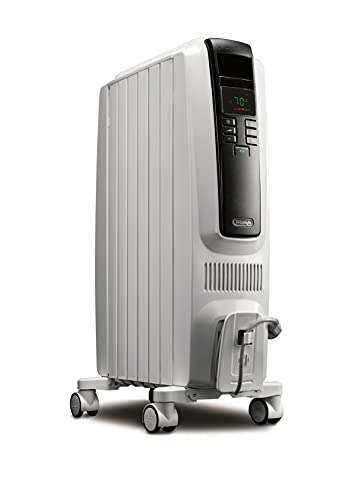
The De’Longhi Dragon Digital Oil Filled Radiator is rated at 1,500 watts and has a digital control panel, 24-hour timer, ECO Plus feature, and wheels for relocation. A buyer seeking steady, fan-free warmth may prefer this style, though the heater still needs time to warm and uses electricity while its element operates. The controls can support scheduled, temperature-aware use, but they cannot guarantee a particular bill reduction.
The MEPTY mica heater lists low, high, and smart ECO settings, a digital thermostat, a timer, and caster wheels. Its product description claims coverage up to 400 square feet, a figure to treat cautiously because room insulation, ceiling height, and drafts strongly affect results. The panel’s advertised fan-free design may appeal where motor noise is unwelcome, while a fan-forced model may distribute warm air differently.
For buyers comparing supplemental styles, our fireplace heater safety and selection guide offers another perspective on adding heat to a room. It is a related option, not evidence that a fireplace heater will use less energy than a portable electric model. Compare operating controls, installation requirements, and the space each device is designed to serve.
Wattage and outlet limits matter to efficiency
On a standard 120-volt household circuit, a 1,500-watt heater draws about 12.5 amps when operating at full rated output. That is a substantial load on a 15-amp branch circuit, especially if other appliances share it, and it can contribute to a tripped breaker. A lower-wattage model may ease demand, but it also supplies less heat, so the right comparison is useful warmth for the actual room rather than wattage alone.
Check what else is connected to the same circuit and follow the heater’s manual and household electrical guidance. Do not use an extension cord or power strip to supply a space heater; plug it directly into an appropriate wall outlet. Stop using a heater if the plug or outlet becomes unusually hot, shows damage, or smells scorched, and have a qualified person assess an electrical concern rather than increasing the circuit load.
Some products in this selection operate at 1,500 watts, while the LifePlus radiator is rated at 700 watts and the plug-in wall heater at 450 watts. The lower-rated products can draw less power at their listed output, but their smaller heating capacity may not satisfy a larger or leakier room. Compare the rated wattage with the amount of supplemental warmth you need and with other loads on the circuit.
Thermostats and timers help limit unnecessary runtime
A thermostat is most useful when its temperature sensor can respond to the room rather than an unusually warm pocket beside the heating element. Digital controls and ECO modes are listed on products including the PELONIS tower, MEPTY mica heater, DREO convection panel, and De’Longhi radiator. These features may cycle or adjust operation to maintain a selected temperature, but actual behavior varies by model and should be checked in its instructions.
The DREO convection panel lists 1,500 watts, a 1-to-24-hour timer, a remote, and an ECO mode that adjusts output based on its temperature sensing. A timer can help align operation with the hours a room is occupied, while a thermostat can reduce needless heating after the desired temperature is reached. Neither feature makes unattended operation risk-free, and a timer should not replace normal clearance, outlet, and supervision precautions.
Temperature settings also depend on clothing, activity, room drafts, and individual comfort. Avoid turning a supplemental heater into a substitute for adequate whole-home freeze protection or necessary heating in unoccupied areas. If you lower a central thermostat while using a zone heater, consider vulnerable occupants, pets, plumbing, and the manufacturer’s operating instructions before deciding which areas can safely remain cooler.
Quiet operation and room use can decide the tradeoff
Noise matters in bedrooms, home offices, and spaces used for calls or focused work. Oil-filled radiators and the MEPTY mica model are described as operating without a fan, while the PELONIS tower uses a fan and lists a working noise level of 50 dB. The DR-968 description lists a blower noise level of 39 dB, but sound perception depends on placement and the room, and those figures are not directly interchangeable without matching measurement conditions.
Air movement can also affect how warmth feels. A fan helps distribute heated air, while a fan-free radiator or panel avoids fan noise and may suit someone who prefers less moving air. Electric resistance heaters do not remove moisture from a room as a dehumidifier would, although warming air can change how dry it feels; people sensitive to dry indoor conditions should consider room humidity and avoid assuming that any one heater eliminates dryness.
Bathroom use requires particular caution because water and electricity create a shock hazard. The DREO panel lists an IP24 rating, but that alone does not establish that any location near a tub or shower is safe; follow the product’s manual and local requirements. Do not use a heater near standing water unless it is specifically approved for that setting, and do not assume that an ordinary portable heater has an ALCI safety plug.
Safety features support, but do not replace, careful use
Several supplied product descriptions list overheat protection, and the PELONIS tower and DR-968 also list tip-over protection. Those are useful safeguards, but no automatic shutoff removes the need to place a heater on a stable surface and keep it clear of combustibles. Maintain at least 3 feet of clearance from curtains, bedding, furniture, and other combustible materials, or follow a greater distance if the manufacturer specifies one.
Check the product label and documentation for recognized safety certification rather than assuming a listing from general marketing language. The supplied details do not identify UL, ETL, or CSA certification for every model, so confirm it on the specific unit before purchase. Keep children and pets away from hot grilles and avoid placing heaters where they can be knocked over or where airflow is blocked.
Do not drape clothing over a heater, use one to dry bedding, or leave combustible items against its housing. Keep the cord visible and in good condition, and stop using a unit with a damaged cord, loose plug, or unusual electrical odor. If a heater repeatedly shuts off, do not bypass its tip-over or overheat mechanism; review the manual and discontinue use if the issue persists.
Match the purchase to the job, then judge the result
For a desk or a small, occupied area, a compact low-wattage model may offer convenient localized heat, provided its intended use and outlet connection suit the setting. For broader room warmth, a tower, panel, radiator, or infrared unit may be a better match depending on whether air circulation, quiet operation, or direct warmth matters most. A lower wattage is not automatically more efficient if the heater must run continuously and still cannot maintain comfort.
Once the heater is set up according to its instructions, assess comfort where people actually sit or work rather than directly beside the unit. Notice whether the thermostat cycles, whether warmth reaches the occupied area, and whether the circuit remains stable with other household loads. If the room stays cold, address drafts or reconsider capacity instead of assuming an ECO label can overcome substantial heat loss.
For many households, the strongest choice is a heater with an appropriate output for one occupied room, controls that suit its schedule, and safety features verified for that specific product. The supplied options range from a 450-watt plug-in unit to 1,500-watt models, with distinct heat styles and control sets. Choose based on room conditions and electrical compatibility, then use the thermostat and timer thoughtfully rather than expecting a heater to deliver guaranteed energy savings.


Write Your Review
No reviews yet. Be the first to share your experience!