


Starting a ventless gas fireplace correctly involves verifying the gas supply, ensuring the oxygen depletion sensor (ODS) is functional, and following the manufacturer’s specific ignition sequence. The process differs slightly between units with a standing pilot light and those with electronic ignition, but both require a careful approach to prevent gas leaks and ensure safe operation. Before turning the knob, confirm that the room is ventilated enough to support the unit’s operation, as these systems draw oxygen from the indoor air.
Many homeowners find that the first time they use a new unit, the procedure feels less intuitive than a standard vented fireplace. Understanding the role of the oxygen depletion sensor is critical, as it acts as the primary safety mechanism that shuts off the gas if unsafe conditions are detected.
Whether you are dealing with a dual-fuel system or a natural gas-only insert, the goal is consistent: to establish a stable flame without triggering safety interlocks. Proper startup not only protects your home but also ensures the unit operates within its designed efficiency range, which is often listed near 99.9% for these types of appliances.

Pros
- Dual-fuel flexibility allows connection to either home natural gas lines or liquid propane tanks.
- Thermostatic temperature cycling eliminates the need for frequent manual flame adjustments.
- Built-in Oxygen Depletion Sensor pilot provides essential monitoring for indoor unvented gas combustion.
- Complete package includes the mantel surround, firebox, mesh screen, iron grate, and four ceramic logs.
Cons
- Vent-free combustion units are subject to local code restrictions and may not be approved in all jurisdictions or compact rooms.
- Product dimensions in listing details show conflicting measurements that require confirmation prior to delivery.
The ProCom FS100T-3AS is a freestanding ventless gas fireplace system designed for homeowners looking to introduce supplemental zone heating and hearth aesthetics without building a masonry chimney or cutting an exterior flue. Finished in an Apple Spice stain with subtle distressing and burnished edges, this complete fireplace package pairs a furniture-grade mantel with an integrated gas firebox. It caters to property owners who want the visual ambiance of glowing ceramic logs alongside reliable gas heat in living areas where venting infrastructure is absent or impractical to install.
At the core of the system is a 10,000 BTU vent-free burner engineered to operate at a listed 99.9 percent efficiency. The manufacturer rates this heat output for spaces up to 500 square feet, though actual temperature changes depend heavily on home insulation levels, ceiling height, and prevailing layout. A built-in thermostatic control monitors ambient temperature and cycles the burner on and off to maintain a chosen comfort level. Because it incorporates dual-fuel engineering, the burner accommodates connections to either natural gas or liquid propane supplies without demanding separate conversion kits.
Aesthetic detailing includes four hand-painted ceramic fiber logs arranged over a sturdy iron grate, surrounded by an integrated mesh safety screen that softens the firebox interior. Ignition is handled by a push-button piezo system assisted by a single AAA battery, eliminating the need to connect the fireplace to a standard 120-volt electrical wall outlet. For indoor operating safety, the assembly integrates a pilot Oxygen Depletion Sensor (ODS). This mechanism is designed to automatically shut off gas flow to the burner if unburned carbon monoxide or depleted oxygen levels are detected in the room.
Proper planning is critical before positioning this unit in a home. The manufacturer specifies a mandatory vertical clearance of at least 42 inches between the top of the mantel and the ceiling to prevent heat buildup. Because ventless gas appliances release combustion moisture and byproducts directly into indoor air, buyers must confirm that local municipal building codes permit vent-free gas hearth appliances, as some jurisdictions and room classifications prohibit them. Connecting the appliance to an existing gas supply line should always be handled by a licensed professional to ensure leak-free operation and compliant line pressures.
Prospective buyers should also take note of listed measurement variations, as the product specifications cite 40 by 48 by 24 inches while feature bullets state 12.5 inches high by 36.5 inches wide by 28 inches deep. Confirming physical floor clearance and ceiling distance ahead of delivery will avoid spatial conflicts. For spaces where ventless heating is permitted and a traditional finished appearance is desired, the ProCom FS100T-3AS provides an adaptable dual-fuel hearth option that requires no external ductwork.
The ProCom FS100T-3AS features patented dual-fuel technology that allows homeowners to fuel the unit with either natural gas or liquid propane. This dual-fuel capability eliminates the guesswork of matching fuel types or purchasing third-party conversion kits prior to setup.
The ignition assembly uses a battery-assisted push-button piezo system powered by one AAA battery, which comes included with the fireplace. Because the ignition and thermostat operate mechanically and with battery assistance, the unit does not require an active electrical wall outlet or dedicated electrical circuit.
As a vent-free system, this fireplace discharges heat directly into the living space without the use of an outdoor vent pipe, B-vent, or chimney flue. The manufacturer notes a 99.9 percent efficiency rating for heat delivery into the room.
Safety and placement guidelines require a strict vertical clearance of at least 42 inches from the top of the fireplace mantel to the ceiling. Ventless gas appliances are governed by municipal codes that vary by state and city, so buyers should review local regulations and room square footage requirements before installation.
The system ships as a comprehensive package that includes the ventless gas firebox, an Apple Spice furniture-grade mantel with distressed detailing, and an integrated protective mesh screen.
Inside the firebox, the setup includes an iron grate, four hand-painted ceramic fiber faux logs designed for gas hearth use, and one AAA battery to operate the push-button piezo ignition system.

Pros
- Direct replacement fit for existing Real Fyre APK-17 gas valve configurations
- Bundled with a dedicated heat shield to protect valve components from high firebox heat
- Supports dual-fuel compatibility for both natural gas and liquid propane setups
- Uses standard universal NPT 1/2 threading for broad compatibility across vented burner pans
Cons
- Propane operation requires a matching conversion orifice that is not pre-installed
- Provides purely manual operation with no support for remote controls or wall thermostats
The Americangaslogs Gas Fireplace Valve Manual Safety Pilot Control System is built specifically for vented gas log sets that rely on manual flame management. Designed to replace worn, malfunctioning, or legacy gas valves, this assembly provides a direct mechanical solution for homeowners seeking to restore reliable operation to their fireplace burner. It serves as a direct-compatible replacement for the Real Fyre APK-17 valve kit, making it especially convenient for owners of compatible vented burner pans looking to swap out hardware without re-engineering their entire gas layout.
Operation centers on a traditional manual safety pilot configuration. The kit incorporates a dedicated pilot assembly engineered to maintain a continuous, stable pilot flame, which reduces the chance of unexpected flame-outs from low temperatures or interior room drafts. In terms of fuel delivery, the valve supports both natural gas and liquid propane supplies. However, users operating on propane must ensure that the proper orifice is installed to match fuel pressure and burner requirements safely.
The build incorporates standard universal NPT 1/2 threading, facilitating connection to compatible fireplace supply lines and burner manifolds. To safeguard internal valve seals and mechanics against high ambient hearth temperatures, Americangaslogs includes a protective heat shield. This silvery metal shield is designed to sit between the active burner pan and the valve body, deflecting radiant heat to help prolong the operating life of the control assembly.
Installation requires careful attention to existing fireplace clearances, gas supply pressure, and firebox dimensions. Because this system is intended strictly for vented gas fireplaces, the fireplace damper must remain open during operation to allow combustion byproducts to exhaust properly up the flue. Working with gas lines involves strict safety considerations, so verifying fitting seals with leak-detection solution and consulting local plumbing codes or a licensed gas technician is strongly advised before lighting the pilot.
A clear limitation of this control system is its lack of automation. There is no provision for handheld remote controls, wall switches, or thermostatic temperature adjustments. It requires the user to access the firebox and manually turn the control knob to light the pilot and adjust the burner. For owners seeking smart controls or electronic ignition, this unit will not fit the bill.
Overall, this Americangaslogs manual safety pilot kit stands as a dependable, budget-conscious choice for existing vented gas fireplaces. If you need a straightforward mechanical replacement for a Real Fyre APK-17 system or a similar manual pilot setup, this kit delivers the essential components, heat shielding, and standard fitting connections needed to restore your hearth.
This valve system is engineered as a direct replacement for the Real Fyre APK-17 manual safety pilot kit. It is specifically intended for use with vented gas log sets and is not suitable for unvented or vent-free firebox setups.
The assembly features universal NPT 1/2 threaded connections, aligning with standard gas piping found on many residential hearth burner pans. It supports both natural gas and propane installations, provided the appropriate burner orifice is utilized for the chosen gas type.
Proper placement of the included heat shield is necessary during installation to insulate the valve body from the intense heat produced by the burner pan. The kit connects using standard NPT 1/2 fittings, which must be properly sealed using gas-rated thread sealant or tape.
Always verify local building and gas codes before performing gas fireplace repairs. Ensuring the fireplace chimney damper is open and scheduling a qualified gas professional for setup and leak testing can help prevent dangerous fuel leaks and carbon monoxide concerns.

Pros
- Includes all core accessories such as burner, ceramic logs, glowing embers, volcanic rock, and remote receiver in a single set.
- Built-in Oxygen Depletion Sensor provides an integrated safety shutoff mechanism for ventless operation.
- Compact footprint accommodates firebox openings as small as 20 inches wide by 13 inches deep.
- Remote control offers convenient on and off flame operation from across the room.
Cons
- Listing title and feature bullets contain conflicting fuel statements between liquid propane and natural gas, requiring confirmation of the burner label prior to piping.
- Ventless gas appliances are subject to local code restrictions and cannot be installed in certain jurisdictions or room types.
The Americangaslogs 18-Inch Ventless Gas Log Set is designed for existing masonry or factory-built fireboxes approved for unvented gas appliances. This package is aimed at homeowners seeking supplemental heating and the ambiance of a glowing fire without the maintenance of cordwood or the heat loss associated with open chimney dampers. Because ventless gas logs operate inside an enclosed hearth area without requiring an active flue, they present a viable alternative for spaces where chimney venting is either nonfunctional or absent.
According to manufacturer specifications, this burner system delivers up to 36,000 BTU of heat output with a listed 99.9% heating efficiency. The listing notes supplemental coverage of up to 1,000 square feet, though actual heating performance will vary based on ceiling height, home insulation, and room layout. The set includes a battery-assisted ignition system for quick startup and features a wireless remote control for turning the flame on and off, along with manual adjustment options for modulating the flame presentation.
The complete kit supplies realistic ceramic logs with birch detailing, a gas burner assembly, volcanic rock, and glowing embers to distribute along the base for added visual depth. Safety is managed through an integrated Oxygen Depletion Sensor (ODS), an essential mechanism for ventless indoor gas hearths that automatically cuts the fuel supply if oxygen levels drop below safe thresholds. Hardware and a remote receiver are also packaged together, simplifying the process of sourcing compatible accessories for a standard installation.
Proper hearth sizing is critical before purchasing this assembly. The manufacturer specifies that the burner and log arrangement requires minimum firebox dimensions of 14 inches in height, 20 inches in front width, and 13 inches in depth. Buyers must measure the internal floor of their fireplace rather than the exterior surround, ensuring sufficient clearance from sidewalls and combustible mantels. Because gas line plumbing involves building codes and safety regulations, a qualified gas technician should manage the pipe connection, leak testing, and pressure verification.
A significant consideration for prospective buyers is a discrepancy in the product listing itself. While the product title mentions liquid propane, the detailed feature bullets and model description specify natural gas use only. Propane and natural gas operate at different line pressures and require distinct burner orifice sizes. Before making any gas connections, owners must check the metal rating plate attached to the burner chassis to verify the exact fuel type for which the valve and orifices are calibrated, as operating with the incorrect fuel poses severe fire and soot hazards.
For homeowners with compatible fireboxes, appropriate local building approvals, and verified gas supply lines, this log set offers an all-inclusive heating upgrade with remote convenience. However, buyers should confirm municipal ventless gas regulations, verify that the physical hearth dimensions exceed the 20-inch width requirement, and verify the appliance data plate upon delivery before hiring an installer.
This 18-inch log set requires a firebox with minimum interior clearances of 14 inches in height, 20 inches in front width, and 13 inches in depth. Hearth owners should measure the narrowest point of the firebox, particularly if the rear wall tapers inward, to guarantee proper fit without crowding the burner assembly.
Maintaining adequate space around the burner is critical for combustion air flow and to prevent ceramic logs from impinging directly on sidewalls or screens. Always cross-reference the appliance manual for clearance to mantels, glass doors, and combustible furnishings prior to finalizing placement.
Ventless gas hearth appliances rely on room air for combustion, making safety features paramount. This unit incorporates an Oxygen Depletion Sensor (ODS) paired with battery-assisted ignition, designed to automatically shut off gas flow if room oxygen levels decrease or if the pilot flame is extinguished.
Due to conflicting details in the product title and description regarding liquid propane versus natural gas, users must confirm the factory-set fuel type stamped on the burner rating plate prior to hookup. Never attempt to convert or connect a gas appliance to an unlisted fuel source without manufacturer-approved components and certified professional installation.
Local building codes and regional regulations vary regarding the installation of unvented gas appliances. Certain states, municipalities, and specific room types such as bedrooms or bathrooms may prohibit or restrict ventless gas logs, so checking local ordinances before purchase is essential.
Pros
- Operates without external chimney venting for straightforward installation in compatible fireboxes
- Multi-function remote enables customizable thermostat settings and safety lockout features
- Built-in Oxygen Depletion Sensor provides automatic gas shutoff for indoor safety
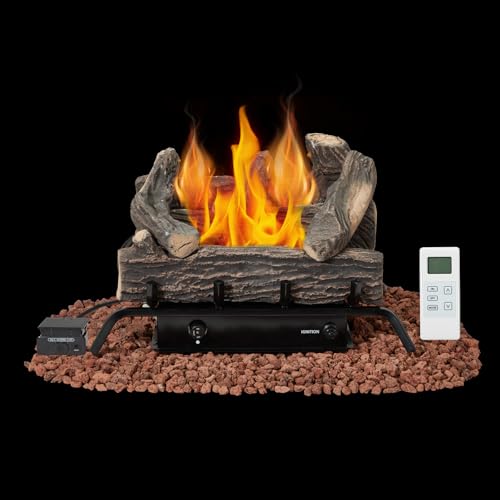
- Includes complete hearth media with six ceramic logs and decorative lava rock
Cons
- Strictly limited to natural gas hookups and cannot be used or converted to propane
- Requires a relatively tall and deep firebox opening of at least 24 inches high and 14 inches deep
- Fireplace glass doors must remain completely open at all times during burner use
The EROMMY 20-Inch Ventless Fireplace Log Set is designed for homeowners looking to convert or refresh an existing indoor hearth with a clean-burning, vent-free natural gas burner. Engineered specifically for dedicated natural gas supply lines, this log set serves as a supplemental heat source and decorative centerpiece. Because it does not require an external chimney or flue, it is particularly suited for existing masonry fireboxes or approved ventless enclosures that meet the manufacturer's clearance and ventilation criteria.
At the core of the system is a 30,000 BTU burner assembly that the manufacturer rates at 99.9 percent heating efficiency, with the listed capacity to provide supplemental warmth for spaces up to 1,000 square feet. Actual room heating performance will depend on ceiling height, home insulation levels, and room airflow. Operation is managed via a wireless remote control that allows users to toggle between manual flame adjustment and automated thermostat modes. The handheld remote also integrates practical functionality such as a child lock feature, Fahrenheit to Celsius display switching, and a built-in safety auto-shutoff if signal communication ceases.
The decorative media comprises six hand-painted logs made from high-temperature ceramic fiber, modeled after South American silk floss wood to simulate natural timber within the firebox. In addition to the logs, the package includes decorative lava rock, the burner platform, a pulse ignition system, and a remote receiver box. Safety is reinforced by an integrated Oxygen Depletion Sensor, commonly known as an ODS, which continuously monitors ambient room oxygen and automatically shuts off the gas supply if oxygen levels decline below acceptable thresholds.
Ensuring a proper fit requires measuring your firebox prior to purchase. The manufacturer specifies minimum opening dimensions of 28 inches wide at the front, 20 inches wide at the rear, 14 inches deep, and 24 inches high. When operating in an existing fireplace equipped with glass doors, those doors must remain fully opened during use to ensure proper combustion airflow and prevent hazardous heat buildup around the burner components. Buyers should also verify municipal regulations, as some cities and states place specific restrictions or total bans on the installation of vent-free gas heating appliances.
This log set provides a viable supplemental heating solution for homes with an existing natural gas connection and adequate firebox depth. However, it cannot be run on liquid propane and should never be modified with aftermarket conversion equipment. For optimal safety and code compliance, hiring a licensed gas professional for piping connections and pressure verification is strongly recommended to ensure dependable performance throughout the colder months.
Before ordering, verifying your fireplace dimensions is essential to ensure safe clearances and proper burner function. This 20-inch log set requires a minimum firebox size of 28 inches wide at the front opening, tapering to at least 20 inches wide at the rear wall.
In addition to width, your firebox cavity must have a minimum depth of 14 inches and a vertical clearance of at least 24 inches from the hearth floor to the opening header. Inadequate clearances can lead to poor combustion, soot accumulation, or excessive heat transfer to the surrounding structure.
This log set is engineered exclusively for natural gas connections. It is not compatible with liquid propane tanks or lines, and attempting to convert the fuel type compromises the integrated burner mechanics and safety sensors.
The unit features an integrated Oxygen Depletion Sensor (ODS) and pulse ignition to shut off gas flow automatically if room oxygen drops. To maintain safe operating conditions, any fireplace glass doors must remain fully open whenever the burner is active, allowing adequate air circulation across the logs.

Pros
- Dual-fuel flexibility allows switching between natural gas and propane based on fuel availability.
- Ventless design avoids the expense and structural modifications of chimney installation.
- Zero-clearance firebox allows straightforward integration into custom mantels or recessed wall cavities.
- Comes complete with ceramic log set, iron grate, mesh screen doors, and remote receiver.
Cons
- Ventless gas appliances are subject to regional building code restrictions and may be prohibited in specific jurisdictions or bedrooms.
- Flame height modulation must be adjusted manually on the firebox valve rather than through the remote control.
The Duluth Forge FDF400RT-ZC is a dual-fuel ventless gas fireplace insert engineered to serve as a supplemental heat source or visual centerpiece in residential living areas. Designed for homeowners seeking the ambiance and heat of a traditional hearth without venting through an exterior chimney or flue, this insert fits well into custom recessed wall framing, prefabricated cabinetry, or existing masonry openings with access to a gas supply line. Because vent-free appliances release combustion byproducts into the living area, buyers must always verify local municipal codes and room-size guidelines before selecting a ventless model.
At the core of the insert is a burner rated by the manufacturer at 32,000 BTU, with a listed heating capability of up to 1,500 square feet. The unit features patented dual-fuel technology, allowing it to burn either natural gas or liquid propane depending on household utility connections. Starting the appliance relies on a push-button piezo ignition that lights a standing pilot. From there, users can turn the main flame on or off using the included handheld remote control with an LCD display, while flame height adjustments are handled manually at the control valve.
Visually, the insert replicates the look of an established hearth through six hand-painted ceramic fiber logs arranged over an iron grate, complemented by an interior sprayed brick liner. The black exterior measures approximately 29.1 inches wide, 29.5 inches deep, and 15.6 inches high, weighing roughly 70 pounds. Protective mesh double doors enclose the firebox face, creating a classic screened finish while maintaining an unobstructed view of the fire. The package also includes the remote receiver and a AAA battery to get the remote operational right away.
The zero-clearance construction permits the firebox to sit directly against framing studs or non-combustible materials when installed according to the manual. However, specific spatial clearances must be maintained, including a minimum of 42 inches between the top of the fireplace and the ceiling. Because proper gas line hookups, pressure regulation, and leak checks are vital for safe gas operation, hiring a qualified, licensed gas technician is strongly advised. Routine maintenance involves dusting the ceramic logs, clearing the burner ports of debris, and replacing remote batteries as needed.
Overall, the Duluth Forge FDF400RT-ZC presents an adaptable option for property owners wanting powerful supplemental heat and fuel flexibility in an all-in-one package. Its lack of required chimney venting can significantly streamline renovation budgets compared to vented alternatives. Prospective buyers should confirm their local building codes regarding ventless combustion appliances, ensure their room volume matches manufacturer minimums, and review gas line access before finalizing their purchase.
The zero-clearance firebox design allows this insert to be recessed into standard framing or built directly into a wall cavity, provided a qualified gas supply is available. The manufacturer specifies a mandatory clearance of at least 42 inches from the top of the appliance to the ceiling to ensure adequate thermal dispersion and prevent heat damage to surrounding finishes.
Because ventless appliances operate without an exhaust duct or chimney, they utilize room air for combustion. Prospective installers should verify that the room provides adequate cubic volume and ventilation as dictated by manufacturer instructions and local regulations. Gas line connections, fuel type configuration, and initial pressure testing should always be performed by a licensed professional.
Featuring dual-fuel capability, this insert can be connected to either an existing natural gas supply or a dedicated liquid propane tank line. The internal system operates at up to 32,000 BTU, providing high-efficiency zone heating directly into the living space without the draft losses associated with open chimneys.
Ignition is initiated via a push-button piezo system that activates a standing pilot. Once the pilot is established, the included remote control can cycle the main burner on and off. Users can fine-tune flame intensity and heat output using the manual control knob located behind the unit access panel.
The Duluth Forge FDF400RT-ZC arrives with the zero-clearance black firebox, integrated burner assembly, and an internal sprayed brick liner. Decorative components include six hand-painted ceramic fiber faux logs, an iron grate, and protective mesh double doors.
For operational control, the package contains a handheld remote control with an LCD screen, a corresponding remote receiver, and a single AAA battery to power the handheld transmitter.
Pros
- Flexible dual-fuel capability allows operation with either natural gas or liquid propane lines.
- Thermostatic cycling helps regulate room comfort automatically without continuous manual adjustments.
- Zero-clearance design provides flexible installation options for recessed framing or custom mantel cabinets.
- Ventless configuration eliminates the need for an external chimney, flue, or venting ductwork.
Cons
- Ventless gas appliances are subject to regional and local code restrictions that must be verified prior to installation.
- Requires a minimum 42-inch clearance from the top of the unit to the ceiling, which may restrict placement in rooms with low ceiling heights.
The Duluth Forge FDF400T-ZC is a zero-clearance, ventless gas fireplace insert engineered for homeowners seeking powerful supplemental heat without the structural demands of an exterior chimney or flue. Designed for indoor installation in rooms with accessible gas piping, this unit functions effectively as a replacement insert inside a suitable fireplace opening or as the core component of a custom-built mantel enclosure. Its dual-fuel configuration makes it an adaptable option for property owners utilizing either utility natural gas or bottled liquid propane.
At the center of its operation is a dual-fuel burner capable of producing up to 32,000 BTUs, operating with a manufacturer-stated 99.9% vent-free efficiency rating. Duluth Forge rates this heat output for living spaces up to 1,500 square feet under typical residential conditions. The built-in thermostat control continuously monitors ambient room temperature, cycling the gas burner on and off to maintain a consistent comfort level rather than requiring ongoing manual flame adjustments. Ignition is managed by a battery-operated push-button piezo system that uses a single included AAA battery, allowing reliable startup without requiring an electrical outlet or household wiring.
Visually, the insert features a traditional fireplace appearance centered on six hand-painted ceramic fiber faux logs positioned on a heavy iron grate. The interior of the firebox features a sprayed brick liner for added depth, while the exterior presents a clean black finish accented by operable mesh double doors. Listed dimensions measure 29.1 inches wide, 29.5 inches deep, and 15.6 inches high, with a total weight of approximately 70 pounds, providing a solid footprint intended to fill standard hearth openings or custom framing cavities.
Installation requires careful review of framing clearances, gas supply requirements, and local code restrictions. Because this is a zero-clearance firebox, it is designed for recessed installation against standard wall framing or into an enclosure accessible to a gas supply. However, the manufacturer dictates that clearance between the top of the firebox and the ceiling must not be less than 42 inches. Because vent-free gas appliances release combustion byproducts directly into the room, prospective buyers should always confirm that local building codes and municipal regulations permit unvented gas appliances in their specific area prior to purchase.
The Duluth Forge FDF400T-ZC serves as an efficient heating solution for homeowners looking for substantial zone heat and versatile fuel compatibility. The absence of exterior venting simplifies placement in homes lacking an existing flue, provided that room dimensions and required ceiling clearances are strictly respected. For households with accessible gas lines seeking a dependable, thermostatically controlled hearth appliance, this model combines practical heating performance with classic fireplace aesthetics.
The zero-clearance firebox design of the Duluth Forge FDF400T-ZC enables flexible installation, whether recessed into standard interior wall framing or housed inside a compatible fireplace mantel surround. Because it does not require an external chimney, chimney liner, or exterior ducting, installation focuses primarily on proper gas line connections and structural clearance compliance.
A critical manufacturer specification is the required clearance to combustible ceilings, which must be a minimum of 42 inches measured from the top of the fireplace insert. Adequate room volume is also necessary to support proper combustion for unvented appliances. Homeowners should consult the manufacturer manual and work with a licensed gas technician to ensure correct piping, pressure regulation, and adherence to municipal codes regarding vent-free indoor heating appliances.
Featuring patented dual-fuel technology, the FDF400T-ZC is engineered to operate on either natural gas or liquid propane without requiring separate conversion kits. This versatility allows homeowners to select the most economical or available fuel source for their household setup.
The burner produces up to 32,000 BTUs of supplemental heat with a 99.9% efficiency rating, as no thermal energy escapes through an exhaust vent. Duluth Forge rates this appliance to heat areas up to 1,500 square feet. An integrated thermostat automates the heating cycle to maintain target room temperatures, while the piezo ignition provides straightforward startup without relying on household electrical power.
Understanding the Ventless Ignition Process
The startup sequence for a ventless unit is governed by its safety architecture, primarily the oxygen depletion sensor and the ignition method. Unlike vented fireplaces that exhaust combustion byproducts outside, ventless models release water vapor and carbon dioxide into the room.
This means the air quality inside the space directly impacts the unit’s ability to sustain a flame. If the oxygen level drops too low, the ODS will close the gas valve, preventing the pilot or main burner from lighting. Understanding this dynamic helps explain why a unit might refuse to start even if the gas supply appears to be on.
| Ignition Type | Key Component | Startup Mechanism |
|---|---|---|
| Standing Pilot | Manual Ignition Knob | User manually lights a small, continuous flame |
| Electronic/Piezo | Spark Generator | Button press creates a spark to ignite the gas |
| Remote Control | Receiver Box | Wireless signal triggers the ignition sequence |
Most modern ventless inserts, such as those from major manufacturers, use a battery-assisted piezo ignition or a standing pilot system. The standing pilot requires the user to hold the knob in the “Pilot” position while pressing a spark button or using a lighter. This keeps the gas flowing to the pilot tube until the flame ignites.
Electronic ignition systems, on the other hand, use a small battery pack to generate a spark. The user typically turns the control knob to “On” and presses a button, which creates a series of sparks. If the spark ignites the gas, the main burner lights. If not, the system may automatically retry the sequence several times before shutting off to prevent gas buildup.
It is crucial to distinguish between the pilot light and the main burner. The pilot is a small, steady flame that serves as the ignition source for the larger fire. In ventless systems, the pilot must remain lit to keep the ODS open. If the pilot goes out due to a draft or a misaligned flame, the main burner cannot be lit, and the gas supply is cut off.
This safety feature is designed to prevent unburned gas from accumulating in the room, which could be a significant hazard. Therefore, the first step in any troubleshooting or startup process is always to verify the status of the pilot flame.
Before attempting to light the unit, check the gas supply valve. This is usually located on the gas line leading to the fireplace. The valve should be parallel to the pipe to be in the “On” position. If the valve is perpendicular to the pipe, it is closed, and no gas will reach the unit.
Additionally, check the battery pack if your unit uses electronic ignition. A weak battery can result in a weak spark that fails to ignite the gas, leading to a “no light” situation. Replacing the batteries is a simple maintenance task that can resolve many startup issues without the need for professional service.
Pre-Startup Safety Checks and Preparation
Safety is the paramount concern when operating a ventless gas appliance. The room must be large enough to support the unit’s heat output and oxygen consumption. Manufacturers specify the maximum square footage a unit can heat, and operating it in a smaller space can lead to excessive heat buildup and oxygen depletion. For example, a unit rated for 1,000 square feet should not be used in a 500-square-foot bedroom without adequate ventilation. Always refer to the owner’s manual for the specific room size recommendations for your model.
Inspect the area around the fireplace for any obstructions that could block the intake or exhaust vents. Even though the unit is ventless, it still draws air from the room for combustion. Blocking this airflow can cause the ODS to shut down the unit.
Ensure that the mesh screen or glass doors are clean and free of debris. Dust and soot can accumulate on the ODS sensor, causing it to malfunction. A dirty sensor might falsely detect low oxygen levels and prevent the unit from starting. Cleaning the sensor with a soft cloth can often restore proper function.
Check the gas logs for any signs of damage or displacement. Ceramic logs are designed to be placed in a specific configuration to ensure proper flame distribution. If a log is loose or broken, it can alter the flame path and potentially damage the burner or the ODS.
The logs should sit securely on the grate, and there should be no gaps that allow flames to escape the intended area. Additionally, ensure that the burner ports are clear of debris. Clogged ports can prevent gas from reaching the ignition point, leading to startup failures.
- Verify the gas supply valve is in the “On” position.
- Check the battery pack level for electronic ignition units.
- Ensure the room is ventilated and meets the minimum size requirement.
- Inspect the ODS sensor for dust or debris.
- Confirm the gas logs are seated correctly on the grate.
- Look for any signs of gas leaks using a soapy water test.
Performing a gas leak check is a critical safety step before the first use of a new unit or after any maintenance. Mix a small amount of dish soap with water and apply it to the gas connections. If bubbles form, there is a leak, and the unit should not be operated.
Turn off the gas supply and call a qualified technician to repair the leak. Never use an open flame to check for leaks, as this can cause an explosion. The soapy water test is a safe and effective way to identify potential issues before they become dangerous.
Step-by-Step Ignition for Standing Pilot Systems
For units with a standing pilot light, the ignition process is manual and requires the user to hold the control knob in the “Pilot” position. Begin by turning the gas control knob to the “Pilot” position. This directs gas flow to the pilot tube. Next, press and hold the spark button, or use a long-reach lighter if the unit does not have a built-in igniter.
You should hear a clicking sound and see a spark at the pilot tube. Hold the knob in the “Pilot” position for at least 30 to 60 seconds after the pilot flame ignites. This allows the thermocouple to heat up and signal the gas valve to stay open.
If the pilot flame does not light within 30 seconds, turn the knob to the “Off” position and wait for five minutes. This allows any unburned gas to dissipate. Then, repeat the ignition process. If the pilot light goes out after you release the knob, the thermocouple may be faulty or misaligned.
This is a common issue in older units and can be resolved by adjusting the thermocouple position or replacing the part. If you are not comfortable performing this adjustment, contact a professional technician. Do not attempt to bypass the safety system, as this can be extremely dangerous.
Once the pilot flame is stable, turn the control knob to the “On” position. The main burner should ignite automatically. Adjust the flame height using the control knob to your desired level. Start with a low flame and gradually increase it to avoid overwhelming the ODS.
Monitor the flame for any irregularities, such as yellow tips or a flickering flame. A healthy flame should be blue and steady. If the flame appears yellow or sooty, the burner may need cleaning, or the gas pressure may be incorrect. Consult the owner’s manual for specific troubleshooting steps for your model.
Electronic and Remote Ignition Procedures
Units with electronic ignition use a battery-powered spark generator to light the gas. To start the fireplace, ensure the gas supply valve is open and the batteries are fresh. Turn the main power switch or control knob to the “On” position.
Then, press the ignition button on the control panel or the remote control. You should hear a series of clicks as the spark generator attempts to ignite the gas. The unit may cycle the spark several times before the flame catches. This is normal and part of the safety protocol to ensure reliable ignition.
If the unit is equipped with a remote control, the process is even more convenient. Simply press the power button on the remote to turn the unit on. The receiver box in the fireplace receives the signal and triggers the ignition sequence. Some remotes allow you to adjust the flame height and set a timer.
These features can help manage the unit’s operation and prevent overheating. However, it is important to ensure that the receiver box is properly connected and functioning. If the remote does not work, check the batteries in both the remote and the receiver box. A weak battery can cause signal interference or failure to ignite.
Electronic ignition systems often include an automatic retry feature. If the first attempt to ignite the gas fails, the system will wait a few seconds and then try again. This process may repeat several times before the unit shuts off completely. This is a safety feature designed to prevent gas buildup.
If the unit fails to ignite after multiple attempts, turn it off and check for issues such as a clogged burner or a faulty ODS. Do not continue to attempt ignition if the unit is not lighting, as this can lead to a dangerous accumulation of gas in the room.
- Ensure the gas supply valve is fully open.
- Verify that the battery pack is installed and charged.
- Press the ignition button and listen for the spark.
- Wait for the flame to catch and stabilize.
- Adjust the flame height to the desired level.
- Monitor the unit for any error codes or unusual sounds.
Some high-end models include a diagnostic mode that can help identify specific issues. If the unit is not starting, check the owner’s manual for instructions on how to enter diagnostic mode. This mode may display error codes that indicate the problem, such as a faulty ODS or a gas supply issue. Understanding these codes can help you determine whether the issue is simple to fix or requires professional attention. Always follow the manufacturer’s instructions for entering and exiting diagnostic mode to avoid causing further damage to the unit.
Troubleshooting Common Startup Failures
One of the most common reasons a ventless fireplace fails to start is a tripped oxygen depletion sensor. If the ODS detects low oxygen levels, it will shut off the gas supply. This can happen if the room is poorly ventilated or if the unit is operating in a space that is too small.
To resolve this, ensure that the room is well-ventilated and that the unit is not being used in a space smaller than the manufacturer’s recommendation. Opening a window slightly can sometimes help improve air circulation and allow the unit to start.
Another common issue is a clogged burner port. Over time, dust and debris can accumulate in the burner, blocking the gas flow. This can prevent the gas from reaching the ignition point, leading to startup failures. To clean the burner, turn off the gas supply and remove the logs.
Use a soft brush or compressed air to clear any debris from the burner ports. Be careful not to damage the burner or the ODS sensor. After cleaning, reassemble the unit and attempt to start it again. If the issue persists, the burner may need to be replaced.
A faulty thermocouple is another frequent cause of startup issues in standing pilot systems. The thermocouple is a safety device that detects the presence of the pilot flame. If it is not heated properly, it will not signal the gas valve to stay open, causing the pilot to go out when you release the knob.
To check the thermocouple, ensure it is positioned correctly in the pilot flame. If it is misaligned, adjust it so that the flame is directly above the tip. If the thermocouple is old or damaged, it may need to be replaced. This is a relatively simple repair that can be performed by a qualified technician.
If the unit smells like gas but does not light, turn off the gas supply immediately and ventilate the room. Do not attempt to light the unit or use any electrical switches, as this could cause a spark. Wait for the gas smell to dissipate before investigating further.
A gas smell can indicate a leak in the gas line or a faulty gas valve. Contact a professional to inspect the system and repair any leaks. Never ignore a gas smell, as it is a serious safety hazard that requires immediate attention.
Maintenance and Long-Term Care
Regular maintenance is essential to ensure the reliable operation of a ventless gas fireplace. Clean the unit at least once a year, or more frequently if it is used heavily. Remove the logs and clean them with a soft brush to remove any dust or debris.
Wipe down the glass doors and mesh screens with a glass cleaner to maintain visibility and heat transfer. Inspect the ODS sensor and the burner for any signs of damage or clogging. Keep the area around the fireplace free of flammable materials, such as curtains, furniture, or paper.
Check the gas supply line for any signs of corrosion or damage. If you notice any rust or leaks, have the line inspected by a professional. Replace the batteries in the ignition system annually to ensure reliable startup. Test the ODS sensor periodically to ensure it is functioning correctly. If the sensor fails to shut off the gas when it should, it needs to be replaced immediately. Regular maintenance not only extends the life of the unit but also ensures that it operates safely and efficiently.
Follow the manufacturer’s recommendations for maintenance and inspection. Some manufacturers require annual inspections by a qualified technician to maintain the warranty. These inspections can identify potential issues before they become major problems. Keep a record of all maintenance and repairs performed on the unit. This can be helpful if you need to troubleshoot issues in the future or if you sell your home. Proper maintenance is an investment in the safety and longevity of your ventless gas fireplace.
Starting a ventless gas fireplace safely requires attention to detail and adherence to the manufacturer’s instructions. By understanding the ignition process, performing pre-startup checks, and maintaining the unit regularly, you can enjoy the warmth and ambiance of your fireplace without compromising safety. If you encounter any issues that you cannot resolve, do not hesitate to contact a qualified professional. Your safety and the safety of your home are the top priorities when operating any gas appliance.




Write Your Review
No reviews yet. Be the first to share your experience!