


Gas fireplace logs typically do not require replacement unless they show visible cracking, severe soot buildup, or physical damage that disrupts the flame pattern. You should inspect your gas fireplace logs at the start of each heating season to ensure they remain safe and functional. If the ceramic surface is intact and the logs fit securely on the grate, they are likely still in good condition for continued use.
Many homeowners assume that gas logs are permanent fixtures, but the refractory ceramic material can degrade over time due to thermal stress. Signs like blackened surfaces, crumbling edges, or logs that no longer sit flat indicate it is time to consider a replacement. Understanding these indicators helps you maintain a safe and efficient fireplace system without unnecessary expense. For more on maintaining your heating setup, see our gas fireplace guide.


Pros
- Comprehensive kit contains the burner, grate, media, damper clamp, and connection hardware
- Durable ceramic logs are internally reinforced with steel rods to resist thermal degradation
- Match-light setup eliminates reliance on household electricity, remotes, or complex wiring
- High-definition bark detailing offers the visual appearance of seasoned Live Oak firewood
Cons
- Requires a fully operational chimney with an open flue damper during all burning periods
- Designed exclusively for natural gas and cannot be used with liquid propane without approved conversion equipment
- Match-light operation lacks push-button ignition, thermostatic controls, or handheld remote functionality
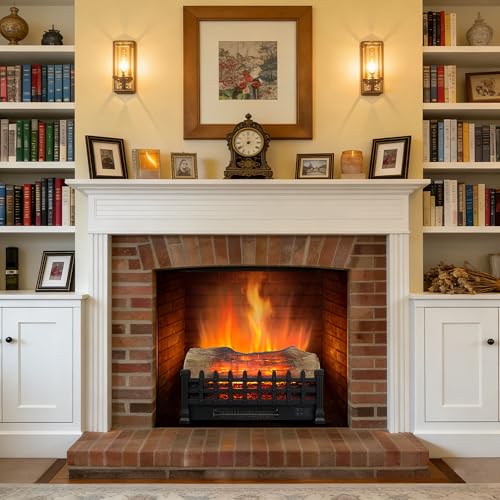
The RealFyre 18-Inch Live Oak Vented Gas Log Kit is built for homeowners seeking to convert an existing wood-burning fireplace into a cleaner, low-maintenance gas hearth. Operating strictly on natural gas, this kit supplies the burner, log media, and essential installation accessories to establish an authentic flame display inside a masonry or factory-built vented firebox. It appeals to existing fireplace owners who want to eliminate wood hauling, soot accumulation, and ash disposal while retaining the visual aesthetic of real burning logs.
Operation relies on a manual match-light ignition system. Because this configuration does not incorporate an automatic safety pilot, electronic sparker, or wall switch, lighting the burner requires opening the manual gas valve and applying an external flame source such as a long fireplace match or butane lighter. The absence of electrical components simplifies ongoing operation, as there are no batteries to replace or circuit boards to service. While the manufacturer does not specify numerical BTU heat output ratings for this listing, the refractory ceramic logs are engineered to absorb heat from the burner flames and project supplemental radiant warmth into the living space even after the flame is extinguished.
Build quality centers on high-definition refractory ceramic construction. Each Live Oak log is individually hand-painted to emulate the texture and coloration of seasoned oak timber. Internal steel reinforcement rods run through the core of the logs to safeguard structural integrity under continuous firebox temperatures. The package includes the matched burner pan, a robust log grate, silica sand to diffuse the gas flow, glowing ember material to simulate a burning coal bed, and a flue damper clamp designed to keep the chimney flue permanently cracked open for safety.
Proper fit and installation require careful planning before purchase. The kit carries dimensions of 13 by 18 by 15 inches and a combined weight of 49 pounds. Prospective buyers must measure the front width, rear width, depth, and height of their existing firebox to ensure adequate clearance around the burner pan and grate assembly. Because this is a vented appliance, combustion gases must exit freely up a functioning chimney. The included damper clamp must be installed to prevent the chimney damper from closing completely, adhering to local building codes. Natural gas line connections must be checked for leaks, and homeowners uncertain of fuel line sizing or municipal plumbing requirements should consult a qualified gas technician.
While the complete nature of this kit simplifies sourcing parts, buyers should recognize its operational boundaries. This unit does not feature flame height adjustment via remote control, nor does it include a standing pilot with an automatic shutoff valve. It is not suitable for vent-free fireboxes or homes lacking a dedicated natural gas line. For homeowners with an active chimney and existing gas infrastructure who prioritize reliable manual controls, robust materials, and an attractive fire presentation over digital automation, the RealFyre Live Oak set serves as a durable, well-appointed hearth upgrade.
This complete vented fireplace logs kit provides all core hardware needed for a standard natural gas installation. Inside the 49-pound package, buyers receive the 18-inch natural gas burner assembly along with a matching heavy-gauge fireplace grate engineered to cradle the ceramic logs securely.
Decorative media includes a complete set of hand-painted refractory ceramic Live Oak logs, a bag of silica sand designed to disperse the gas evenly across the burner bed, and rock wool glowing embers that create a bright coal bed appearance during operation. A flue damper clamp is provided to maintain the required chimney opening, alongside the essential gas connection hardware needed to link the burner inlet to an existing residential gas supply pipe.
The RealFyre Live Oak set is categorized strictly as a vented gas appliance. It must be installed only in a functional, certified wood-burning firebox equipped with an operational chimney or flue system that vents directly to the outdoors. Operating this log set with a closed damper or inside an unvented enclosure can cause hazardous combustion byproducts, including carbon monoxide, to accumulate inside the home.
To help prevent accidental flue closure, the set includes a mandatory damper clamp that mechanically locks the fireplace damper in an open position. Homeowners must verify that the chimney flue has been inspected and cleaned of creosote or debris prior to burner installation, and all gas hookups should be tested for tight seals in accordance with local municipal codes and the manufacturer installation guide.

Pros
- Dual fuel compatibility allows use with natural gas and liquid propane systems
- Generous bag size provides ample material to refresh most standard gas fireplace log sets
- Durable mineral fiber structure resists rapid breakdown under direct flame contact
- Improves the visual realism of gas flame beds without altering heating mechanics
Cons
- Requires careful placement to prevent blocking burner ports, air shutters, or pilot assemblies
- Listing details show a slight package discrepancy between the 7-ounce title specification and the 6-ounce description text
The Americangaslogs Glowing Embers package is a dedicated hearth accessory designed for homeowners looking to restore or enhance the visual presentation of an existing gas fireplace or gas log set. Over time, original ember beds can settle, break down, or be removed during maintenance. This 7-ounce bag provides fresh mineral media that simulates incandescent wood coals beneath artificial logs, making it suitable for refreshing tired hearth installations without the expense of replacing the full log arrangement.
Functioning entirely as a visual enhancement rather than a heat source, these fibers glow when touched by burner flames. When positioned where the gas flame gently brushes the material, the mineral composition reacts by producing a bright ember effect reminiscent of a traditional wood fire. The product does not alter the appliance heat output, burner configuration, or gas delivery, operating solely to enhance flame realism across the fireplace floor.
Supplied in an 8-inch by 12.5-inch bag weighing approximately 0.4375 pounds (7 ounces), the media consists of dark mineral fibers that can be separated and pulled into custom-sized tufts. The material is formulated to endure extreme combustion temperatures over multiple heating seasons without turning to ash. Its loose, fibrous consistency allows users to tailor application density across burner pans and surrounding decorative areas.
Proper placement is essential when handling any fireplace ember media. Rather than placing dense clumps directly over gas orifices, users should tear the fibers into light, wispy, coin-sized tufts and position them lightly around flame paths. Care must be taken not to cover burner ports or obstruct primary air openings, as restricting gas flow can cause soot accumulation, flame disruption, or delayed ignition. Owners should always review their gas appliance manufacturer manual for specific media limits, especially when dressing vent-free fireplaces.
For owners of natural gas or propane log sets seeking a realistic hearth upgrade, Americangaslogs Glowing Embers deliver a dependable and practical visual improvement. While there is a minor variance in listing text between 6 and 7 ounces, the bag contains ample fiber for standard residential firebox needs. When installed with care and aligned with appliance instructions, this media provides an effective, low-effort refresh for your living space hearth.
Americangaslogs Glowing Embers are compatible with both natural gas (NG) and liquid propane (LP) burner arrangements, including vented gas log sets, burner pans, and gas fireplace inserts designed to support mineral fiber media.
Always check your specific fireplace manufacturer guidelines prior to installation. Certain vent-free appliances carry strict limits regarding media density or explicit placement restrictions around burner ports to avoid incomplete combustion and soot formation.
Ensure the gas supply is turned completely off and the entire firebox has cooled before beginning setup. Remove any dust, loose debris, or spent ember material from the burner pan with a fireplace-safe brush or utility vacuum.
Tear the mineral fiber into thin, loose tufts approximately the size of a quarter. Lightly place these tufts along the front burner area and log base where flames will lick the edges, taking care to leave all burner ports, pilot mechanisms, and air mixers unobstructed.

The primary reason to replace gas logs is safety. Cracked or broken ceramic pieces can allow gas to escape or create uneven heat distribution, which poses a risk to your home. A visual inspection is the first step in determining if your current set is still viable. Look for any structural changes that have occurred since the last heating season.
| Inspection Point | Acceptable Condition | Replacement Indicator |
|---|---|---|
| Surface Integrity | Smooth, intact ceramic | Cracks, chips, or crumbling |
| Color and Soot | Original paint, light soot | Heavy black soot, paint peeling |
| Fit and Alignment | Sits flat on grate | Loose fit, gaps, or shifting |
| Flame Pattern | Even, stable flames | Yellowing, lifting, or erratic |
Check these specific areas on your logs before turning on the gas:
- Inspect the bottom of each log for cracks that may not be visible from above.
- Check the painted surface for peeling or flaking, which can release particles.
- Ensure the logs sit firmly on the grate without rocking or shifting.
- Look for heavy soot buildup that obscures the ceramic texture.
- Verify that the logs do not touch the glass door or fireplace walls.
- Examine the joints where logs meet for any separation or gaps.
Understanding Ceramic Degradation and Soot Buildup
Refractory ceramic is designed to withstand high temperatures, but it is not indestructible. Over years of use, the material can suffer from thermal shock, especially if the fireplace is cycled on and off frequently. This stress can lead to micro-cracks that expand over time. Soot accumulation is another common issue that affects the appearance and performance of the logs.
Soot forms when the gas does not burn completely, often due to improper log placement or a dirty burner. While light soot is normal, heavy blackening indicates a combustion issue that needs attention. You can often clean light soot with a soft brush, but if the soot is baked into the ceramic or the paint is damaged, replacement is the safer option. Ignoring these signs can lead to more serious problems with your fireplace system.
Fit, Alignment, and Flame Pattern Issues
The position of the logs directly affects how the gas burns. If the logs are not aligned correctly, the flame can lift off the burner or create hot spots that damage the ceramic. This misalignment can happen if the grate is bent or if the logs have shifted over time. A stable flame pattern is essential for both safety and aesthetic appeal.
If you notice yellow flames or flames that are lifting away from the logs, it is a sign that the air-gas mixture is off. This can be caused by dirty burner ports or incorrect log placement. Adjusting the logs to the manufacturer’s recommended position can often resolve this issue. However, if the logs are warped or damaged, they may no longer fit correctly, necessitating a full replacement. Always refer to the installation manual for the specific layout required for your model.
When to Replace vs. When to Clean
Not every issue requires a new set of logs. Regular cleaning can extend the life of your current set and improve performance. Dust and light soot can be removed with a soft, dry brush or a vacuum with a brush attachment. This should be done when the fireplace is cool and the gas is off. Cleaning helps maintain the realistic look of the logs and ensures that the burner ports are not blocked by debris.
Replacement is necessary when the structural integrity of the ceramic is compromised. If you see cracks, chips, or crumbling material, do not attempt to repair the logs. These defects can worsen with heat and lead to unsafe conditions. Additionally, if the paint is peeling significantly or the logs no longer fit the grate, it is time to invest in a new set. This ensures that your fireplace operates safely and efficiently for the season.
Consider these factors when deciding between cleaning and replacing:
- Clean if the soot is light and the ceramic is intact.
- Replace if there are visible cracks or chips in the ceramic.
- Replace if the paint is peeling or flaking off the surface.
- Replace if the logs do not sit flat on the grate.
- Clean if the flame pattern is slightly uneven but stable.
- Replace if the logs are warped or deformed from heat.
Choosing the Right Replacement Logs
When it is time to replace your logs, choosing the right set is crucial for compatibility and performance. You need to match the size, shape, and material of your original logs. Most gas fireplaces use refractory ceramic logs, which are designed to withstand high temperatures and produce a realistic flame effect. Ensure that the new logs are compatible with your specific fireplace model and fuel type.
Check the manufacturer’s specifications for the recommended log set. Some fireplaces require specific configurations to ensure proper ventilation and heat distribution. Using the wrong size or type of logs can lead to poor performance and safety hazards. It is also important to consider the aesthetic aspect, as the logs contribute to the overall look of your fireplace. A well-chosen set can enhance the ambiance of your living space.
Safety Checks and Professional Guidance
Safety should always be the top priority when dealing with gas appliances. If you are unsure about the condition of your logs or the cause of a performance issue, consult a qualified professional. They can inspect the burner, venting system, and logs to identify any underlying problems. This is especially important if you have noticed smoke, unusual odors, or yellow flames.
Always follow the manufacturer’s instructions for operation and maintenance. Do not attempt to modify the log set or bypass safety controls. Regular professional inspections can help catch potential issues before they become serious. If you are a renter, check with your property owner before making any changes to the fireplace. For more on ensuring your heating system is safe, see our fireplace safety guide.
Replacing gas fireplace logs is a straightforward task if you know what to look for. By regularly inspecting your logs for cracks, soot, and fit issues, you can ensure that your fireplace remains safe and efficient. When in doubt, err on the side of caution and consider a replacement. This proactive approach helps you enjoy the warmth and ambiance of your fireplace without worrying about hidden risks.




Write Your Review
No reviews yet. Be the first to share your experience!