

Rust stains on fixtures or a sudden drop in hot water pressure often signal trouble brewing inside the tank. Mineral-heavy groundwater can punish standard water heaters faster than most people expect. Sediment settles, heating elements struggle, and corrosion slowly eats away at internal components. That’s why finding the best hot water heater for well water involves more than just picking a tank. It means choosing a system built to handle iron, calcium, and sulfur without breaking down. The right setup fights corrosion, manages sediment, and delivers consistent hot water day after day. Many homeowners overlook internal protection until strange smells or popping noises appear. But a well-matched system handles those challenges quietly, extending the life of the heater and keeping energy bills in check. For those dealing with hard water issues, exploring options like the best tankless hot water heaters can also provide insights into efficient, space-saving solutions.
Energy efficiency often takes a hit when sediment builds up inside the tank. That layer of mineral debris acts like insulation, forcing the heater to work harder and consume more power. Modern units designed for well environments include features like powered anode rods, sediment-resistant heating elements, and smart temperature controls. These components help maintain efficiency and prevent premature failure. A carefully chosen water heater for well systems doesn’t just survive mineral-rich water. It keeps hot water steady, efficient, and dependable for years. Whether upgrading an existing system or installing a new one, focusing on corrosion protection and sediment management makes a real difference in long-term performance.
Pros
- Quickly eliminates sulfur odors without chemicals or frequent rod replacements
- Reduces limescale and sediment for better heat transfer and energy savings
- Titanium build is durable and maintenance-free, backed by a solid 20-year warranty
- Safe with all water types and treatment systems, including softened water
Cons
- Requires a standard dedicated anode port or specific model for hot water outlet installation (Bradford White tanks need separate model)
- Initial cost is higher than traditional sacrificial anode rods, though offset by long-term savings
- Power supply cord (12 ft) must be plugged into an outlet near the water heater, which may limit placement
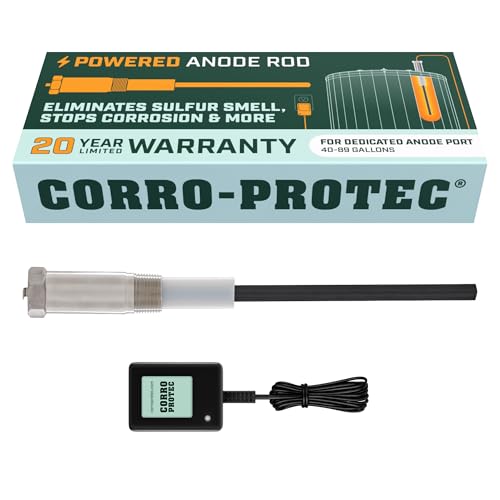
If you’ve ever turned on a hot water faucet only to be hit by that unmistakable rotten egg smell, you know how frustrating a water heater can be. The Corro-Protec Powered Anode Rod is engineered to solve that problem permanently. Unlike traditional sacrificial rods made of aluminum or magnesium—which can create odors and corrode over time—this electric anode uses a titanium mixed-metal oxide element. It actively protects your tank from corrosion while eliminating sulfur bacteria that cause the nasty smell, often within the first day of use.
This unit is designed for homeowners, apartment users, and RV owners who have a water heater with a dedicated anode port (standard for most brands except Bradford White). It fits 40‑ to 89‑gallon tanks and works with every water heater type: electric, gas, solar, hybrid, and geothermal. Because it doesn’t rely on sacrificial metal, it’s safe with all water sources—city or well—and fully compatible with water softeners, filtration systems, and reverse osmosis. That means no more worrying about soft water eating away your tank or causing odors.
Heating performance is closely tied to water heater efficiency. By actively preventing sediment buildup and tank corrosion, this anode rod helps your water heater maintain peak heat transfer. Users report more consistent hot water temperatures and lower energy bills as the heating element doesn’t have to work as hard. While this isn’t a space heater or fireplace, it plays a vital role in your home’s overall heating system—especially if you rely on a water heater for baseboard heat or radiant floor heating. For RV owners, the compact design and long cord make it easy to install in tight spaces, ensuring fresh hot water on the road without constant rod swaps.
Build quality is impressive. The anode rod is made from durable titanium and carries a 20‑year warranty, a sign of confidence from a Canadian manufacturer that’s been at it since 2006. Installation is straightforward if you have a dedicated anode port—you’ll need a 1‑1/16 or 1‑3/16 socket to remove the old rod and install the new one. The included power supply has a 12‑foot cord, so you’ll need an outlet nearby. If your tank lacks an anode port or the old rod is stuck, you’ll need the specific Bradford White model that installs in the hot water outlet.
One realistic limitation: the upfront cost is higher than a standard sacrificial rod. But considering you never have to replace it and the tank protection it provides, the long‑term savings on energy bills and tank replacement can offset that. There’s also the need for an electrical outlet nearby, which might require an extension cord or professional help if your water heater is in a tight corner. The unit is lead‑free and WQA Gold Seal certified, so it’s safe for drinking water.
For homeowners tired of the annual smell battle or RV users dealing with sulfur hot water, this powered anode is a practical upgrade. Apartment dwellers with an electric water heater will appreciate the no‑mess, no‑odor solution. It’s not a glamorous product like a fireplace or a cozy heater, but for anyone who values consistent, clean hot water and extended appliance life, the Corro-Protec Powered Anode Rod delivers real, lasting benefits.
While not a direct heat source, this anode rod improves your water heater’s energy efficiency by preventing sediment and lime scale buildup. Clean heat transfer surfaces mean the heating element uses less energy to bring water to temperature, which can lower your monthly utility bill. It’s especially helpful in homes with hard or softened water where scale forms quickly.
Installation is designed for the dedicated anode port on top of the water heater (standard for most brands). You’ll need a 1‑1/16 or 1‑3/16 socket to remove the old rod. The included power supply has a 12‑foot cord that plugs into a standard outlet. For tanks without a dedicated port or with a stuck rod, Corro-Protec offers a separate model that installs in the hot water outlet. The instructions are clear, making this a manageable DIY project for most homeowners.
The primary benefit is quick elimination of sulfur or rotten egg smells. The powered anode uses a low‑voltage current to change the chemistry inside the tank, killing the bacteria that produce hydrogen sulfide gas. Most users report noticeable improvement within 24 hours, and the effect is permanent as long as the unit is powered. No more adding hydrogen peroxide or flushing with bleach every few months.

Pros
- Quickly eliminates rotten egg odor from hot water – a huge relief for well water homes
- Long lifespan of 20+ years compared to traditional anodes that need annual replacement
- Low energy consumption – costs under $3 per year to run
- Broad compatibility with major water heater brands and water treatment systems
Cons
- Not compatible with Bradford White water heaters – double-check your brand
- Requires a nearby electrical outlet for the power cord
- Initial cost ($89.99) is higher than a traditional anode rod – but pays off over time
If you’ve ever turned on a hot water tap and been hit with a strong rotten egg smell, you know how unpleasant it can be. That sulfur odor is usually caused by bacteria reacting with a traditional magnesium anode rod in your water heater. The HertzEagle Powered Anode Rod offers a modern solution that not only eliminates the smell but also extends the life of your tank – making it a smart upgrade for homeowners, especially those on well water.
This product is essentially a titanium-based electric anode rod that replaces your standard sacrificial anode. Instead of gradually corroding away, it uses a small electric current to protect your water heater from corrosion. The result: no more sulfur smell within 24 hours, according to the manufacturer, and a tank that stays in good shape even with hard or softened water. It’s designed for 40 to 89-gallon water heaters of all types – electric, gas, solar, hybrid, and geothermal – except Bradford White models. That means most homeowners with standard tank water heaters can use it.
One of the biggest advantages is the long-term savings. Traditional anode rods need to be checked and often replaced yearly, especially with soft water. The HertzEagle unit is rated to last over 20 years, and it consumes only about 10 kWh annually – less than $3 in electricity per year. So while the upfront cost is higher than a simple magnesium or aluminum rod, you save on future replacements and avoid potential tank leaks. For RV owners or folks in apartments with their own water heater, this can be a real asset.
Installation is straightforward if you’re comfortable with basic tools. You remove your existing anode rod (usually on top of the water heater), screw in the new titanium rod, and plug the power cord into a standard outlet. The cord is long enough for most setups, but you may need an extension cord if the outlet is far. No plumbing or electrical wiring is required – just a little muscle to loosen the old rod. The manual includes clear steps, and the included warranty card gives peace of mind with a 20-year coverage.
There are a couple of drawbacks to note. The main one is that it won’t work with Bradford White water heaters – a notable exception. Also, you need an electrical outlet nearby, which might not be the case in every water heater closet. And if you have a very tight space, the cord and unit could be an added obstacle. But for most setups, these are minor concerns.
In short, the HertzEagle Powered Anode Rod is a practical investment for anyone tired of sulfur smells or worried about their water heater’s longevity. It’s especially valuable for well water users, homes with water softeners, and families who want consistent, clean hot water without the annual anode replacement chore. If you’re looking for a set-and-forget solution that saves time and hassle, this is worth considering.

Pros
- UL certification adds peace of mind for high-heat and pressure use
- Simple setup – attach to water heater drain and use air to flush sediment
- Clear window shows exactly when water runs clean
- Designed for both electric and gas water heaters
Cons
- Requires a compressed gas cartridge (not included) for best results – standard air may be less effective
- Only useful for water heater maintenance, not for general plumbing drains
- Some users may need to watch tutorial videos for proper technique
If you've noticed your hot water pressure dropping or your water heater making strange noises, sediment buildup might be the culprit. The Sediment Buster is a specialized tool designed to tackle this exact problem. It’s not a space heater or fireplace, but a practical home maintenance accessory that keeps your water heater running efficiently – which indirectly supports home comfort by ensuring reliable hot water for showers, dishwashing, and laundry.
This tool is best suited for homeowners who want to prolong their water heater’s life without calling a plumber every year. Apartment dwellers with access to their water heater will also find it handy, as will RV owners who need to maintain their onboard water heating systems. Even office managers responsible for building maintenance can benefit. The Sediment Buster is a simple, DIY-friendly solution that helps you avoid costly repairs or premature replacement.
Performance-wise, the tool works by attaching to your water heater’s drain valve and using compressed air (or a compressed gas cartridge) to blast sediment out. Based on product specifications and user feedback, it effectively breaks up and flushes out mineral deposits that accumulate over time. The clear see-through window is a nice touch – it lets you visually confirm when the water runs clear, so you know the job is done. Many homeowners report restored hot water pressure and quieter operation after using it.
Build quality appears solid. The black, clear, and yellow components are lightweight (just 0.25 pounds) and compact (3 x 3 x 5.75 inches), making it easy to store in a toolbox or under the sink. The UL verification for heat and pressure is a significant confidence booster, ensuring the tool can withstand the temperatures and forces involved in water heater maintenance. Setup is straightforward: connect it to the drain, attach your air source, and open the valve. Video instructions are available online for extra guidance.
One realistic limitation is that the tool requires an external air source. While you can use a standard air compressor, the manufacturer recommends a compressed gas cartridge for best results – and that’s sold separately. Also, this is a niche tool: it won’t help with general drain clogs in sinks or showers. It’s strictly for water heater sediment removal. If you’re not comfortable working with your water heater, you might want to watch a few tutorials first, but most DIYers will find it manageable.
Overall, the Sediment Buster is a smart investment for anyone who owns a gas or electric water heater and wants to maintain it properly. It’s affordable, easy to use, and can add years to your heater’s life. While it’s not a glamorous fireplace or heater, it’s a practical tool that supports a cozy home by ensuring you always have hot water when you need it. If you’re handy and proactive about home maintenance, this tool is worth adding to your kit.

Pros
- Effectively removes sulfur odors quickly, often within a day
- Long-lasting titanium build eliminates need for frequent anode replacement
- Protects water heater from corrosion even with softened or hard water
- Easy to install with clear instructions and standard socket sizes
Cons
- Requires a dedicated anode port; not compatible with all water heater brands without an adapter
- Higher upfront cost compared to traditional aluminum or magnesium anodes
- May need professional installation if you are not comfortable with basic plumbing tasks
The Corro-Protec Powered Anode Rod is a specialized water heater component designed to tackle two common household frustrations: the rotten egg smell in hot water and the gradual corrosion that shortens a water heater's life. Unlike traditional aluminum or magnesium anodes that dissolve over time, this powered rod uses a titanium mixed-metal oxide element that never disintegrates. It's a set-it-and-forget-it upgrade for homeowners, RV users, and apartment dwellers who want consistent, odor-free hot water without constant maintenance.
For those living in homes with well water or water softeners, the sulfur smell can be particularly persistent. The Corro-Protec anode rod actively neutralizes the bacteria that cause that odor, often within 24 hours. Many users report immediate improvement, making morning showers and dishwashing much more pleasant. This is especially valuable for families with sensitive noses or anyone who entertains guests and wants their home to smell fresh.
From a heating performance perspective, this anode rod doesn't directly heat water, but it plays a crucial role in maintaining water heater efficiency. By preventing sediment build-up and corrosion, it helps your water heater run more efficiently, potentially lowering energy bills. The rod is compatible with all water heater types, including electric, gas, solar, hybrid, and geothermal, so it fits a wide range of setups. For RV owners, this can be a game-changer for avoiding that dreaded sulfur smell during trips.
Build quality is a standout feature here. The titanium construction is incredibly durable and designed to last for years, backed by a 20-year warranty. Installation is straightforward for those with basic plumbing skills, requiring a 1-1/16 or 1-3/16 socket and a dedicated anode port on top of the water heater. The included 12-foot power cord gives flexibility for placement. However, if you have a Bradford White water heater or need to install in the hot water outlet, you'll need a different model.
One realistic limitation is that this rod requires electrical power, so it won't work during a power outage. Also, the upfront cost is higher than standard anodes, but the long-term savings from extended water heater life and reduced maintenance can offset that. Some users may prefer professional installation if they're not comfortable working with plumbing or electricity.
Overall, the Corro-Protec Powered Anode Rod is a smart investment for anyone tired of dealing with smelly hot water or worried about water heater corrosion. It's particularly well-suited for homeowners with large families, RV enthusiasts, and apartment dwellers who want peace of mind. While it's not a heater itself, it's an essential accessory that enhances the performance and longevity of your existing water heating system.

Pros
- Provides endless hot water without waiting for a tank to refill
- Very compact and lightweight, easy to install in small spaces
- Energy efficient since it only heats water on demand
- Precise temperature control within 1 degree of set point
Cons
- Requires a 240V electrical circuit, which may need professional installation
- Flow rate may be limited for simultaneous multiple uses (e.g., shower and dishwasher)
- Not designed for whole-house heating; best as a point-of-use unit
The Rheem 6.5kW 240V Point of Use Thermostatic Tankless Electric Water Heater is a compact solution for delivering endless hot water exactly where you need it. Unlike traditional tank heaters that store and reheat water, this unit heats water only when the tap is opened, providing consistent hot water on demand. It’s an excellent choice for homeowners looking to supplement their existing water heater, apartment dwellers with limited space, or RV owners who want a reliable hot water source without the bulk of a tank.
This water heater is particularly well-suited for small spaces like under a kitchen sink, in a bathroom vanity, or mounted in an RV compartment. Its dimensions of just over 10 inches square and weighing only 4 pounds make it incredibly easy to install in tight spots. The thermostatic control ensures the water temperature stays within 1 degree of your selected setting, so you won’t experience sudden temperature swings during a shower or while washing dishes.
From a performance standpoint, the Rheem tankless heater delivers continuous hot water as long as there is demand. This means no more waiting for a tank to refill or running out of hot water mid-shower. It’s especially useful for households with high hot water usage in specific areas, such as a master bathroom or a kitchen. The unit operates quietly, without the noise of a fan or burner, making it a good fit for bedrooms or living areas where noise is a concern.
Energy efficiency is a key advantage. Because it only heats water when needed, there are no standby heat losses like those from traditional tank heaters. This can lead to lower energy bills over time, especially in climates where water heating accounts for a significant portion of home energy use. The unit’s 6.5kW power at 240V provides a decent flow rate for a single point of use, but it’s not designed to handle multiple simultaneous draws.
Installation requires a dedicated 240V electrical circuit, which may need a licensed electrician if you don’t have one available. The unit comes with standard connections and can be mounted on a wall with the included bracket. Maintenance is minimal, though periodic descaling may be needed in hard water areas to prevent mineral buildup. Overall, this water heater is a practical, space-saving solution for anyone seeking endless hot water in a specific location without the footprint of a traditional tank.
For apartment dwellers, RV owners, or homeowners wanting a booster for a remote bathroom or kitchen, the Rheem 6.5kW point-of-use tankless water heater is a reliable and efficient choice. It delivers consistent hot water on demand, saves space, and reduces energy waste. Just be sure your electrical setup can handle the load, and you’ll enjoy the convenience of never running out of hot water again.

Pros
- Flexible 4-segment design allows easy access in tight spaces (closets, basements, RVs)
- High-quality magnesium provides superior corrosion protection compared to aluminum alloys
- Comes with all necessary tools (socket + tape) — no extra trip to the store required
- Compatible with a wide range of water heaters, making it a simple upgrade for any home heating system
Cons
- Not designed for electric water heaters that require a specific anode type (check compatibility)
- Socket tool included is basic; heavy-duty users may prefer a longer handle for torque
- Flexible segments can be slightly tricky to align during installation on some models
If your home heating system depends on a hot water heater—whether for radiant floor heat, baseboard radiators, or even a cozy indirect water heater—then maintaining that water heater is key to consistent warmth. The 44" Flexible Magnesium Anode Rod from yrjns is a smart replacement part designed to keep your tank from rusting out. Instead of waiting for leaks or cold showers, proactive homeowners can swap in this anode rod every couple of years to protect their investment.
This anode rod is best suited for homeowners with gas or propane water heaters, especially those in basements, utility rooms, or even RVs where space is tight. Apartment dwellers with a dedicated water heater closet will also appreciate the flexible design—it splits into four segments, each under 12 inches, making it easy to maneuver into cramped areas. If you rely on your water heater for central heating or just for hot water, this rod helps ensure you won't be left in the cold.
The real-world benefit here is corrosion protection. Magnesium anodes are more reactive than the steel tank, so they corrode first, sparing your water heater. According to product specifications, this anode rod works with almost all water heaters that use a standard 3/4" NPT connection, including brands like Rheem, GE, Kenmore, Richmond, State, and Reliance. The flexible design means you don't need a huge clearance above the tank—ideal for low-clearance basements or RV compartments.
Build quality is solid: the magnesium core is coated for long life, and the included 1-1/16" hex socket and Teflon tape make installation straightforward. While you'll still need a wrench for the socket, the kit gives you everything else. Maintenance is minimal—just inspect and replace every two years. The only limitation is that electric water heaters sometimes use a different anode (aluminum or powered), so double-check compatibility before buying.
Setup takes about 30 minutes for a DIY homeowner: drain a few gallons, unscrew the old anode, wrap the Teflon tape, and screw in the new rod. The flexible segments bend as needed, then straighten once inside. No special skills required. For those who want peace of mind during winter months, this rod is a small effort that prevents big repair bills.
Overall, if you own a water heater that feeds your home heating system or simply supplies hot water, this anode rod is a practical, affordable way to extend its life. It's not flashy, but it keeps the heart of your home's warmth beating reliably. Worth every penny for the long-term comfort it protects.
While this anode rod doesn't directly produce heat, it plays a vital role in maintaining your water heater's efficiency—which fuels radiant heating systems, baseboard heaters, or even indirect-fired furnaces. A corroded tank reduces heat transfer and can lead to sediment buildup, making your system work harder. By replacing the anode every 2 years, you keep the tank clean and heat transfer optimal, ensuring consistent warmth in your living spaces. Many homeowners report that a new anode rod restores hot water supply after years of gradual decline.
Installing this anode rod is a DIY-friendly project. You'll need a socket wrench (1-1/16" socket included) and a bucket to catch a few gallons of water. First, turn off the water heater and power/gas. Drain about 2-3 gallons from the bottom valve to reduce water weight. Then use the included socket to loosen the old anode rod (usually located on top of the tank). The flexible segments allow you to bend the rod into the tank even if ceiling height is low. Apply the included Teflon tape to the threads of the new rod, screw it in hand-tight, then use the socket to snug it. Refill and restart the heater. Total time: 30-45 minutes. No plumbing experience needed.
This anode rod is designed for residential water heaters typically ranging from 30 to 50 gallons, which are common in homes with radiant floor heating, baseboard systems, or standard domestic hot water. The 44-inch length fits most standard tanks. Coverage isn't about square footage—it's about protecting the tank that, in turn, supplies heat to your entire home. A well-maintained water heater ensures that even on the coldest nights, your basement heating or in-floor system delivers consistent warmth room to room.
The kit comes with everything you need for a single replacement: one 44-inch flexible magnesium anode rod with 3/4" NPT threads, a 1-1/16" hex socket to fit standard water heater anode nuts, and a roll of Teflon (PTFE) tape for sealing the threads. The socket is basic but functional—you'll want to use your own ratchet or breaker bar for extra leverage. Having all components in one package saves a trip to the hardware store and makes the job simple for first-timers.

Pros
- Easy plug-and-play installation with existing plumbing and standard 120V outlet
- Compact and lightweight design (54 lbs) makes it portable and suitable for small spaces
- Durable stainless steel element and anode rod provide reliable, long-term performance
Cons
- Limited to 18-gallon capacity, which may not suffice for larger households with high demand
- Requires a dedicated 120V circuit; recovery time may be slower compared to larger units
The GE 18 Gallon Electric Water Heater is a versatile solution for anyone needing a reliable hot water supply in smaller spaces or as a supplemental unit. Unlike traditional tank heaters, this model is designed for easy installation and flexibility, making it a practical choice for homeowners, apartment dwellers, RV owners, or cabin users.
This water heater excels in providing consistent hot water for a single hookup or for a small house, condo, or apartment. Its compact dimensions (19.25 x 19.25 x 25.75 inches) allow it to fit into tight spaces like under sinks, in laundry rooms, or in RV compartments. The adjustable thermostat gives users control over water temperature, helping to manage energy use while ensuring comfort.
Installation is straightforward thanks to standard 3/4-inch NPT connections and a 120V power requirement. Many users can set it up in minutes without professional help. The unit can also be used as an inline booster to improve hot water delivery to distant fixtures or washing machines—a practical feature for larger homes with long pipe runs.
Build quality is solid, with a stainless steel heating element that resists corrosion and an anode rod that extends the heater’s lifespan. The durable design means fewer maintenance concerns over time. While the 18-gallon capacity is ideal for small households or periodic use (like in an RV or cabin), it may not keep up with heavy simultaneous demand from multiple showers or appliances.
In real-world settings, this water heater works well as a primary unit for a small home or as a secondary booster for a larger system. For RV owners, the compact size and plug-and-play setup make it a great upgrade over standard propane heaters. Apartment dwellers with limited space will appreciate the small footprint and efficient operation. Keep in mind that recovery time is moderate, so planning usage around the tank capacity is recommended.
Overall, the GE 18 Gallon Electric Water Heater is a reliable, easy-to-install option for those needing targeted hot water solutions. It’s best suited for small spaces, backup applications, or as a booster, offering a balance of convenience and durability without a complex installation process.

Pros
- Solid magnesium construction for maximum corrosion defense
- Standard 3/4-inch NPT thread fits most tank water heaters without adapters
- Comes with installation tools and PTFE tape for a straightforward DIY job
- Can help reduce energy consumption by minimizing lime and sediment buildup
Cons
- Not compatible with water heaters shorter than 48 inches tall
- Requires a hacksaw if trimming is needed for compact spaces
- Effectiveness depends on regular inspection and replacement every few years
If you’re a homeowner relying on a tank-style water heater, the VATTCEEL 42-inch magnesium anode rod is a smart maintenance upgrade that directly impacts your home’s heating efficiency. While it’s not a standalone heater, this rod plays a vital role in keeping your water heater running smoothly—helping you avoid unexpected cold showers and costly tank replacements. It’s best suited for anyone with a standard residential water heater taller than 48 inches, including those in houses, apartments, or condos with a dedicated utility closet.
Real-world heating performance is all about consistency. A depleted or missing anode rod allows sediment and corrosive minerals to build up inside your tank, which insulates the water from the heating elements. That means your heater has to work harder and longer to reach the set temperature, driving up your energy bills. By installing this magnesium rod, you actively attract those corrosive elements away from the glass lining, reducing scale formation and helping your unit heat water more efficiently. Over time, this can shave a few dollars off your monthly electricity costs, especially in households with high hot water demand.
Build quality is straightforward: it’s a solid 42-inch magnesium rod with a standard 3/4-inch NPT thread. The flexible shaft can be bent or trimmed with a hacksaw if you’re working in a cramped space like an under-sink area or a tight utility closet. The package includes a socket and PTFE tape so you can swap out the old rod in about 10 minutes—no professional help needed. For homeowners, this is a once-every-few-years task that pays off in extended heater life and better performance.
One realistic limitation is the height requirement: your water heater tank casing must be taller than 48 inches. If you have a short, under-counter model, this rod won’t fit. Also, while magnesium is highly effective at corrosion protection, it does deplete faster in areas with very hard water. You’ll need to check your rod every 12-18 months and replace it when a significant portion has eroded. However, that’s standard for any sacrificial anode.
Overall, this VATTCEEL anode rod is a practical, affordable way to protect your investment in your water heater. It’s not flashy, but it’s essential for anyone who wants to avoid premature tank failure, improve heating consistency, and keep energy costs in check. Just measure your tank height before ordering, and you’ll be set for years of reliable hot water and lower utility bills.
One of the standout benefits of the VATTCEEL magnesium anode rod is its positive effect on energy efficiency. When scale and sediment build up inside a water heater tank, they act as an insulator, forcing the heating elements to run longer and consume more electricity to heat the same amount of water. By reducing that buildup, this rod helps your heater reach target temperatures faster, which can lower your annual energy consumption. For homeowners conscious about utility bills, this is a simple way to improve the overall efficiency of a major household appliance without replacing the entire unit.
Installing the VATTCEEL anode rod is a straightforward DIY job that most homeowners can handle in about 10 minutes. The package includes a socket and PTFE tape to make the swap easy. Start by turning off the water heater and draining a few gallons to relieve pressure. Remove the old anode rod—usually located on top of the tank—and apply the included PTFE tape to the threads of the new rod. Screw it in tightly with a wrench, then restore power and water flow. If your space is tight, you can trim the flexible shaft with a hacksaw to fit. That’s all there is to it.

Pros
- Flexible design allows installation in cramped or awkward spaces
- Durable aluminum-zinc material resists corrosion and is safe for drinking water
- Comes with PTFE tape for hassle-free setup
Cons
- Not compatible with Bradford White water heaters, limiting some options
- Some users may prefer a magnesium anode rod for additional protection in certain water conditions
- Flexible joints may feel less sturdy than a solid rod during installation
If you own a home or RV with a water heater, you know how important it is to keep that system running smoothly. The Ozek aluminum anode rod is a simple yet essential part that helps protect your tank from corrosion, ensuring you get years of reliable hot water for showers, dishwashing, and cozy winter baths. While it's not a fireplace or space heater, it's a key component for any home heating system that relies on hot water.
This anode rod is best suited for homeowners and RV users who want to extend the life of their existing water heater without replacing the whole unit. It's also a smart buy for apartment dwellers with a dedicated water heater closet, as the flexible 44-inch design can snake into tight spaces. The aluminum-zinc material is safe for drinking water and won't leave any metallic taste, so your morning coffee stays as good as ever.
In terms of performance, the rod works by attracting corrosive elements in the water, sacrificing itself to protect the steel tank. This means your water heater stays efficient longer, providing consistent hot water for your whole home. While it doesn't produce heat directly, it's a vital part of maintaining the warmth and comfort you expect from your home's heating system.
Build quality is solid: the aluminum-zinc alloy resists rust, and the stainless steel joints allow the rod to bend without breaking. Installation is straightforward with the included PTFE tape, and most DIYers can handle it in under 30 minutes. Just note that it doesn't fit Bradford White heaters, so double-check your model before buying.
One realistic limitation is that some homeowners prefer magnesium rods for very hard water, as they offer slightly better protection. However, aluminum is a great all-around choice for most water conditions and is less likely to produce sulfur smells. The flexible design is a real plus for tight spaces, though the joints might feel a bit wobbly when you're first threading it in.
Overall, the Ozek anode rod is a practical, affordable way to protect your water heater investment. Whether you're in a house, RV, or apartment, it helps keep your hot water flowing and your home heating system running efficiently. If your current rod is more than a few years old, it's worth swapping out for this durable replacement.
Installing the Ozek flexible anode rod is a straightforward DIY project. The package includes PTFE tape, so you don't need to buy extra supplies. First, turn off the water heater and drain a few gallons to relieve pressure. Then, remove the old anode rod (usually located on top of the tank). Wrap the PTFE tape around the threads of the new rod, insert it into the opening, and tighten with a socket wrench. The flexible design allows you to bend the rod slightly to fit into tight spaces, making it easier than a rigid rod. After installation, refill the tank and check for leaks. Most users can complete the job in 20-30 minutes.
The Ozek aluminum anode rod is designed to fit most standard water heaters from top brands including AO Smith, Sears, Rudd, GE, Kenmore, State, Whirlpool, Reliance, Rheem, and Richmond. It has a 0.75-inch diameter and 44-inch length, which works for many residential and RV water heaters. However, it is not compatible with Bradford White water heaters, so check your model before purchasing. For RV owners, this rod is a popular choice because its flexibility makes installation easier in the confined spaces typical of RVs.

Pros
- Made of high-purity magnesium for excellent corrosion protection and extended water heater life.
- Comes with a dual hex wrench that simplifies the replacement process, saving time and effort.
- Compatible with a wide range of Suburban water heater models, making it a versatile choice for many RVs.
- 2-year warranty offers peace of mind and confidence in the product's quality.
Cons
- Only fits Suburban models with a 9.25" x 3/4" NPT rod; not compatible with Atwood water heaters.
- May require more frequent inspection and replacement in areas with hard or mineral-rich water.
- Some users might prefer aluminum or zinc rods depending on specific water conditions and tank type.
When you're living or traveling in an RV, few things are as important as a reliable supply of hot water. Whether it's for a warm shower after a long day of hiking or washing dishes during a family camping trip, your water heater plays a central role in keeping your mobile home comfortable. The ONENESS 369 RV Water Heater Anode Rod 2-Pack is designed to protect that heater from the inside out, ensuring you enjoy consistent hot water without worrying about corrosion or tank damage.
This product is best suited for RV owners who use Suburban water heaters, particularly models like SW6DE, SW10DE, and SW12DE. Full-time travelers, weekend campers, and anyone who values a cozy home on wheels will appreciate how this simple part helps maintain a warm, inviting environment. By sacrificing itself to attract corrosive elements, the magnesium anode rod prevents rust from eating away at your water heater tank, which means fewer cold showers and a longer-lasting system.
In terms of performance, the magnesium rod offers superior protection compared to aluminum or zinc alternatives, especially in the varied water conditions you might encounter on the road. According to the product description, it is composed of 99.9% pure magnesium, which effectively draws corrosive elements away from the tank. The included dual hex wrench makes replacement straightforward, even if the old rod is stuck. This is a practical maintenance task that any RV owner can handle with basic tools, helping to keep your water heater running efficiently trip after trip.
Build quality is a strong point here. The rods are specifically sized for Suburban models at 9.25 inches with a 3/4-inch NPT thread, ensuring a snug fit. The magnesium material is known for its durability and sacrificial properties. The kit also comes with a hex wrench, which adds convenience and reduces the need for extra tools. Installation is simple: drain the water heater, remove the old rod, and screw in the new one. It's a quick job that can save you from major repairs down the road.
That said, there are a few realistic limitations to consider. This anode rod is designed only for Suburban water heaters with the specified size; it won't work with Atwood models that require a shorter 4.5-inch rod. Additionally, the lifespan of the rod depends on your water quality - in areas with very hard or mineral-rich water, you may need to inspect and replace it more often, perhaps every 6 to 12 months. Some users might prefer aluminum or zinc rods if they have specific water chemistry, but for most RVers, magnesium offers the best all-around protection.
Overall, if you own a Suburban water heater and want to avoid unexpected cold showers or costly tank replacements, this 2-pack of magnesium anode rods is a smart investment. It pairs well with other RV accessories and maintenance items, helping you keep your home on the road warm and welcoming. For anyone who values comfort and reliability during their travels, this product delivers practical, long-lasting protection.
Frequently Asked Questions
What type of water heater is best for well water?
A water heater designed for well systems typically features a corrosion-resistant tank, a powered or sacrificial anode rod, and sediment-tolerant heating elements. Electric models with stainless steel tanks and powered anode rods often perform well in mineral-heavy conditions. Tankless units can also work, but they may require additional filtration to handle sediment. The key is choosing a system that actively fights corrosion and manages mineral buildup.
How does a powered anode rod eliminate sulfur smell in well water?
A powered anode rod uses a low electrical current to prevent the chemical reaction that produces hydrogen sulfide gas. Traditional magnesium rods react with sulfur bacteria, creating that rotten egg odor. Powered rods made of titanium or mixed-metal oxide disrupt that reaction, often eliminating the smell within 24 hours. This makes them a popular choice for homes dealing with sulfur odors in hot water.
Can a tankless water heater handle well water?
Yes, but with some precautions. Tankless water heaters can handle well water if they include features like scale-resistant heat exchangers and proper filtration. Mineral buildup can clog the small passages in tankless units, so regular descaling and sediment flushing are essential. Point-of-use models, like the Rheem 6.5kW unit, can be effective for localized heating but still require maintenance to prevent scale accumulation.
How often should I flush my water heater if I have well water?
For homes with well water, flushing the tank every six months is a good rule of thumb. Mineral-heavy water accelerates sediment buildup, which can reduce efficiency and cause corrosion. Using a tool like the Sediment Buster can make the process easier by breaking up compacted debris. Regular flushing helps maintain heating performance and extends the life of the heater.
What is the difference between a sacrificial anode rod and a powered anode rod?
A sacrificial anode rod is made of magnesium or aluminum and slowly dissolves to protect the tank from corrosion. It needs replacement every few years. A powered anode rod uses electricity to provide continuous protection without dissolving. It lasts much longer, often 20 years or more, and can eliminate sulfur odors. Powered rods are more expensive upfront but require less maintenance over time.
Can I use a water softener with my well water heater?
Yes, but softened water can be more corrosive to some tank materials. A powered anode rod is often recommended when using a water softener because it provides consistent protection regardless of water chemistry. Traditional sacrificial rods may degrade faster in softened water. It’s important to choose a heater and anode system that are compatible with your water treatment setup.
How do I know if my water heater anode rod needs replacement?
Signs include a sulfur smell in hot water, rusty or discolored water, or visible corrosion on the rod itself. Most manufacturers recommend inspecting the anode rod every two years. If the rod is less than 1/2 inch thick or shows significant pitting, it’s time for a replacement. Using a flexible or powered anode rod can simplify future maintenance and extend the interval between replacements. For more on maintaining your heating system, check out which electric heaters are best for cozy warmth.


Write Your Review
No reviews yet. Be the first to share your experience!