

Introduction
A chilly room doesn’t automatically mean you need a gas heater. Portable and supplemental heaters may use electricity, natural gas, or propane, and the right answer depends on the model’s fuel connection and intended use. If you’re trying to warm one occupied area without changing the temperature throughout the home, understanding that difference can help you choose a practical zone-heating option.
For the question does a heater use gas, the short answer is: some do, and many don’t. The products listed below include natural-gas wall or freestanding models and portable propane heaters, so they aren’t interchangeable with electric space heaters. Check the fuel type, room suitability, installation requirements, and safety instructions before choosing. For broader context, see our guide to gas fireplace heating and our overview of heating a larger room evenly.
Product Shortcode


Pros
- Compact and space-saving design fits in tight spaces like apartments or RVs
- Thermostat control provides consistent warmth without constant manual adjustment
- Ventless operation means easy installation without ductwork or external venting
- Safe with ODS sensor and ANSI certification for peace of mind
Cons
- Requires a natural gas line connection – not portable like electric heaters
- No fan so heat distribution relies on natural convection, which may be slower in large rooms
- Ventless models can add moisture to the air in tightly sealed spaces, so proper ventilation is recommended
The ProCom MN100TPA-B is a natural gas ventless infrared plaque heater designed to provide supplemental warmth for spaces up to 500 square feet. It uses infrared technology to heat objects and people directly, creating a cozy atmosphere without the noise of a fan. This makes it a strong choice for bedrooms, living rooms, home offices, and even RVs where quiet operation matters.
Who is this heater best suited for? Homeowners looking to reduce reliance on central heating, apartment dwellers who want zone heating without losing floor space, and RV owners who need a reliable heat source during power outages. Because it requires no electricity, it works perfectly in off-grid scenarios or emergency kits. The thermostat control lets you choose between High, Medium, and Low settings, so you can fine-tune the heat output to match your comfort level.
Heating performance is steady and consistent thanks to the infrared plaque design. Unlike forced-air heaters, this model warms surfaces and people rather than just the air, which can feel more natural and comfortable. It covers up to 500 square feet, making it suitable for a typical bedroom or small living area. The thermostat helps maintain a stable temperature, reducing the need for constant adjustments.
Build quality is solid with a slim white profile that blends into most decors. You can mount it on a wall using the included hardware or place it on the floor with the base feet. Setup is straightforward if you have a natural gas line nearby – just connect and ignite. There’s no need for an electrical outlet, which simplifies placement. The push-button ignition fires up quickly, and the oxygen depletion sensor (ODS) adds a critical safety layer by automatically shutting off the heater if it detects unsafe levels of carbon monoxide or low oxygen.
Realistic limitations include the need for a natural gas hookup, so it’s not a plug-and-play portable unit like an electric heater. Also, because there’s no fan, heat distribution relies on natural convection, which may take longer to warm up a large or drafty room. Ventless gas heaters can also release moisture into the air, so in very tight homes you might want to crack a window or use a dehumidifier.
Overall, this ProCom heater is a practical choice for anyone wanting efficient, reliable supplemental heat without the noise or electricity demands of traditional space heaters. It shines in small to medium rooms, especially during winter evenings when you want steady warmth without a blower sound. If you have a natural gas connection and need a heater that works during outages, this model is worth considering.
The ProCom MN100TPA-B uses infrared plaque technology to deliver 10,000 BTU of heat. Infrared warmth feels more like sunlight than hot air, so it heats people and objects directly without stirring up dust. The thermostat control allows you to select High, Medium, or Low settings, giving you flexibility to match the heat output to the room size and your comfort. Coverage is rated for up to 500 square feet, which works well for a master bedroom, home office, or small living room. Because there is no fan, the heat spreads naturally and quietly – ideal for bedrooms where noise can disrupt sleep.
Safety is a priority with this ventless heater. It includes an oxygen depletion sensor (ODS) that continuously monitors the air quality. If carbon monoxide or low oxygen levels are detected, the heater automatically shuts off. The unit is ANSI certified, meeting strict safety standards for gas appliances. The push-button ignition eliminates the need for matches or lighters, reducing the risk of accidental flames. While the exterior stays cool to the touch during operation, it is always wise to keep flammable materials away from any heating appliance.
Setting up the ProCom heater requires a natural gas line connection. The package includes wall-mounting hardware and base feet, so you can choose between a permanent wall installation or a freestanding floor setup. No electricity is needed, which simplifies placement and makes it ideal for areas without nearby outlets. The push-button ignition lets you start the heater with a single press. For the best experience, have a professional handle the gas connection to ensure safety and proper operation. Once installed, the heater requires minimal maintenance – just occasional dusting and an annual inspection of the gas line and burner.

Pros
- Provides steady, quiet heat without a noisy fan – perfect for bedrooms and offices
- No electricity needed, so it works during power outages and in remote locations
- Thermostat control allows you to fine-tune the temperature for comfort and efficiency
- Ventless design means simple installation – just connect to natural gas supply and mount or place on floor
Cons
- Requires a natural gas connection, limiting placement to areas with gas line access
- Ventless gas heaters can release moisture and combustion byproducts into the room, so adequate ventilation is necessary
- Blue flame design provides radiant heat, which may feel less intense than forced-air heaters for some users
The ProCom MN100TBA-B is a ventless natural gas blue flame space heater designed for efficient, supplemental heating in small to medium spaces. It operates on natural gas (no electricity needed) and produces 10,000 BTU, capable of warming up to 500 square feet. This heater is a solid choice for homeowners looking to reduce heating bills in a spare room, apartment dwellers who want to add warmth without running up electric costs, office users who need a quiet heat source, and RV owners with a natural gas hookup.
Heating performance is centered around its blue flame technology, which generates radiant warmth that circulates naturally. The thermostat control offers High, Medium, and Low settings, allowing you to dial in the desired heat output. Many users will appreciate the even heat distribution, especially in rooms with standard 8-foot ceilings. Because there's no fan, operation is completely silent – a major plus for bedrooms, nurseries, or home offices where noise can be distracting.
Installation is straightforward: you can mount the heater on a wall using the included hardware for a permanent, space-saving setup, or set it on the floor with the included base feet for portability. The compact dimensions (17 x 23 x 6.375 inches) and white finish blend easily into most decor. Since it doesn't require electricity, it's also a practical backup heat source during power outages, making it suitable for emergency preparedness.
Safety is a key feature. The built-in oxygen depletion sensor (ODS) monitors oxygen levels and carbon monoxide production. If either becomes unsafe, the heater automatically shuts off. This ANSI-certified safety mechanism provides peace of mind, especially in smaller rooms. However, because it is a ventless gas appliance, proper room ventilation is still important to prevent excessive moisture and ensure fresh air circulation.
One limitation is the need for a natural gas connection, which may not be available in all apartments or RVs. Also, ventless heaters are not recommended for use in bathrooms or extremely tight spaces. The blue flame design delivers radiant heat, which warms objects and people directly rather than the air, so it may feel different from forced-air heating. Some users might prefer a more convective heat for faster temperature rise.
Overall, the ProCom MN100TBA-B is a reliable, energy-efficient supplemental heater for homes, offices, and RVs where natural gas is accessible. Its quiet operation, thermostat flexibility, and safety features make it a practical choice for creating a cozy atmosphere in living rooms, bedrooms, and workspaces. If you need a no-electricity heating solution that blends performance with simplicity, this model is worth considering.
Pros
- Portable and lightweight, easy to carry and store
- Dual heat settings provide flexibility for different room sizes
- Safety features include low oxygen shutoff and tip-over protection
- Runs on readily available 1 lb propane cylinders
Cons
- Requires ventilation in indoor spaces despite safety approvals
- Propane cylinders need frequent replacement on high setting (2.4 hours)
- Not suitable as a primary heat source for larger homes
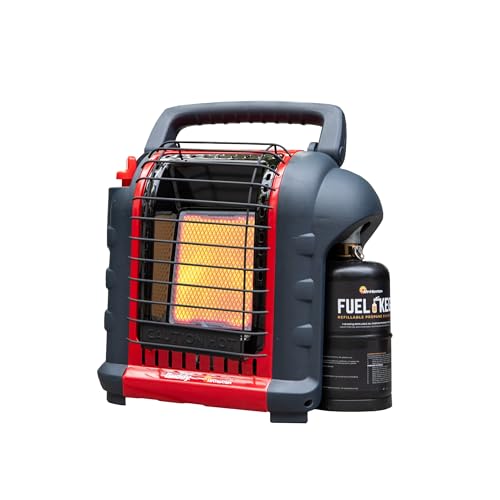
The Mr. Heater Portable Buddy is a propane-powered radiant heater designed for both indoor and outdoor use. With a maximum output of 9,000 BTUs, it can warm areas up to 225 square feet, making it a practical choice for RVs, tents, garages, workshops, and small rooms. This heater is particularly popular among RV owners, campers, and anyone needing supplemental heat in a compact space.
Heating performance is straightforward and effective. The two heat settings let you choose between 4,000 BTUs for gentle warmth or 9,000 BTUs for more intense heat. On low, the heater can run for about 5.4 hours on a single 1 lb propane cylinder, while high setting lasts around 2.4 hours. This makes it suitable for short-term use during camping trips, power outages, or chilly mornings in a garage. The radiant heat warms objects and people directly, providing a cozy feeling without circulating dust or drying out the air like forced-air heaters.
Build quality is solid for a portable heater. The unit weighs just over 7 pounds and features a sturdy metal body with a protective grille. It includes a built-in handle for easy carrying and a stable base that prevents tipping. Safety is a key focus: the heater has an emergency low oxygen shutoff system and is constructed with self-extinguishing materials. These features give peace of mind when using it indoors, though proper ventilation is still recommended to avoid carbon monoxide buildup.
Setup is simple. You attach a 1 lb propane cylinder directly to the heater, turn the knob to ignite, and adjust the heat output. No tools or permanent installation are required. Storage is easy thanks to its compact size, and the heater can be packed away in a closet, RV cabinet, or car trunk without taking up much space. Maintenance involves keeping the unit clean and checking for any propane leaks periodically.
One realistic limitation is the reliance on disposable propane cylinders, which can be inconvenient and costly if used frequently. An optional hose adapter allows connection to larger propane tanks for extended runtime, but this is sold separately. Additionally, the heater is best for spot heating rather than whole-home warmth. It works well in small, enclosed spaces but may struggle in drafty or open areas.
Overall, the Mr. Heater Portable Buddy is a reliable and affordable solution for targeted heating needs. It shines in RVs, tents, garages, and workshops where portability and quick warmth are priorities. For homeowners looking to supplement their primary heating in a small room or for outdoor enthusiasts needing a compact heat source, this heater is a practical choice. Just remember to follow safety guidelines and ensure adequate ventilation during indoor use.
The Mr. Heater Portable Buddy delivers radiant heat that warms people and objects directly, creating a comfortable environment without the noise of a fan. With two heat settings, you can choose between 4,000 BTUs for gentle warmth or 9,000 BTUs for more intense heat. The heater can cover up to 225 square feet, making it suitable for small rooms, RVs, tents, and garages. On low, it runs for about 5.4 hours on a 1 lb propane cylinder, while high setting lasts around 2.4 hours. This makes it ideal for short-term use during camping trips, power outages, or chilly mornings. The radiant heat is consistent and provides a cozy feeling, though it works best in enclosed spaces without drafts.
Safety is a priority with the Mr. Heater Portable Buddy. It includes an emergency low oxygen shutoff system that automatically turns off the heater if oxygen levels drop too low, reducing the risk of carbon monoxide poisoning. The unit is also constructed with self-extinguishing materials that help prevent fires. Additionally, the heater has a stable base to minimize tipping, and the grille protects users from direct contact with the hot surface. While these features make it safer for indoor use, proper ventilation is still essential. Always follow the manufacturer's guidelines and never use the heater in a completely sealed room.
The Mr. Heater Portable Buddy is designed for easy transport and quick setup. Weighing just 7.1 pounds and measuring 7.7 x 13.4 x 15 inches, it fits easily in a car trunk, RV cabinet, or closet. A built-in handle makes carrying it simple. Setup involves attaching a 1 lb propane cylinder directly to the heater, turning the knob to ignite, and adjusting the heat output. No tools or permanent installation are needed. For extended use, an optional hose adapter allows connection to larger propane tanks. Storage is straightforward, and the compact size means it won't take up much space when not in use.

Pros
- Adjustable heat output from 6000 to 18000 BTU suits various room sizes and heating needs.
- Portable and cordless design allows easy placement in garages, patios, or camping setups.
- No electricity required, making it a reliable heat source during power outages.
- Safety features (ODS and tip-over shutoff) provide added confidence for indoor use.
Cons
- Requires a separate 20 lb propane tank, which may be bulky for some users.
- Limited to 450 sq. ft. coverage, so not ideal for large open spaces or whole-home heating.
- Some users may find the initial setup of the regulator and hose slightly time-consuming.
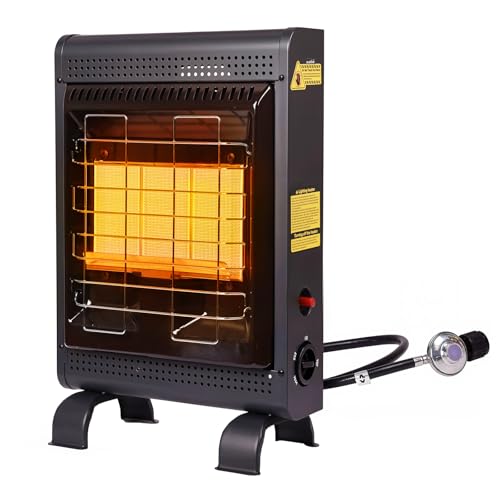
The Ruasveltan Propane Heater is a versatile heating solution designed for both indoor and outdoor use. With an adjustable output ranging from 6,000 to 18,000 BTU, it can warm spaces up to 450 square feet, making it a practical choice for homeowners, apartment dwellers, and RV owners looking for supplemental heat in living rooms, bedrooms, garages, or patios.
One of the standout features is its portability. The heater is lightweight and comes with a stable stand, allowing you to move it easily from your cozy living room to a chilly garage or even on a camping trip. Since it requires no electricity, you can rely on it during power outages, which is a real plus for those in areas prone to storms. Simply connect a standard 20 lb propane cylinder, and you're ready to go.
In terms of heating performance, the three adjustable modes give you control over the warmth level. On the high setting, it delivers a noticeable heat boost that can take the edge off a cold room quickly. The infrared ceramic panel provides a steady, radiant heat that feels natural and comfortable, without the dry air often associated with forced-air heaters. It operates quietly, so it won't disturb your movie nights or sleep.
Safety is well addressed with dual protection features: an oxygen depletion sensor (ODS) that shuts off the gas if oxygen levels drop, and a tip-over switch that cuts the fuel supply if the unit is knocked over. This makes it a safer option for indoor use, especially in bedrooms or living areas where you might have children or pets. The front windscreen also helps maintain consistent heat outdoors on breezy days.
Setting up the heater is straightforward, though you'll need to attach the regulator and hose to a propane tank, which may take a few minutes. The slim design makes storage easy when not in use. One limitation is that it's best suited for smaller spaces; large open-concept areas may not feel as warm. Also, you'll need to keep a spare propane tank handy for extended use.
Overall, the Ruasveltan Propane Heater is a reliable and portable heating option for those who want to supplement their home heating without high electricity costs. It works well in apartments, RVs, workshops, or on the patio, providing cozy warmth where you need it most.
Does a Heater Use Gas? Fuel Types, Uses, and Safety
Some supplemental heaters burn natural gas or propane; electric models use electricity instead. The fuel source is a defining specification, not a small preference, because it affects the connection needed, where the heater can be used, and what safety precautions apply. In this product selection, the ProCom models are listed for natural gas, while the Mr. Heater Buddy and Ruasveltan options use propane.
How to tell whether a heater burns gas
Start with the product label and manufacturer’s manual, rather than guessing from the heater’s shape or the way it produces warmth. Look for an explicit fuel listing such as natural gas or propane, and check whether the instructions call for a gas supply, cylinder, regulator, or hose. An electric heater will identify its electrical supply and connection instead of listing a combustible fuel as its heat source.
Fuel types are not automatically interchangeable. A natural-gas appliance is not a propane appliance simply because both burn gas, and a product should only be connected to the fuel specified by its manufacturer. Don’t adapt a connection or substitute fuel unless the manufacturer expressly approves that configuration. If the label or instructions are unclear, confirm the model’s requirements before buying or connecting it.
Retail descriptions can include broad words such as “space heater,” “infrared,” or “blue flame,” but those terms alone don’t tell you the fuel. Infrared describes a way heat can be delivered, while blue flame describes a burner style; neither is a substitute for checking the fuel specification. In this selection, product details explicitly identify the ProCom heaters as natural-gas-only and the portable models as propane heaters.
Natural-gas models in this selection
The ProCom natural-gas heater options are described as ventless and intended to run on natural gas only. The listed models include infrared plaque heaters and blue-flame heaters, with stated maximum outputs of 10,000 or 30,000 BTU and manufacturer-listed coverage of up to 500, 1,200, or 1,400 square feet, depending on the model. Those coverage figures are product claims, not a guarantee that a particular room will reach a comfortable temperature.
The distinction between the two styles can inform how you think about heat delivery, but the available product details don’t provide controlled comparisons of their room performance. The 10,000-BTU infrared plaque model is listed with thermostat control, while the 30,000-BTU infrared model has manual low, medium, and high settings. The blue-flame options include a 10,000-BTU thermostat-controlled model and a 30,000-BTU manual-control model.
Several ProCom descriptions list push-button Piezo ignition and an oxygen depletion sensor (ODS) that automatically shuts the heater off if oxygen becomes insufficient. An ODS is a safety feature, not a substitute for following the manual, meeting local requirements, or using suitable carbon monoxide and smoke alarms. “Ventless” also doesn’t mean that combustion has no effect on indoor air. Review the manufacturer’s instructions and local rules for the intended room before deciding that a model is suitable.
The listed ProCom models include base feet and wall-mounting hardware, which gives buyers a choice of placement when the instructions allow it. A blower is described as sold separately for the 30,000-BTU models, so don’t assume one is included. Compare the exact model number and control type in the listing: similar product names can refer to different heat outputs, controls, and installation arrangements.
Portable propane heaters and their limits
The Mr. Heater Buddy is listed as a 4,000- or 9,000-BTU-per-hour radiant propane heater for indoor and outdoor use, with an approximate coverage claim of 225 square feet. Its description lists two heat settings and an emergency low-oxygen safety system. It also states that a one-pound propane cylinder runs for about 5.4 hours on low or 2.4 hours on high, so fuel planning depends on the selected setting and the product’s stated conditions.
The Ruasveltan portable heater is described as a propane model with adjustable outputs from 6,000 to 18,000 BTU and a stated coverage claim of up to 450 square feet. Its product information lists three heat settings, Piezo ignition, an ODS, and tip-over shutoff protection. The description says it uses a 20-pound liquid propane cylinder, but buyers should verify the supplied regulator and hose instructions and the exact setup requirements for their intended location.
Portability does not make every location suitable. A garage, workshop, patio, tent, cabin, or indoor room can have different ventilation, clearance, and local-code requirements, and a marketing list of possible settings does not override the manual. Use a fuel-burning heater only in locations and conditions its manufacturer permits. Maintain the required clearances, keep it away from bedding and curtains, and use active carbon monoxide and smoke alarms when operating fuel-burning supplemental heat.
Propane also requires attention to fuel storage and handling, while natural-gas models depend on a compatible natural-gas supply. Neither fuel should be treated as a universal backup for an electric heater. If a power outage is the reason you’re considering gas, check whether the particular heater can operate without electricity, whether its ignition and controls need power, and whether the manual permits the intended outage use. The product descriptions here state that some ProCom models require no electricity, but verify that detail for the exact model.
Gas versus electric for supplemental room heat
An electric heater draws power from a household circuit and doesn’t burn natural gas or propane at the point of use. Fuel-burning models generate heat by combustion and require the specified fuel connection. That basic difference affects installation and operation: an electric heater needs a suitable electrical outlet, while a gas model needs its approved gas supply or cylinder arrangement and must be used under its safety instructions.
For zone heating, consider the room you actually want to warm, how often it is occupied, and what fuel connections are already available. A natural-gas heater may be a practical candidate where its specified supply and installation are available; a portable propane option may appeal where its approved portable setup fits the intended use. An electric model may be simpler where the appropriate outlet and circuit are available, but it won’t provide heat during an outage unless a suitable power source is available.
Room coverage figures need context. A heater’s listed square-foot range doesn’t account for every room’s insulation, drafts, ceiling height, outdoor temperature, or how the space is divided. A small enclosed room with limited heat loss can behave differently from a high-ceiling room or a drafty workshop with a concrete floor. Treat coverage as a starting point from the manufacturer, then compare it with your room and the heater’s permitted use.
Fuel cost also can’t be judged from the heater’s fuel name alone. Actual operating expense depends on local utility rates, fuel prices, the appliance’s output and cycling, and how long it runs. Claims such as “pennies an hour” in product descriptions aren’t enough to calculate your own cost. Check the applicable rate and usage assumptions rather than treating a marketing phrase as a household estimate.
Controls, placement, and safety checks
Controls matter because they affect how easily you can adjust supplemental warmth. The ProCom 10,000-BTU models are listed with thermostat control, while the 30,000-BTU versions described here use manual low, medium, and high settings. A thermostat can regulate operation around its sensing temperature, but actual comfort still depends on room conditions and heater placement. Manual settings give a simpler choice of output levels but may require more attention as the room warms or cools.
Before purchasing, check the full manual for clearances from combustible materials, permitted mounting positions, required ventilation, and any restrictions on sleeping areas or unattended operation. Keep heaters at least three feet from bedding and curtains as a general fire-safety reminder, while following any greater clearance stated by the manufacturer. Don’t block a heater’s air openings or place combustible items against it. Never disable an ODS or tip-over shutoff.
For electric heaters, verify the electrical rating and the circuit’s capacity, and plug the unit directly into an appropriate wall outlet rather than a power strip or light-duty extension cord. A heavily loaded shared circuit can trip its breaker. For gas heaters, confirm the fuel type and connection requirements before use, and don’t assume that a regulator or accessory from another product is acceptable. Use only accessories permitted by the heater’s manufacturer.
Look for applicable safety certifications in the product documentation instead of assuming a heater is listed by a safety organization. The supplied descriptions identify an ANSI certification for one ProCom model, but they don’t establish UL, ETL, or CSA listings for every product in this selection. Check the label and documentation for the specific unit. If the information isn’t clear, ask the seller or manufacturer before installing or operating it.
Matching a product to the actual fuel need
Choose by fuel first, then narrow the options by output, control, and permitted location. If you have natural gas and want a fixed or freestanding supplemental unit, compare the ProCom model’s natural-gas-only specification with its listed output and controls. If you need a portable propane heater, compare the Mr. Heater and Ruasveltan descriptions, while checking the cylinder requirements and indoor or outdoor restrictions for the exact model.
Don’t buy on BTU rating alone. A larger number doesn’t make a heater appropriate for a small or poorly ventilated space, and a listed coverage area doesn’t establish safe placement in every room. Match the heater to the room, the available fuel, and the manufacturer’s instructions. Also consider whether manual controls or a thermostat better fit the way you use supplemental heat.
Brand and product names can help identify candidates, but the model number is more reliable when checking specifications. This selection includes multiple ProCom heaters with similar names but different outputs and controls. Confirm whether the item is infrared plaque or blue flame, whether it is manual or thermostat-controlled, and whether the specified fuel is natural gas or propane. Those distinctions matter more than a broad “gas heater” label.
For ideas about portable fuel-burning warmth in outdoor settings, our outdoor heater overview offers related context. Outdoor suitability does not automatically establish indoor suitability, though, so follow the exact product’s indoor-use statement and manual. A product described for both indoor and outdoor use still has operating limits and safety requirements. Check them before use rather than relying on a general category description.
In short, heaters may use electricity, natural gas, or propane, and the product label tells you which applies. The models here are gas-fueled: the ProCom options use natural gas, while the portable choices use propane. Confirm the exact fuel, connection, room suitability, and safety instructions before buying, then select a model whose output and controls suit the space you intend to heat.


Write Your Review
No reviews yet. Be the first to share your experience!