
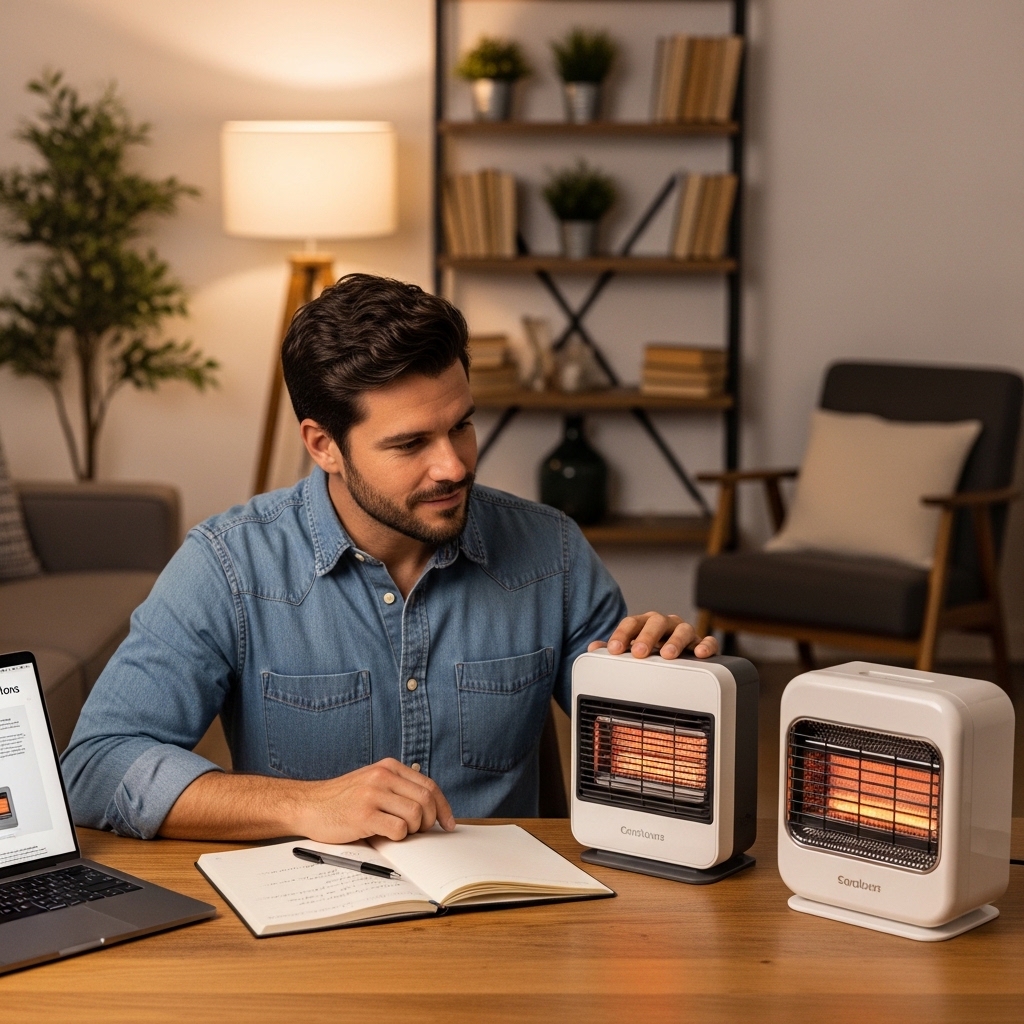

Heating a chilly room without creating another indoor-air concern is a reasonable goal. Most conventional electric space heaters warm air or nearby objects with resistance elements; they are not designed to generate ozone. But product listings can blur the distinction between a heater and a device that intentionally produces ozone, so checking the appliance’s stated purpose matters.
The question do space heaters produce ozone has a direct answer: a typical ceramic, infrared, or oil-filled electric heater does not intentionally make ozone as part of its heating process. The HOSOUTION item listed below is an ozone generator, not a space heater, and its product information says it should operate in a ventilated environment. For room heating, compare appliances by their actual heating technology and safety information, such as in this guide to heating open-plan rooms.

Ozone, Space Heating, and the Product Listed Here
Ordinary plug-in electric heaters transfer electrical energy into heat. A ceramic fan heater warms air passing over its heating element, an infrared heater directs radiant energy toward nearby surfaces and people, and an oil-filled radiator warms its casing and the surrounding air. Those heating methods do not depend on generating ozone, a reactive gas made of three oxygen atoms.
That distinction is useful because a listing that contains the words “heater,” “hot tub,” or “ozone” may still describe equipment that does not heat a room. The supplied HOSOUTION 2000mg/H Ozone Generator with Timer is described for treating water in applications such as cold plunges, ice baths, hot tubs, and spas. Its description identifies it as an ozone generator, not a supplemental space heater.
So, a person shopping for warmth should not treat this product as an alternative to a ceramic, radiant, oil-filled, or other room heater. Its listed timer, ozone output claim, and water-related uses do not establish a room-heating function. The product information also does not provide heater wattage, room coverage, a thermostat, or a heating element specification.
How common electric heaters produce warmth
Resistance heaters use electricity to heat an element, then move that heat into the room by convection, radiation, or a combination of the two. In a fan-forced model, a fan circulates warmed air; an oil-filled radiator relies mainly on natural convection and radiant warmth from its heated surfaces. These mechanisms are different from electrical processes designed to create ozone.
Ozone production is not a normal feature of standard electric resistance heating. A heater’s product description should identify a heating method and intended room use, rather than ozone output or water treatment. If an appliance advertises ozone generation, it should be evaluated as an ozone-producing device, not assumed to be a heater because its listing uses the word “hot” or mentions a hot tub.
Some air-cleaning or specialty devices use electrical methods that can generate ozone, but that does not mean every appliance with a fan, electrical component, or heating function does so. The exact technology matters. If a manufacturer does not clearly identify whether a device generates ozone, check its manual or product documentation rather than inferring from a vague listing or an unfamiliar odor.
Why ozone generator warnings matter indoors
Ozone is a reactive gas, and intentionally generating it indoors is a different activity from heating a room with an ordinary electric heater. The supplied HOSOUTION description specifically says the ozone generator should be operated in a ventilated environment. It also says that, after use in a closed environment, the user should wait 30 minutes before entering or open external windows and doors when re-entering.
Those directions belong to the ozone generator’s use, not to standard electric space heating. Do not transfer its operating instructions to a heater, and do not assume a heater can perform water treatment or air treatment. Follow the exact manufacturer directions for the appliance in question, including any instructions about ventilation, occupancy, and re-entry.
The listed product description does not give enough detail to independently characterize ozone concentrations in a room, establish a safe exposure level, or verify how the generator behaves in a particular space. Avoid interpreting its output rating as a room-heating specification or as proof that an indoor environment is suitable. If the intended use is not clear from the manual, contact the manufacturer before operating it.
What a strange smell from a heater does and does not tell you
A smell from a heater does not by itself prove that ozone is present. Dust warming on an element, overheated material, or an electrical fault can create odors with different causes, and smell alone is not a reliable way to identify a gas. A new or persistent burning, melting, or electrical odor deserves attention rather than an assumption that the appliance is producing ozone.
If a heater smells unusual, switch it off and disconnect it if this can be done safely, then consult the manufacturer’s instructions. Do not open the appliance, bypass an automatic cutoff, or keep operating a unit that appears damaged. Smoke, visible scorching, a damaged cord, or a hot or discolored plug are reasons to stop using the heater and seek appropriate assistance.
Dust can collect around a heater during storage and may create a temporary odor as the appliance warms, but that possibility should not be used to dismiss a strong or recurring smell. Follow the cleaning and maintenance directions for that model, and allow the appliance to cool before any permitted exterior cleaning. If the odor continues after appropriate cleaning or occurs with abnormal operation, discontinue use and contact the manufacturer.
Reading a listing without confusing heating and ozone output
Start with the product’s stated category and intended task. A room heater listing should identify that it heats indoor space and provide relevant specifications, such as the heating technology, electrical requirements, controls, and any stated safety features. A listing centered on ozone output, water, a cold plunge, or a spa points to a different kind of device.
Product titles can combine several search terms, and marketplace listings may use broad wording. Read the description and manual rather than relying on one phrase in a title. The HOSOUTION description focuses on ozone treatment for water and warns about ventilation and re-entry; it does not claim to warm a room.
For a heater purchase, look for manufacturer information that matches the room and electrical supply. A listing should make its intended heating use clear, while the manual should explain operation and safety requirements. If a page does not state whether the product heats air or surfaces, do not fill in that missing information from a brand name, a timer, or a heat-related application elsewhere in the title.
Choosing a room heater for the actual comfort problem
Once the ozone question is separated from the product listing, choose a heater based on how the room needs warmth. Radiant models can provide directed warmth to people or objects in their path, while convection heaters circulate heat through room air. Oil-filled radiators generally warm gradually and can provide steady ambient heat, though they are not ozone generators simply because they contain heated oil.
For an electric heater, check the rated wattage and the circuit serving the outlet before purchase. A common 1,500-watt heater on a 120-volt supply draws about 12.5 amps, which can leave limited capacity on a 15-amp circuit shared with other equipment. Follow the heater’s manual and electrical safety instructions, and plug it directly into a suitable wall outlet rather than a power strip or light-duty extension cord.
Match the heater to the room’s insulation, drafts, ceiling height, and the amount of space that needs warmth. A simple sizing baseline often used for ordinary insulated rooms is about 10 watts per square foot, but it is only a starting point, not a guarantee of comfort. A drafty room, high ceiling, or cold concrete floor can increase heat loss and make a small portable heater feel inadequate.
Noise and controls also shape day-to-day comfort. Fan-forced heaters move air and make operating noise, while passive convection models avoid a fan but may take longer to warm a room. Thermostats and timers can help manage operation, but a feature name alone does not establish precise temperature control or lower energy use; check the model’s documentation for how its controls work.
Separate ozone-device directions from heater safety
Space heater safety focuses on electrical loading, hot surfaces, and fire prevention, not ozone-generator ventilation directions. Use the clearances stated by the heater manufacturer and keep bedding, curtains, and other combustibles at least three feet away. Keep the appliance on a stable surface, do not drape items over it, and do not leave it operating unattended unless its instructions specifically permit the intended use.
Check whether the heater carries a recognized safety listing such as UL, ETL, or CSA, and confirm that the listing applies to the exact model. A tip-over switch or overheat shutoff can reduce certain risks, but no feature removes the need for safe placement and supervision. Keep children and pets away from hot grilles and follow the manufacturer’s guidance for any room-specific restrictions.
These precautions do not make a conventional heater an ozone generator, nor do they make an ozone generator suitable for heating. The appliances have different jobs and their safety instructions address different hazards. If a product combines heating with an air-treatment function, verify the exact design and operating directions in its documentation instead of assuming that all heater-related claims apply to every mode.
For fireplace-style supplemental heating, this overview of fireplace heater options offers a related starting point, but always confirm specifications and safety information for the particular model. A product roundup cannot replace the manufacturer’s instructions or establish that a device produces or does not produce ozone unless its documentation says so.
What the HOSOUTION listing supports
The supplied description identifies the HOSOUTION product as a timer-equipped ozone generator intended for water-related applications. It lists a claimed output of 2000mg/H, describes low-noise operation, and says the device should be operated in a ventilated environment. Those details describe the ozone generator; they do not establish heater performance, electrical compatibility for room heating, or indoor air quality outcomes.
The description also suggests a schedule of use for keeping standing water clean, but that is manufacturer-provided product information and should be followed only as applicable to the intended water setup. It does not substantiate use as an air purifier or a space heater. If a buyer needs supplemental warmth, this is not the product category to compare against ceramic, infrared, oil-filled, or other electric room heaters.
Before buying any appliance with ozone in its name, confirm whether ozone is intentionally generated and where the manufacturer says it may be used. Read the ventilation and re-entry instructions carefully, especially if the proposed location is enclosed or occupied. The supplied listing provides a caution, but it does not provide enough information to replace the complete product manual.
In short, ordinary electric space heaters are designed to produce warmth, not ozone; the product shown here is an ozone generator rather than a room heater. Check the appliance’s actual purpose and documentation, then select a heater whose stated heating method and safety instructions fit the room.


Write Your Review
No reviews yet. Be the first to share your experience!