
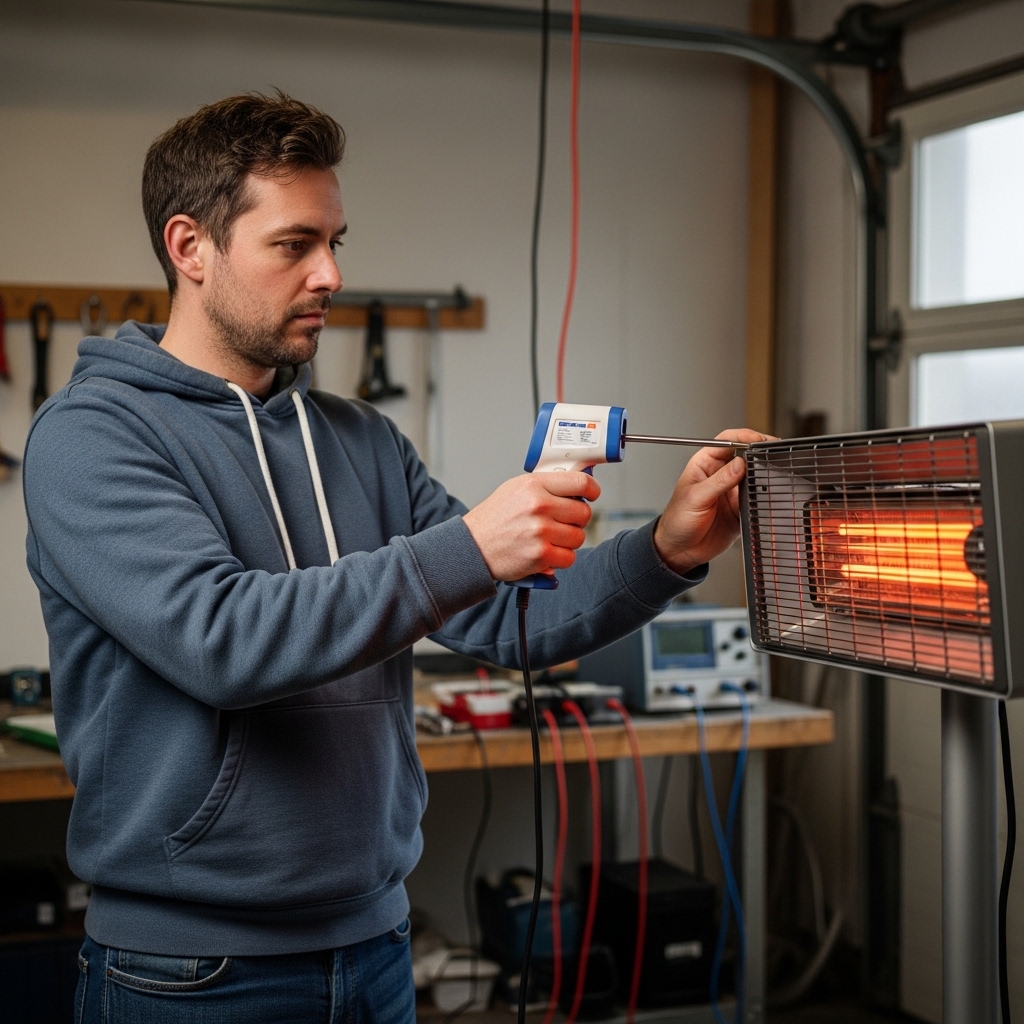

An uninsulated garage loses heat through its walls, doors, and concrete floor, so a heater that works well in a bedroom may struggle to make the whole space comfortable. The practical answer to what is the most efficient garage heater depends on whether you need quick, directional warmth at a workbench or sustained heat across a larger area. The options here range from plug-in infrared and ceramic electric models to a high-output forced-air propane heater, and their fuel and electrical requirements are not interchangeable.
For a small, occupied zone, a 120-volt electric heater can be convenient, but a 1,500-watt unit draws substantial power and may share a circuit with other equipment. For a chilly, larger workspace, the listed InoKraft propane model offers a higher rated heat output, but fuel-burning equipment requires careful attention to ventilation and its instructions. If you are comparing room-heating approaches, our guide to heating open-plan rooms offers related context, while our overview of outdoor heater options covers radiant heat for less enclosed spaces.
Top Products

Pros
- WiFi control lets you manage heating remotely, adding convenience and energy savings.
- Space-saving wall mount frees up floor space and keeps the area clutter-free.
- Infrared heat feels natural and comfortable, with even warmth distribution.
- Safe-to-touch exterior and tip-over shutoff provide peace of mind for families.
Cons
- Wall-mounted design may require installation and is not portable like freestanding models.
- Feet are not included, so it cannot be used as a standalone unit without mounting.
- Some users may prefer a model with visible flame effects for ambiance.
The Heat Storm HS-1500-PHX-WIFI is an infrared heater that brings modern convenience to home heating. Unlike traditional space heaters that take up floor space, this model mounts directly on the wall, keeping your room clutter-free. It's an excellent choice for homeowners, apartment dwellers, RV owners, and anyone looking to add supplemental warmth to their bedroom, office, or living room without sacrificing valuable square footage.
One of the standout features is its WiFi connectivity, which allows you to control the heater from your smartphone. Whether you're at work or cozy in bed, you can adjust the temperature, set a schedule, or turn the unit off with a simple tap. The digital thermostat and touch screen make it easy to dial in your preferred comfort level, helping you save energy by heating only when and where you need it.
In terms of heating performance, this unit delivers 1500 watts (5200 BTUs) of infrared warmth. Infrared heat works by warming objects and people directly, rather than just circulating air, which creates a consistent, comfortable environment. As a primary heat source, it can handle up to 150 square feet in a well-insulated room; as a supplement, it may cover up to 750 square feet. Many users appreciate that it doesn't dry out the air like forced-air heaters, making it more pleasant for long-term use.
The wall-mounted design is both practical and safe. The heater stays cool to the touch, and the wall behind it remains cool as well, reducing fire risk. It also includes a tip-over safety shutoff for added protection. Installation is straightforward when mounted over an outlet, as the cord can be hidden inside the unit for a clean look. Keep in mind that feet are not included, so this model is intended for permanent or semi-permanent wall mounting.
While the Heat Storm lacks flame effects, it focuses on pure heating functionality. Its quiet operation makes it ideal for bedrooms or offices where noise can be distracting. The remote control adds convenience, though the WiFi app provides even more flexibility. One limitation is that it's not portable in the traditional sense, so if you need a heater you can move from room to room, a freestanding model might be a better fit.
Overall, the Heat Storm HS-1500-PHX-WIFI is a solid choice for anyone wanting efficient, space-saving heat with modern smart controls. It suits small to medium spaces, offers reliable infrared warmth, and prioritizes safety. If you're looking to heat a bedroom, office, or apartment without cluttering the floor, this wall-mounted heater is worth considering.


Pros
- Versatile indoor/outdoor use with IP55 weatherproof rating
- Instant, silent infrared heat - no noisy fan
- Easy wall or ceiling mount saves floor space
- Remote control adds convenience for adjusting settings
Cons
- No built-in thermostat, so you may need to manually adjust settings to maintain comfort
- At 1500W, it's best for spot heating or supplementing an existing system, not whole-home heating
- Some users may find the heat output less effective in very large, open outdoor areas
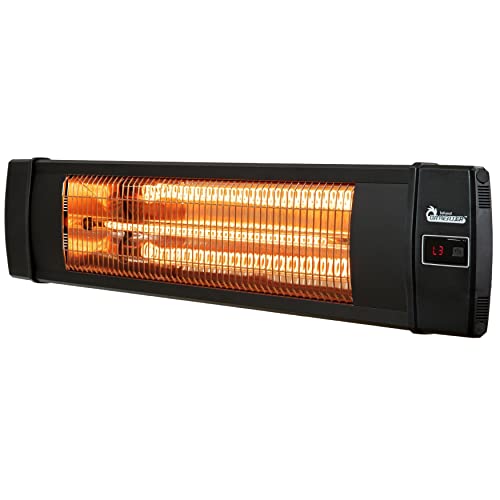
The DR. INFRARED HEATER Portable Infrared Space Heater is a versatile heating solution that works both indoors and outdoors, making it a great option for homeowners, apartment dwellers, and anyone looking to add warmth to a patio, garage, or workshop. Unlike many space heaters that rely on noisy fans, this unit uses infrared technology to deliver clean, instant heat that warms people and objects directly, not the air. That means you feel the warmth quickly without stirring up dust or creating a loud hum.
This heater is particularly well-suited for spot heating in areas like a living room corner, a bedroom, or a home office where quiet operation matters. The three power settings (900W, 1200W, 1500W) let you adjust the heat output based on the size of the space and how much warmth you need. For example, on a chilly evening in a small apartment, the lower setting may be enough to take the edge off, while the higher setting can provide more noticeable warmth on a cold winter night. Just keep in mind that there is no thermostat, so you will need to manually switch between settings or use the remote to find your comfort level.
Build quality appears solid, with a weatherproof aluminum body that carries an IP55 rating. This means it can handle moisture and dust, which is why it is also suitable for covered patios, decks, or garages. The included wall and ceiling mounting bracket is a nice touch, allowing you to install the heater up and out of the way, saving valuable floor space. Setup is straightforward if you have basic DIY skills, though you will need to mount it securely to a wall or ceiling joist.
In terms of performance, the high-efficiency aluminum reflector is designed to maximize heat output, and many users find the infrared warmth comfortable and natural. Because it does not rely on a fan, there is no air movement, which can be a plus for people with allergies or those who prefer a draft-free environment. However, the lack of a thermostat means you may need to keep an eye on the temperature and adjust settings as needed, especially if the room heats up or cools down throughout the day.
One realistic limitation is that this heater is best for supplemental or spot heating rather than as a primary heat source for a large home. In a typical 150-square-foot room, it can provide noticeable warmth, but in an open-concept living area or a very large garage, you may need additional heating. The remote control is a handy feature, letting you turn the unit on or off and change power settings from across the room without getting up.
For anyone looking for a quiet, efficient, and flexible heating option that can transition from indoor cozy spaces to outdoor entertaining areas, the DR. INFRARED HEATER is a practical choice. It works well for apartment dwellers who want to warm up a bedroom or living area without a bulky unit, and for homeowners who want to extend their outdoor season on a covered patio or deck. Just be prepared to manage the heat manually since there is no automatic thermostat.

Pros
- Versatile wall-mount or freestanding design fits small spaces like apartments, RVs, and offices.
- Infrared heat feels natural and doesn't dry out the air like traditional fan heaters.
- Safe to touch even the grill, with overheat protection for added safety.
- Quiet enough for bedrooms and workspaces, with no loud fan noise.
- Energy-efficient with two power settings and a responsive thermostat.
Cons
- No visible flame effect, so it lacks the cozy ambiance of a fireplace.
- Heating coverage is limited to small rooms (up to about 200 sq ft) – not suitable for large spaces.
- Fan noise, while low, may still be noticeable to some users in very quiet environments.
The Heat Storm Phoenix Infrared Space Heater (HS-1500-PHX) is a compact and versatile heating solution designed for those who need efficient warmth in smaller spaces. Unlike traditional space heaters, this model uses infrared technology to heat objects and people directly, rather than just circulating hot air. The result is a gentle, even warmth that feels natural and doesn't strip moisture from the room. It's an excellent choice for homeowners, apartment dwellers, RV owners, and anyone looking to supplement their primary heating in a bedroom, home office, or cozy living nook.
Heating performance is where the Phoenix shines. With a 1500-watt output (5200 BTU) and a lower 750-watt eco mode, you can tailor the heat to your needs. The built-in thermostat with an LED display shows the current room temperature and helps maintain your desired comfort level automatically. Many users appreciate that the infrared heat doesn't create drafts or stir up dust, making it a clean option for those with allergies. While it's not designed to heat a whole house, it handles small to medium rooms (roughly 200 square feet) effectively, providing consistent warmth without the hot-and-cold cycles of some fan heaters.
Build quality and practicality are strong points. At just 9 pounds and measuring 18.75 x 4.5 x 12.75 inches, the heater is small enough to tuck into a corner or mount flush on a wall. The included removable feet let you use it as a freestanding unit, while the back brackets allow for simple wall installation. The grill stays cool to the touch, a key safety feature for homes with children or pets. Overheat protection and a tip-over shutoff add further peace of mind. The remote control makes it easy to adjust settings from your couch or bed, and the quiet operation means it won't interrupt your movie night or sleep.
Setting up the Heat Storm Phoenix is straightforward. If you choose to wall-mount it, the brackets are already on the back – just screw it into studs or use appropriate anchors. For floor use, snap on the feet and plug it in. There's no complicated assembly or special wiring required. Maintenance is minimal: occasional dusting of the intake vents keeps it running efficiently. The heater's small size also makes it easy to move from room to room or store during warmer months.
Of course, no product is perfect. The Phoenix lacks a flame effect, so if you're seeking the ambiance of a fireplace, this won't provide that visual warmth. Its heating range is best for smaller spaces – don't expect it to warm an open-concept living area or a large basement. Some users have noted a faint fan hum when the heater is running, though it's generally quieter than most space heaters. The power cord is also on the shorter side, so you may need an extension cord or a nearby outlet.
Overall, the Heat Storm Phoenix is a practical, safe, and energy-efficient choice for targeted heating. It's ideal for apartments, RVs, home offices, and bedrooms where you want consistent comfort without the bulk of a larger heater. For those who prioritize quiet operation, safety, and flexible placement over flame effects, this infrared heater delivers reliable warmth at a reasonable price.
The Heat Storm Phoenix uses infrared quartz heating to warm people and objects directly, creating a comfortable environment without the dry air typical of fan-forced heaters. With two power modes (750W and 1500W), you can adjust output to match your room size and energy goals. The thermostat maintains your set temperature, cycling the heater on and off as needed. Coverage is best in small rooms up to about 200 square feet, where it provides steady, even heat. The 5200 BTU output is sufficient for supplemental heating in a bedroom, office, or small living space.
Setting up the Heat Storm Phoenix is simple and tool-friendly. For wall mounting, the heater comes with brackets already attached to the back – just screw them into wall studs or use drywall anchors. It hangs flush and takes up minimal space. If you prefer a freestanding setup, snap the included feet onto the bottom and place it on any flat surface. The unit weighs only 9 pounds, so moving it between rooms is easy. No special wiring or professional installation is needed – just plug it into a standard 120V outlet.

Pros
- Three versatile heat settings including a fan-only mode for year-round use
- Adjustable 90-degree angle helps target warmth to specific areas
- Quiet enough for use in bedrooms or offices without disturbance
- Overheat protection and flame-retardant build enhance safety
Cons
- 5-foot power cord may limit placement options in larger rooms
- Base requires assembly, which may be slightly inconvenient out of the box
- Limited to small to medium spaces; not suitable for heating large open areas
The AEscod 1500W Electric Space Heater is a compact, portable heating solution designed for indoor use in spaces like garages, offices, bedrooms, and apartments. With its bright yellow finish and simple controls, it brings both function and a pop of color to any room. This heater is best suited for homeowners, apartment dwellers, RV owners, or anyone needing supplemental warmth in a small to medium area without the hassle of a permanent installation.
In terms of heating performance, this unit offers three modes: high heat (1500W), low heat (750W), and natural wind (fan only). The 1500W setting can quickly warm up a small office or bedroom, while the lower setting is great for maintaining a comfortable temperature without using as much electricity. The 90-degree adjustable angle is a nice touch, allowing you to direct the airflow exactly where you need it, whether you're at a desk or relaxing on the couch. However, because it's a fan-forced heater, it works best as a supplemental heat source rather than a primary heating system for larger areas.
Build quality and practicality are solid for the price point. The heater uses upgraded ABS material that is flame-retardant, adding a layer of safety. It also features built-in overheat protection that automatically shuts the unit off if it gets too hot, which is reassuring for families or anyone using it in a bedroom or nursery. The compact size and built-in handle make it easy to move from room to room, and the 5-foot power cord is adequate for most small spaces, though you may need an extension cord for larger rooms.
Setup is straightforward: you'll need to attach the base, which takes just a minute or two. Once assembled, operation is simple with a manual dial to select your desired mode. The noise level is rated under 45 dB, which is quieter than many similar heaters, making it suitable for use while sleeping or working. There's no remote control or thermostat, so you'll need to adjust settings manually, but for the price, the simplicity is a trade-off many will accept.
One realistic limitation is that this heater is best for spot heating rather than whole-room warmth. It's ideal for a home office, a chilly corner of a living room, or a small garage workspace. It may struggle to heat a large basement or open-concept area. Additionally, the lack of a tip-over switch (based on the provided specs) means you should place it on a stable, flat surface away from foot traffic.
Overall, the AEscod 1500W Electric Space Heater is a practical, budget-friendly choice for anyone needing a portable heater for small indoor spaces. It's especially well-suited for apartment dwellers, office workers, and RV owners who want a quiet, adjustable heat source with essential safety features. If you're looking for a simple, no-frills heater to take the chill off a single room, this model is worth considering.

Pros
- Dual heating system provides efficient, even warmth across large areas without drying the air
- Quiet fan at 39 dB won't disrupt daily activities or sleep
- Lifetime filter reduces maintenance and keeps the air clean
- Caster wheels make it easy to move from room to room
Cons
- Weighs 19 lbs, so not as lightweight as some compact heaters
- Power cord is 6 feet long, which may limit placement in some rooms
- Some users may find the cherry color finish less versatile for modern decor
The Dr Infrared Heater DR-968 is a portable space heater designed for homeowners and renters who need efficient supplemental heating in larger rooms. With a dual heating system that combines infrared quartz tubes and PTC ceramic technology, this 1500-watt unit delivers around 5,200 BTUs of warmth — 60% more than traditional models. It's a solid choice for living rooms, basements, home offices, or even a spacious bedroom setup where consistent, comfortable heat matters.
Warmth distribution is one of this heater's strong points. The infrared quartz heats objects and people directly, while the PTC fan circulates warm air throughout the room. The built-in electronic thermostat lets you set a target temperature between 50 and 85°F, and the heater maintains it automatically. The auto energy-saving mode with high and low settings helps reduce electricity use without sacrificing comfort. For apartment dwellers or homeowners looking to zone-heat a large area, this setup works well as a primary heat source during milder weather or as a boost alongside central heating.
Build quality feels practical and home-friendly. The cherry wood finish gives it a furniture-like appearance that blends into living spaces rather than standing out as a utility appliance. It sits on caster wheels, making it easy to roll from one room to another. The 12-hour auto shut-off timer and IR remote control add convenience — you can set it to turn off after you fall asleep or warm up the room before you get home. At just 39 dB, the blower operates quietly, so it won't interfere with conversations, TV watching, or sleep.
Safety features are well covered. Tip-over protection and overheat protection automatically shut off the heater if it's knocked over or gets too hot. The exterior remains cool to the touch, which is reassuring if you have kids or pets. The lifetime washable filter means you won't have to buy replacements, just occasional cleaning to keep air quality high. Setup is straightforward: attach the wheels, set the thermostat, and start heating. No wall mounting or professional installation required.
That said, there are a few limitations to consider. At 19 pounds, it's not the lightest portable heater, though the wheels help with mobility. The 6-foot power cord may restrict placement if your outlet is far from where you want the heater. And while the cherry color adds warmth, it may not match every decor style. Also, because it uses a fan, you'll hear some airflow noise, though at 39 dB it's generally considered quiet.
Overall, the Dr Infrared Heater DR-968 is a reliable option for those needing powerful, quiet, and energy-efficient supplemental heating in larger spaces. It's especially suited for homeowners who want to warm up a cold basement or living room, apartment dwellers looking for a freestanding heater that doesn't scream 'appliance,' and anyone who appreciates the comfort of infrared warmth without the drying effect of traditional forced-air heaters. If you're shopping for a durable, feature-packed space heater that balances performance with safety, this model is worth considering.
The Dr Infrared Heater DR-968 uses a dual heating system that combines infrared quartz tube technology with a PTC ceramic element. This design heats objects and people directly with infrared waves while a quiet fan circulates warm air throughout the room. According to the manufacturer, it produces 60% more heat than standard 1500-watt heaters, roughly equivalent to 5,200 BTUs. The electronic thermostat allows you to set a precise temperature between 50 and 85°F, and the heater cycles on and off to maintain that level. On high, it provides fast warmth for larger rooms up to about 1,000 square feet. On low, it maintains comfort in smaller spaces with less energy. The auto energy-saving mode further reduces power consumption by adjusting output based on room temperature.
Safety is a priority with the Dr Infrared Heater DR-968. It includes tip-over protection, which automatically shuts off the unit if it's knocked over. Overheat protection prevents the heater from running too hot and causing damage or fire risk. The exterior stays cool to the touch even during operation, reducing the chance of burns if someone brushes against it. These features make it suitable for households with children or pets. Additionally, the heater has a stable base on caster wheels, reducing the likelihood of accidental tipping during daily use.
What Makes a Garage Heater Efficient?
The most efficient choice is not automatically the heater with the largest output or the lowest purchase cost. It is the unit whose heat delivery, energy source, and capacity match the space and the amount of time you need warmth. A heater cannot compensate indefinitely for open doors, major drafts, poor insulation, or a cold concrete slab absorbing heat.
Start with the space, not the product label
Estimate the garage floor area, then consider ceiling height, insulation, air leakage, and how much of the space you actually occupy. A common starting estimate for ordinary insulated rooms is about 10 watts per square foot, but it is not a guarantee of comfort in a garage. Taller ceilings increase the volume of air to heat, while uninsulated walls, frequent door openings, and a cold slab can make heat loss much greater than in a typical indoor room.
That distinction matters when a product listing gives a square-foot coverage figure. The Buyplus 1500W Patio Heater is described as suitable for an area up to 200 square feet, while the Heat Storm HS-1500-PHX-WIFI is listed for up to 150 square feet as a primary heat source in a well-insulated room. Those claims do not establish that either unit will heat a drafty, uninsulated garage of the same size to a particular temperature.
Think about the task as well as the dimensions. If you stand in one part of the garage for occasional projects, directing warmth toward that work area may be more practical than trying to heat every corner. If you move throughout the space or need a more even ambient temperature, airflow and heat output become more important, along with insulation and air sealing.
Electric heat is straightforward, but circuit capacity matters
Most of the plug-in electric options listed here operate at 1,500 watts, and the Heat Storm products are specified at 120 volts. At 120 volts, a 1,500-watt heater draws about 12.5 amps, leaving limited capacity on a typical 15-amp branch circuit for other loads. A garage often has tools, lights, or chargers on the same circuit, so a breaker trip is a real possibility if several loads run together.
Check which outlets share a circuit and follow the heater maker’s electrical instructions. Plug an electric heater directly into a suitable wall outlet, not a power strip or light-duty extension cord, and do not run its cord under rugs or where it can be crushed. If the outlet, plug, or cord becomes unusually hot, or a breaker trips repeatedly, stop using the heater and have the electrical problem assessed rather than repeatedly resetting the breaker.
Electric resistance heat converts the electricity used at the heater into heat at the point of use, but that does not make every electric model equally economical to operate. A 1,500-watt heater running continuously uses more electricity than one that cycles off after reaching its thermostat setting. Actual energy cost depends on runtime and the local electricity rate, neither of which can be determined from wattage alone.
Zone heating can make sense if you warm only the area you occupy rather than trying to heat an entire home or detached workspace. It is not a guaranteed way to lower a bill: savings depend on what other heating you reduce, how long the supplemental heater runs, and how quickly the garage loses heat. A thermostat, a smaller heated zone, and sensible insulation improvements can all affect operating time.
Infrared, ceramic, and forced air serve different jobs
Infrared heaters send radiant heat toward nearby people and surfaces instead of relying only on warming all the air in the room first. That can be useful when a person stays in a relatively fixed work area, although radiant warmth is directional and does not make every distant corner equally warm. The DR. INFRARED HEATER Portable Infrared Indoor has three listed power settings, 900, 1,200, and 1,500 watts, and includes wall and ceiling mounting hardware.
The Heat Storm HS-1500-PHX-WIFI is a wall-mounted infrared model with a digital thermostat, remote, and Wi-Fi control. Its listing specifies 1,500 watts and 5,200 BTU, with coverage figures that depend on whether it is used as a primary or supplemental heat source. Wall mounting can keep the unit off the floor, but the listed wall-mounted version does not include feet, so it is not a freestanding model.
Fan-forced ceramic heaters move warmed air around the nearby space and can feel useful when quick local airflow is wanted. The Buyplus and SEEYANG models are listed as 1,500-watt PTC ceramic heaters with overheat protection; the descriptions also list tip-over protection for these portable designs. Their compact format may suit a small work zone, but a small plug-in unit should not be mistaken for a high-output heater for an entire cold garage.
The InoKraft MAXHEAT MH68 is a different category of equipment. Its listing specifies adjustable forced-air propane output from 30,000 to 68,000 BTU and use with a 20-pound propane tank or larger, with a hose and regulator included. The manufacturer describes coverage up to 1,600 square feet, but actual results depend on the building and conditions; do not treat that figure as a promise of even or sustained warmth in every garage.
A propane forced-air heater may make sense where a high heat output is needed and the space and operation are appropriate for that appliance. It also introduces fuel handling and combustion concerns that plug-in electric models do not have. Follow its instructions for ventilation and placement, and use working carbon monoxide and smoke alarms when operating fuel-burning supplemental heat. Never use a fuel-burning heater in a way its manufacturer does not permit.
Match controls and portability to your routine
Thermostatic control can reduce unnecessary runtime by switching the heater off or reducing output as the room reaches its set temperature. The Heat Storm Phoenix infrared models include thermostatic controls, and the Wi-Fi wall model adds remote control from a phone. The portable DR-968 also lists an electronic thermostat, a remote, high and low modes, and a 12-hour automatic shutoff timer.
Controls do not fix a poor match between heater and building. If a thermostat is near a warm outlet, in a draft, or otherwise not representative of the area where you work, its reading may not reflect comfort across the garage. Use the controls as intended and assess warmth where you actually spend time, rather than assuming the display represents every part of the space.
Portability is useful when a heater needs to move between a garage and another indoor space, but it also means the unit can be placed near combustible materials or in a traffic path. The DR-968 lists caster wheels, while the Buyplus and SEEYANG models list carrying handles. Check the cord reach and choose a stable location that follows the manufacturer’s clearances before moving or operating a portable unit.
Compare the listed options by garage task
For a compact electric option, the AEscod 1500W Electric Space Heater with 90 Adjustable lists high, low, and natural-air modes, a 90-degree adjustable angle, and overheat protection. Its listed five-foot cord makes outlet placement a practical consideration. The product description does not give a garage coverage figure, so its suitability should be judged by the area you need to warm and the outlet’s circuit capacity.
The SEEYANG 1500W portable electric model also offers multiple settings, including a low-heat mode and natural air, and its description lists ETL certification and overheat protection. Its compact size and carrying handle may appeal to someone who needs movable spot heat. The certification and safety claims should be checked against the product label and current manufacturer information before purchase, since the supplied details are product-description claims rather than an independent verification.
For wall placement, compare the two Heat Storm models carefully. The HS-1500-PHX-WIFI is specified as wall mounted, while the Phoenix HS-1500-PHX includes attachable feet and wall mounting points, so its listed configuration can be used on the floor or wall. Both list 1,500-watt operation, but their mounting flexibility and controls differ, which may matter more than a broad claim of efficiency.
The DR. INFRARED HEATER Portable Infrared Indoor is described as IP55 approved for indoor and outdoor use and includes a mounting bracket, but it is listed without a thermostat. That makes its three power settings relevant for manual adjustment, while buyers who want automatic temperature regulation may prefer a model with a stated thermostat. Verify the actual product documentation and intended location, rather than assuming every heater labeled for a garage is appropriate for damp or exposed conditions.
These specifications help narrow the options, not establish a universal winner. A heater’s wattage, fuel, controls, mounting style, and safety features must fit the building and the job. The right choice for a small bench area may be the wrong choice for a large, poorly insulated garage that needs broader heat distribution.
Safety and air quality are part of the efficiency decision
Keep heaters at least three feet from combustible items such as curtains, cardboard, stored supplies, and clothing, unless the manufacturer requires a greater clearance. Leave the intake and outlet unobstructed, set portable units on a stable surface, and keep the heater out of the path of vehicles and foot traffic. A tip-over switch or overheat cutoff is useful protective equipment, but it does not eliminate the need for safe placement and supervision.
Product descriptions list tip-over and overheat protection for several portable models, and the InoKraft listing describes overheat and gas-leak cutoffs. Features vary by model, so check the exact unit rather than assuming that one heater’s safeguards apply to another. Look for a safety listing from a recognized testing organization on the product itself and consult the manual for installation, clearance, and operating limits.
Combustion appliances need particular care because they burn fuel and require ventilation conditions specified by their manufacturer. Use active carbon monoxide and smoke alarms when operating fuel-burning or high-output supplemental heating appliances. If you cannot provide the conditions required in the manual, choose a suitable electric option or another permitted heating approach instead of improvising.
Electric heaters also deserve regular visual attention. Stop using a unit with a damaged cord, loose plug, or signs of overheating, and do not defeat a safety switch or thermal cutoff if the heater keeps shutting down. Dust and debris can interfere with an appliance’s airflow, so follow the product instructions for cleaning and storage rather than opening or repairing electrical components without appropriate expertise.
For more background on matching heat to an indoor zone, the supplemental fireplace heater guide discusses a different style of room heating. The useful comparison is the heating task: a garage needs equipment suited to its drafts, floor area, electrical supply, and operating environment, not simply a heater that sounds efficient in a product title.
Make the choice against your actual operating pattern
If you use the garage briefly and work in one location, a portable infrared or ceramic heater may provide targeted warmth without requiring you to heat the entire building. If you need broad warmth, consider how much airflow, output, and runtime the space demands, then check whether the available energy source can support it. Insulation and limiting avoidable drafts can reduce heat loss, but they do not change the heater’s rated output.
Compare electricity use by thinking in terms of wattage multiplied by operating time, not by assuming that a heater’s marketing label predicts a lower bill. A thermostat may shorten runtime when its setpoint is reached, but a cold, leaky garage can make a heater run for longer. The propane model has a different fuel and output profile from the plug-in units, so any operating-cost comparison needs local fuel and electricity rates as well as realistic runtime.
Noise may also affect the choice. Fan-forced heaters move air and produce operating sound, while the supplied specifications do not provide comparable decibel ratings for these models. If quiet work matters, look for an explicit noise rating in current product documentation rather than assuming that a compact heater or infrared label means silent operation.
Before buying, confirm the intended mounting arrangement, available outlet or fuel supply, heater controls, and safety features for the exact model. Then judge the stated coverage cautiously against the garage’s insulation and ceiling height. The most efficient garage heater is the one that supplies the heat you need in the occupied area without exceeding the space’s electrical, fuel, or safety limits.


Write Your Review
No reviews yet. Be the first to share your experience!