

Introduction
A patio heater can make a cool evening outdoors more comfortable, but the right choice depends on what you need warmed: people in a seating area, the air in an enclosed space, or a particular spot near a table. That distinction matters because infrared models direct warmth toward people and nearby surfaces, while fan-forced ceramic heaters move heated air. If you are learning how to buy a patio heater, start with the location, exposure to wind, available power or fuel, and the number of people you hope to keep comfortable.
Electric and propane options have different placement and operating needs. The products listed below include portable ceramic heaters, freestanding infrared units, propane patio heaters, a wall-mounted model, and a replacement reflector shield, so check the product description carefully rather than assuming every item is a complete heater. For a broader look at outdoor heating styles, see our outdoor heater options and their uses. Prioritize clear safety instructions, suitable weather protection, stable placement, and heat that matches how your patio is actually used.
Product Shortcode


Pros
- Instant, focused infrared heat that feels natural and comfortable
- Quiet operation with no fan noise, ideal for sleep or work
- Multiple safety features including tip-over shutoff and child lock
- Versatile for both indoor and outdoor covered spaces
Cons
- Heating coverage is best for small to medium areas, not large open spaces
- Remote control range may be limited in some setups
- Tower design may be less stable on uneven surfaces without proper placement
The HAIMMY 42-inch Infrared Patio Heater is a versatile electric tower heater designed to provide instant, quiet warmth for both indoor and outdoor covered spaces. Unlike traditional fan-forced heaters, this model uses infrared technology to heat people and objects directly, creating a comfortable, sunshine-like warmth without stirring up dust or noise. It's an excellent choice for homeowners, apartment dwellers, RV owners, and anyone looking to supplement their primary heating system in living rooms, bedrooms, home offices, or basements.
Heating performance is a standout feature. With 9 adjustable heat levels ranging from 620W to 1500W, you can fine-tune the output to match your comfort needs. The infrared heating element warms up almost instantly, so you feel the heat within seconds of turning it on. This makes it ideal for spot heating or taking the chill off a small to medium-sized room. The 42-inch height and long heating tube help distribute warmth from floor to chest level, reducing cold spots. However, it's best suited for supplemental heating in areas up to about 200 square feet, not as a primary heat source for large open spaces.
Build quality and practicality are well-considered. The tower design is sleek and space-saving, fitting easily into corners or next to furniture. The included remote control lets you adjust heat levels and set the 1-9 hour timer from across the room, adding convenience for bedtime or daily routines. The timer is especially useful for energy savings and safety, allowing you to schedule the heater to turn off automatically. The fanless operation means it's whisper-quiet, making it a great companion for a good night's sleep or focused work.
Safety features are comprehensive. The heater includes tip-over protection that automatically shuts it off if knocked over, overheat protection to prevent overheating, and a safety lock that prevents children or pets from accidentally changing settings. The safety lock also has a memory function, so if the heater is moved while locked, it remains locked when turned back on. The IPX5 waterproof rating adds durability for covered outdoor use on patios, porches, or gazebos, though it should not be exposed to direct rain or hose spray.
Setup is straightforward: just place the heater on a stable, level surface, plug it in, and use the control panel or remote to select your desired heat level and timer. There's no assembly required, and its lightweight 8.8-pound build makes it easy to move from room to room or take on RV trips. Maintenance is minimal—occasional dusting of the heating element and exterior keeps it running efficiently.
One realistic limitation is that the heating coverage is best for small to medium spaces; it may struggle to warm larger living areas or open-concept rooms. The remote control range is adequate for most rooms but may not work from very far away. Also, the tower design requires a stable, flat surface to prevent tipping, so it's not ideal for carpeted or uneven floors without careful placement. Overall, the HAIMMY infrared heater offers a practical, quiet, and safe heating solution for those seeking targeted warmth in cozy indoor or covered outdoor settings. It's a solid choice for anyone wanting to stay comfortable during chilly evenings without the noise or dust of a fan heater.


Pros
- Fast heating in just 2 seconds - no waiting for warmth.
- Three modes include a cooling fan option, useful in summer.
- Compact and lightweight with a handle, easily portable.
- Overheat protection and ETL certification for safety.
- Quiet enough for use in bedrooms or home offices.
Cons
- Heating coverage is limited to small spaces; not suitable for large rooms.
- No built-in thermostat - only manual mode selection.
- Zero customer reviews at listing time, so real-world performance is unverified.
The SEEYANG 1500W portable electric heater is a compact and versatile heating solution designed for both indoor and outdoor use. While it may not be a traditional fireplace, it serves as an excellent supplemental heater for patios, garages, tents, and smaller indoor spaces like apartments or RVs. Homeowners looking for spot heating, apartment users needing a boost in a chilly bedroom, or RV owners wanting quick warmth on cold nights will find this unit practical.
Heating performance is a strong point here. The PTC ceramic heating element combined with a 2600 RPM fan delivers hot air within two seconds, according to the product description. With three modes - natural air (25W), low heat (750W), and high heat (1500W) - you can adjust the output based on the season. In winter, the high setting quickly warms a small room, while the low setting provides gentle heat without overcooking the space. The fan-only mode is handy for summer air circulation. For supplemental heating in a 150-200 square foot area, this unit should suffice.
Build quality emphasizes portability and safety. The heater measures just 7x8x9 inches and includes a carrying handle for easy transport. The exterior uses V-0 flame retardant material, and the unit automatically shuts off if internal temperature reaches 75°C. ETL certification adds a layer of trust. Quiet operation is claimed, making it suitable for bedrooms or offices where noise can be distracting. The simple rotary switch for mode selection is straightforward, though there is no remote control or digital thermostat.
Setup is as easy as plugging it in and selecting a mode. No assembly or installation required, which is great for renters or temporary spaces. Storage is simple due to its small footprint. However, there are limitations. The lack of a thermostat means you have to manually adjust the mode to maintain comfort. The heating coverage is best for small areas - don't expect it to warm a large living room. Also, with no customer reviews at this time, it's wise to rely on the specifications and return policy.
Overall, the SEEYANG heater is a budget-friendly option for targeted warmth. It works well as a spot heater for a desk, a tent, or a chilly bathroom. Apartment dwellers and RV owners who need quick, portable heat will appreciate the fast startup and safety features. Just keep expectations realistic regarding room size and manual controls. If you need a simple, no-frills heater for small spaces, this is worth considering.
The SEEYANG heater offers three distinct modes via a rotary switch. The natural air mode (25W) runs the fan without heat, useful for summer ventilation or air circulation. The low heat mode (750W) provides gentle warmth for mild days or small spaces. The high heat mode (1500W) delivers maximum heat output for quick warming in cold conditions. Switching between modes is instantaneous, and the fan continues running to distribute heat evenly. This flexibility makes the heater suitable for year-round use in a garage, patio, or indoor room.

How to Match a Patio Heater to Your Space
Buying a patio heater is mainly a matter of matching its heat delivery and installation requirements to the place where people sit. A heater that warms a person directly may feel useful in an open, breezy seating area, while a compact fan-forced model may be more appropriate for a sheltered spot where moving warm air is welcome. Fuel type, mounting position, controls, weather rating, and safety features all affect whether a product suits your routine. Treat advertised coverage as a description to check against your actual layout, not as a promise that every seat will feel equally warm.
Start with the patio layout, not a coverage promise
Measure the area you intend to use and identify the seating positions, doors, overhead structures, and nearby combustible materials. A long table, a compact conversation set, and an open deck present different heating needs even if their floor areas are similar. Wind and open sides carry warmth away, so a heater’s stated coverage should not be treated as a guarantee for an exposed patio. A sheltered seating nook can make targeted heat more useful than trying to warm a large, open outdoor area.
Think about where people will sit in relation to the heater. Infrared heat is directional, so orientation and line of sight matter; a heater pointed away from occupants may not provide the intended comfort. A fan-forced unit distributes heated air instead, but outdoor air movement can quickly dilute that effect. Map the desired warm zone before deciding whether a standing heater, wall-mounted unit, or portable heater makes sense.
Also consider whether the heater will stay in one place or move between the patio and another permitted location. The HAIMMY tower is listed as 42 inches tall and has a remote, timer, nine heat levels, and an IPX5 water-resistance rating. The hykolity standing model is listed as 38.5 inches tall, with two heat levels, a remote, and an IPX4 rating. These listed features help distinguish the models, but neither rating means the heater can be left exposed to any weather or used contrary to its manual.
Choose between electric radiant warmth and moving warm air
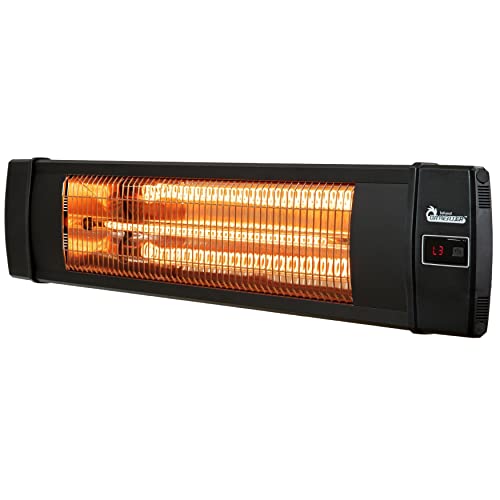
Infrared heaters transfer warmth toward people and objects rather than relying primarily on heating all the surrounding air. That makes them worth considering for a defined seating area, especially where open sides make it difficult to retain warm air. The HAIMMY and hykolity products are listed as infrared models, and the wall-mounted hykolity unit uses infrared heating with three adjustable power levels. These descriptions indicate the heating approach, not a measured amount of comfort at a specific distance.
A ceramic fan heater takes a different approach: it heats air and pushes that air into the nearby space. The SEEYANG and Buyplus portable models are listed with 1500W ceramic heating and multiple operating modes. The SEEYANG listing includes fan-only, 750W, and 1500W settings, while the Buyplus listing includes fan-only, 750W, and 1500W modes. A fan can move heat around a more sheltered area, but it also creates airflow and some operating sound, and outdoor drafts can limit how much warmth remains around the seats.
Do not choose a heater solely because a listing uses phrases such as fast heating or broad coverage. The supplied product information does not establish comparable real-world performance across different patio layouts. A better question is whether the heat reaches the people and surfaces that matter, whether the unit can be positioned safely, and whether its electrical or fuel needs fit the setting. For open patios, prioritize the intended radiant zone; for a sheltered space, compare both radiant and fan-forced options against its airflow and layout.
Decide whether an electric outlet or propane tank fits your routine
Electric models avoid handling a fuel tank, but they need a suitable outdoor power arrangement and weather-appropriate placement. The listed electric models include 1500W options, so check the circuit and product instructions before use, especially if other high-draw appliances share the circuit. A 1500W heater on a 120V supply draws about 12.5A, which is a substantial continuous load on a typical 15A branch circuit. Do not assume a patio outlet can safely support a heater simply because the plug fits.
Follow the manufacturer’s electrical instructions, and connect an electric heater directly to an appropriate wall outlet rather than a power strip or light-duty extension cord. Keep the plug, outlet, and cord away from water and locations where they can be damaged or become a trip hazard. A wall-mounted electric heater may reduce floor clutter, but its mounting location and installation still need to follow the product manual. The hykolity wall-mounted model lists IP55 water and dust resistance, remote operation, a timer, and three power levels; verify the specified installation requirements before buying.
Propane models can be considered where a suitable outdoor setup is available and an electrical outlet is inconvenient. The Sweetcrispy and NEWBULIG listings specify 48,000 BTU and say that a standard 20-pound propane tank is used, with the tank excluded. Both descriptions list automatic shutoff features, while the NEWBULIG listing also specifies one-touch ignition, adjustable flame, wheels, and ground anchors for soft ground. A tank adds handling and storage considerations, so confirm the heater’s instructions for tank installation, operation, and storage before purchase.
Fuel-burning patio heaters belong outdoors and must be used as directed by their manufacturer. Do not bring an outdoor propane heater into a home, enclosed room, tent, or other space unless the product is specifically listed and approved for that use. Follow instructions concerning ventilation and location, and use active carbon monoxide and smoke alarms when operating fuel-burning or high-output supplemental heating appliances. Never treat a tip-over switch or flame-out shutoff as permission to ignore placement requirements.
Read weather ratings and mounting details in context
Outdoor-rated language is not the same as unlimited weather protection. The HAIMMY tower lists IPX5 water resistance, the standing hykolity model lists IPX4, and the wall-mounted hykolity model lists IP55. Those are product-specific details, so compare the listed rating with the actual exposure at your intended location and the manufacturer’s instructions. A covered porch, a wind-driven rain exposure, and a storage area are not interchangeable conditions.
Wall mounting can keep a heater out of a walkway and leave more floor space available, but it reduces flexibility after installation. Confirm that the surface, location, and clearances meet the manual’s requirements before deciding where it should go. The hykolity wall-mounted product description says the unit is designed for wall installation, but it does not provide a mounting height or clearance measurement in the supplied details. Do not invent those measurements or substitute a generic rule for the manufacturer’s directions.
A freestanding heater can be repositioned, although portability does not make every surface suitable. The Sweetcrispy and NEWBULIG propane listings include wheels, and their descriptions mention ground anchors for soft ground. The NEWBULIG listing specifically cautions that the anchors are not for hard concrete surfaces. Check how the heater’s base sits on your patio and whether foot traffic, children, pets, or wind could disturb it.
For electric models, weather resistance does not remove the need to keep electrical connections protected as directed. For propane models, keep the tank and appliance in the locations specified by the manufacturer. Use the manual’s clearance instructions for walls, overhead materials, furniture, curtains, and other combustibles. Maintain at least 3 feet of clearance from bedding and curtains, and follow any greater clearance required by the heater’s instructions.
Compare controls, shutoffs, and everyday operation
Controls affect how easily a heater fits a changing evening. The HAIMMY model lists nine heat levels from 620W to 1500W, a one-to-nine-hour timer, a remote, a safety lock, tip-over shutoff, and overheat protection. The standing hykolity model lists two heat levels, remote operation, a zero-to-24-hour timer, tip-over shutoff, and overheat protection. These features may help with adjustment and automatic shutdown, but they do not replace attention to safe placement or the product’s operating instructions.
The SEEYANG listing describes three modes, including natural air at 25W, low heat at 750W, and high heat at 1500W, along with overheat protection and an ETL certification claim. The Buyplus description lists three modes and overheat protection, as well as a carry handle and non-slip base. Certification claims should be checked against the heater’s labeling and documentation for the exact model. The supplied product details do not establish a certification for every product in the list, so do not assume they all have the same listing.
Look for safety functions that match the heater type. The propane listings describe flame-out shutoff, and the Sweetcrispy and NEWBULIG products also list a tilt-related shutoff. Automatic shutoff features can reduce certain risks, but they cannot prevent every fire or injury scenario. Keep people and pets from bumping the heater, do not drape or place objects on it, and never bypass a safety switch or thermal cutoff.
Noise may matter if the patio is next to a bedroom or if the heater will be used during conversation. Infrared models do not need a fan to deliver radiant warmth, while a fan-forced ceramic heater moves air and has a fan as part of its design. The supplied information does not provide comparable decibel measurements, so avoid treating a marketing description such as quiet as a standardized noise result. If sound is a concern, check the model’s documentation or return policy before committing.
Separate complete heaters from replacement parts
Not every patio-related listing is a heater. The PLUSBROIL item is a 33-inch reflector shield described as a replacement part for many standard outdoor propane patio heaters. It is not a complete heating appliance, and the listing says that some models may need extra drilling. That makes model identification essential before ordering: compare the existing heater’s mounting positions, dimensions, and instructions with the replacement part’s details rather than relying on a broad compatibility phrase.
The listing describes three outer panels and a center panel, mounting holes, and included hardware. It also instructs buyers to remove the blue protective film before installation. Those details may help a buyer assess the package, but they do not prove compatibility with a particular heater. Check the replacement part against the original manufacturer’s documentation, and do not modify a heater or its safety components to force an uncertain fit.
Some portable electric products in the selection use broad labels such as patio, garage, tent, or indoor use. A label in a product title is not enough to establish suitability for every environment. Confirm the manual’s approved locations, electrical requirements, and moisture restrictions before using a portable heater outside. If an intended location is damp or directly exposed to rain, do not infer safe use from the word outdoor alone.
Use a safe setup to judge whether the heater suits you
Before buying, read the manual or obtain it from the manufacturer so you can verify clearances, permitted surfaces, weather restrictions, electrical requirements, and maintenance needs. Confirm that a plug-in model can be used with the outlet available at the patio and that the circuit can accommodate its load. For propane, check tank requirements and the appliance’s outdoor-use instructions. If any of these details are unclear, resolve them before purchase rather than relying on assumptions.
Once a heater is installed or positioned, use it only in the configuration specified by the manufacturer. Keep the heater on a stable surface and away from foot traffic, furniture, dry leaves, and combustible materials. Maintain at least 3 feet of clearance from bedding and curtains, and follow the product manual whenever it requires more space. Never leave a heater unattended or use it to dry clothing, and keep children and pets from contacting hot surfaces.
Check the plug, cord, housing, controls, and base for visible damage before operation. Stop using the unit if a cord or plug is damaged, the heater behaves unusually, or a safety feature does not operate as described; consult the manual or manufacturer rather than attempting to bypass protection. For fuel-burning appliances, follow the manufacturer’s outdoor-use directions and have active carbon monoxide and smoke alarms in the home. These precautions address risks that a product feature or weather rating cannot eliminate.
For related ideas about room-specific supplemental heating, our guide to heating open-plan spaces explains why layout and heat distribution matter when warming a larger area. Patio heating has a different challenge because outdoor air movement can carry warmth away, but the same basic lesson applies: match the heater’s heat pattern to where people spend time. Buying more output than your setup can use safely is not a substitute for choosing a suitable location.
Make the final choice around use, not headline features
For a compact, sheltered seating area with a suitable outlet, a portable electric infrared or ceramic model may be convenient, depending on whether you want directional radiant warmth or fan-driven air. For a larger outdoor gathering, the listed propane models offer a different fuel and output category, but tank handling, stable placement, and strict outdoor use become central considerations. A wall-mounted electric model can preserve floor space if its installation location meets the manual’s requirements. These are tradeoffs, not a universal ranking.
Base the decision on the actual patio, not on the widest advertised coverage or the longest feature list. Check the type of heat, available power or fuel, weather exposure, installation constraints, controls, and documented safety features. Verify that the listing is for a complete heater rather than a replacement part, and confirm important claims in the manufacturer’s documentation. A suitable patio heater is one whose heat reaches the intended seating area while its location and operation remain within the product’s instructions.


Write Your Review
No reviews yet. Be the first to share your experience!