
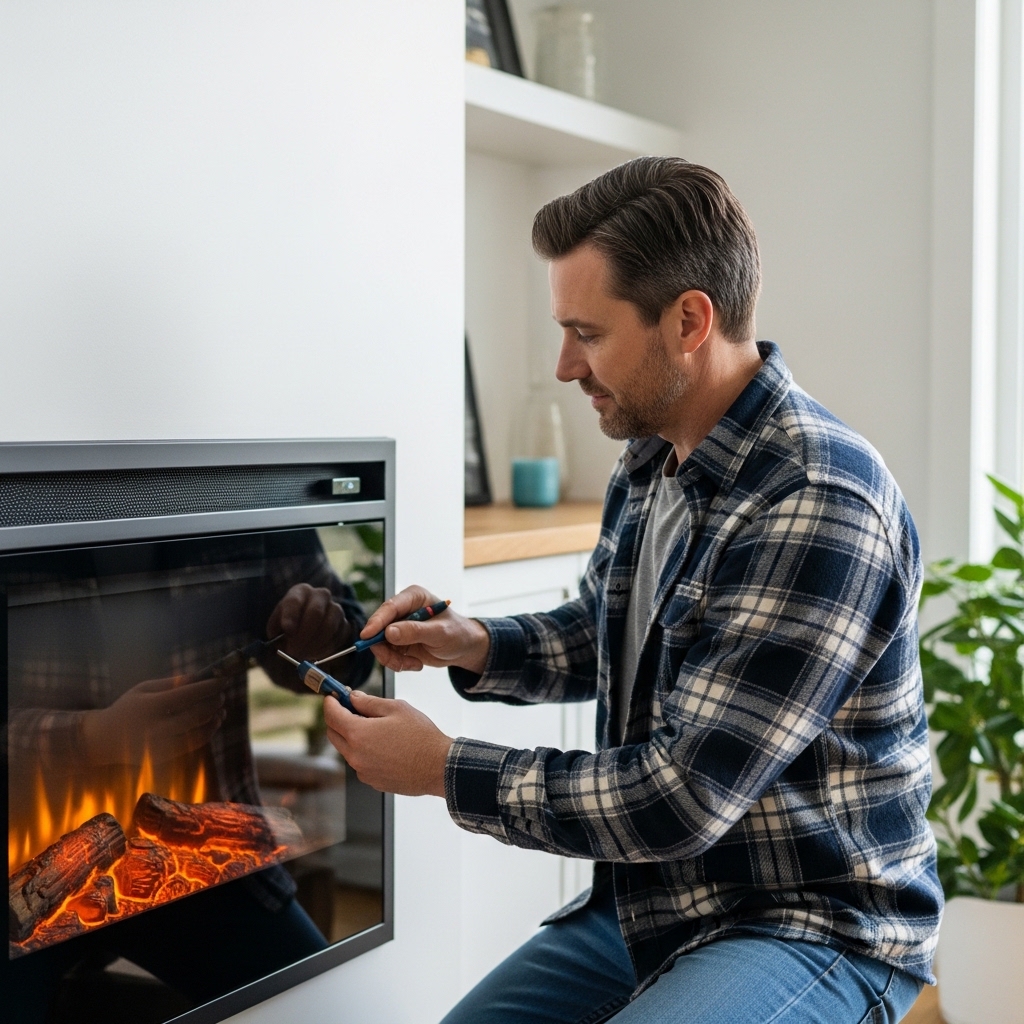

An unused fireplace can let outdoor air, dust, or moisture enter through an opening, but covering the wrong vent can interfere with how an appliance is meant to operate. Before deciding how to cover fireplace vents, identify the fireplace type, the opening’s purpose, and whether the appliance is completely out of service. A decorative fireplace grille, an outdoor direct-vent termination, and a combustion-air opening are not interchangeable. The fireplace manual and the appliance manufacturer’s instructions should guide the decision.
The products listed below include magnetic covers for some indoor metal vents and tie-on covers made for specific outdoor termination caps. Their descriptions include important limits, including checking magnet compatibility, measuring the termination cap, and keeping a cover off while a fire or pilot is active. These are product-specific details, not permission to block any fireplace opening. For related draft-control context, see our fireplace cover and draft-control guide and our overview of supplemental fireplace heaters.


The basic answer is to cover a vent only when the fireplace manufacturer allows it, the appliance is fully inactive and cool, and the cover is designed for that exact opening. A removable draft cover can be useful for an eligible, unused vent, but it is not a replacement for a damper, a repair, or an approved part. Do not cover an opening if you cannot identify its function. If the fireplace is connected to gas, has a standing pilot, or has uncertain operating status, consult its manual or a qualified fireplace professional before attaching anything.
Identify the opening before selecting a cover
“Fireplace vent” can mean different openings. An indoor grille may be part of a circulation system, a combustion-air path, or another appliance-specific arrangement, while an outdoor termination cap is part of a direct-vent system. A traditional wood-burning fireplace has a firebox and flue, and its damper controls the passage between them; that damper is not the same thing as a removable magnetic cover. The visible location alone does not establish what the opening does.
Look for the fireplace make and model on its rating plate, then locate the operating and installation manuals. The manual can help distinguish an air outlet from an air intake, identify a termination assembly, and explain whether the appliance can be covered while idle. If the paperwork is missing, a manufacturer or qualified technician may be able to help identify the system from its label and configuration. Avoid guessing based only on the shape of a grille or cap.
Some products in this roundup target indoor vents that attract magnets, while others fit particular outdoor direct-vent termination caps. Those uses are distinct: a flexible magnetic sheet cannot be assumed to suit an exterior cap, and a tie-on cap shield is not an indoor grille cover. A fireplace may also have openings that must remain unobstructed for its intended operation. Confirm the purpose and the appliance instructions before considering any accessory.
Check whether the fireplace can be covered at all
Do not cover a vent while a fireplace is operating, hot, or in a state the manufacturer defines as active. The Beeplove, Flehomo, and Flamorrow product information specifically warns users to wait until the fireplace has cooled and to remove the cover before lighting it. Draft Decor’s termination-cap product descriptions say there must be no fire or pilot while the cover is in place. Treat those as restrictions for those products, and check the instructions for the particular fireplace and accessory rather than generalizing them to every appliance.
A gas fireplace may have a pilot or other operating conditions even when no flames are visible, and its venting arrangement is part of the appliance design. Do not block a gas fireplace’s intake, exhaust, or termination simply to stop a draft unless the fireplace manufacturer specifically permits the accessory and use. If you are unsure whether a pilot is on or what a particular opening serves, leave the vent uncovered and ask the manufacturer or a qualified technician. For broader context on different gas fireplace arrangements, see our guide to gas fireplace options.
Wood-burning fireplaces have different airflow and flue considerations from direct-vent gas appliances. A cover over an indoor opening does not resolve a damaged damper, a flue problem, or smoke entering the room, and it should not be used to conceal an unresolved draft or odor. If smoke spills indoors, the fireplace does not draw as expected, or you notice signs of damage, stop using it and seek appropriate professional assessment. Follow the appliance instructions and local requirements for inspection and service.
Measure and verify magnetic compatibility
For a magnetic indoor cover, first determine whether the vent surface attracts a magnet. The Beeplove and Flehomo descriptions specify that their magnetic covers work only on magnetic surfaces; the Flamorrow description likewise says to confirm that the vent is magnetic. A nonmagnetic grille will not provide the attachment these designs rely on. Do not assume that a metal-looking surface is magnetic.
Measure the opening and compare its width and height with the product’s listed dimensions before ordering. The Beeplove, Flehomo, and Flamorrow descriptions list a 36-by-4-inch format, and some describe trimming the flexible cover to fit. That stated size does not establish compatibility with every grille or fireplace. Check whether the cover will sit securely without interfering with adjacent controls, trim, or other appliance components.
For a termination-cap cover, measure the cap itself and compare all relevant dimensions with the listing. Draft Decor identifies one model for a trapezoid-shaped cap or shroud and another for a specific square horizontal cap, with different fit descriptions. The trapezoid model lists dimensions of 13.5 inches high, 10.5 inches wide, and 8 inches deep, and its description explicitly cautions buyers to measure. The square model also requires matching its specific cap dimensions, so its name alone is not enough to determine fit.
Check how the accessory attaches and which portions it covers. The trapezoid model description mentions soft twist ties and an insert intended to cover the bottom screen area; the square model description says it ties onto the last vent opening and does not cover the cap’s edge or mounting area. These details matter because exterior assemblies differ in shape and layout. If the listing does not clearly match your cap, do not buy on the assumption that a flexible cover can accommodate a mismatch.
Attach a removable cover only under the stated conditions
Once the fireplace is confirmed inactive and cool, follow the accessory’s own instructions. For a magnetic model, align its magnetic side with a compatible metal vent and check that it stays in place without covering nearby controls or unrelated openings. Some listings say the material can be trimmed, but trimming should follow the manufacturer’s directions and should not alter an area needed for attachment. Keep the product’s use limited to the opening and conditions described by its maker.
For an exterior termination-cap shield, use only the attachment method and cap configuration named in its product information. Secure it as directed, and do not improvise around a different cap, obstruct a mounting feature, or use a substitute fastener that could damage the assembly. If the cover cannot be fitted as instructed, remove it and contact the seller or fireplace manufacturer for clarification. Draft Decor’s descriptions invite customers who are uncertain about the cap style or size to share photographs and measurements with the seller.
Keep track of every cover that is installed. A removable cover can be overlooked when someone else in the household uses the fireplace, so make its presence obvious and tell other occupants. Renters should also follow property-owner rules before attaching a cover or changing how a fireplace is used. If a product’s instructions and the fireplace manual appear to conflict, do not use the cover until the manufacturer or a qualified professional clarifies the correct approach.
Remove the cover before use and watch for warning signs
Before operating the fireplace, remove a draft cover and confirm that no part remains over an opening. Do this in accordance with the fireplace’s manual and only when conditions are safe for handling the accessory. Do not light the appliance with a cover still attached, and do not rely on memory if multiple people use the room. A visible reminder near the fireplace may help household members notice that a removable cover needs to come off.
If the cover becomes loose, damaged, wet, difficult to remove, or unusually warm, stop using it and consult its instructions. A magnetic cover that no longer holds securely may not be suitable for that surface, while a cap cover that shifts may not match or attach correctly. Do not add tape, adhesive, or other materials unless the product maker permits them. The supplied product descriptions do not establish suitability for every fireplace, climate, or installation.
A persistent cold draft may have another cause, such as a damper that does not close properly, a missing component, or an issue with the fireplace’s venting arrangement. Those are possibilities to investigate, not diagnoses that can be made from a draft alone. A cover might mask a symptom without correcting the underlying condition. If you notice smoke, unusual odors, visible deterioration, or uncertain appliance operation, leave the system in the condition directed by its manual and arrange qualified assessment before use.
What these vent-cover products do and do not establish
The product descriptions help distinguish two accessory categories: flexible magnetic covers for compatible indoor vents and fitted shields for specified outdoor termination caps. Beeplove lists two magnetic sheets in a 36-by-4-inch size, while Flehomo and Flamorrow also describe two-piece magnetic covers and trimming for size adjustment. Each description makes magnetic-surface compatibility and removal before fireplace use important considerations. These are manufacturer-provided listing details, not independent tests of how much air a cover blocks in a particular home.
The Draft Decor products are not simply larger versions of magnetic grille covers. One is described for a trapezoid-shaped termination cap or shroud, while the other is for a specific square horizontal cap. Their descriptions specify attachment and coverage limitations, so matching the exterior cap is central to selection. The listed claims about reflective material should be understood as manufacturer statements, not as a measured result for a particular fireplace or room.
No accessory in the supplied information is established as compatible with every fireplace type, vent, or installation. Product descriptions cannot replace the appliance manual, an inspection, or location-specific requirements. A cover’s usefulness also depends on whether the opening is approved for temporary closure and whether the fireplace is truly out of service. The safest selection is not necessarily the product with the broadest claims; it is the one whose stated use, dimensions, and attachment match an approved application.
Covering a fireplace vent is appropriate only after identifying the opening, confirming that the fireplace instructions allow it, and matching the accessory to the actual vent or termination cap. Keep every cover off an active or hot fireplace, and remove it before use as directed by the product and appliance instructions. If the vent’s purpose or the fireplace’s status is uncertain, pause and seek manufacturer or qualified professional guidance instead of blocking the opening.




Write Your Review
No reviews yet. Be the first to share your experience!