
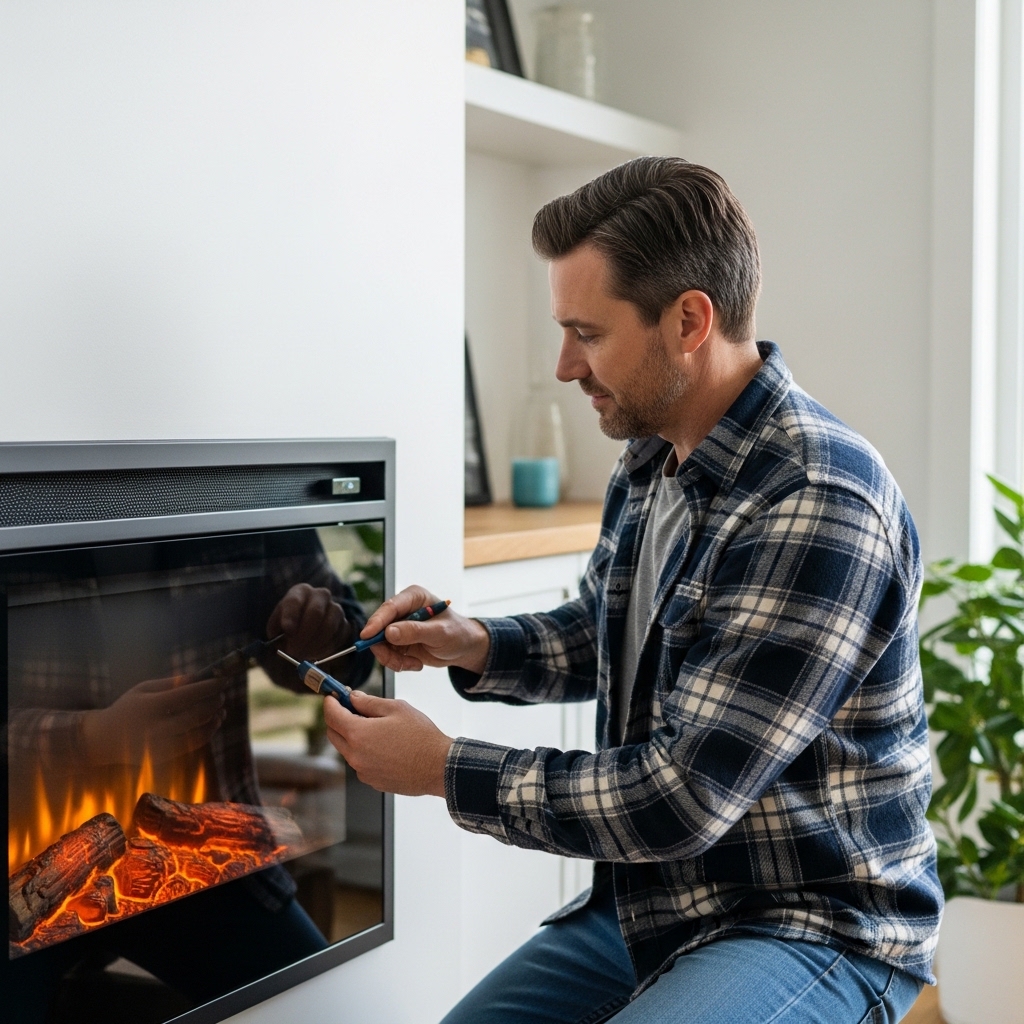

A fireplace can mean a traditional wood-burning hearth, a gas appliance, or an electric unit that creates a flame-like display without burning fuel. So, are there electric fireplaces? Yes. They’re available as wall-mounted, built-in, insert-style, and freestanding appliances, with features that range from visual ambiance alone to supplemental electric heat.
The key distinction is that an electric fireplace uses electricity rather than wood, pellets, or gas to create its effect and, if equipped, heat. That changes what installation, operation, and upkeep involve, but it doesn’t mean every model suits every room or can replace a home’s primary heating system. The products listed below include portable electric stoves with flame-only settings and heaters, and their features are based on the supplied product descriptions, not independent testing. For a related look at compact supplemental heating, see our guide to fireplace heaters for small spaces or explore corner fireplace stand options.
Pros
- Infrared quartz heating elements help warm living spaces while preserving natural air humidity.
- Three-sided glass design provides wide viewing angles for the simulated ember and log display.
- Lightweight construction under 13 pounds enables straightforward relocation between living areas, offices, and bedrooms.
- Multi-agency certified with ETL, UL, and CSA safety listings alongside automatic overheat and tip-over protections.
Cons
- Provides 1500W supplemental zone warmth and is not engineered to serve as a primary whole-home heat source.
- Compact stove dimensions may appear undersized if placed inside large, existing masonry fireplace openings.
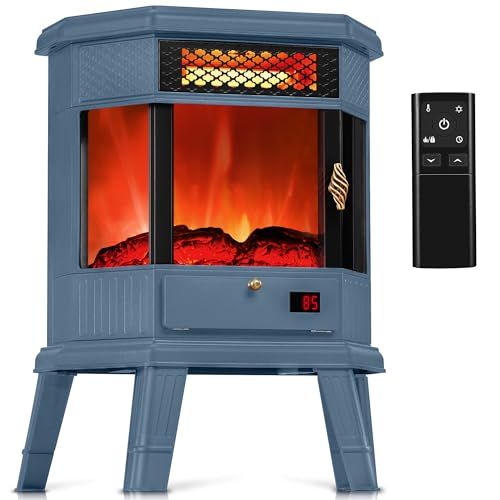
The RealSmart 22-inch electric fireplace heater offers a compact, freestanding heating solution designed for supplemental zone warmth and fireside ambiance. Finished in a distinctive serene blue color, this stove-style appliance appeals to apartment dwellers, renters, and homeowners who want the aesthetic appeal of a hearth without chimney flues, gas hookups, or remodeling. Its three-sided viewing cabinet gives occupants in bedrooms, home offices, or living areas a wide vantage point of the simulated flame display without requiring permanent wall framing.
Operation centers around an infrared quartz heating assembly generating up to 5,118 BTUs. Users can switch between 1000-watt and 1500-watt heating levels, powered through a standard 120-volt, 60 Hz electrical connection. The onboard thermostat allows target temperature adjustments between 50°F and 90°F, while a 1 to 12-hour timer gives owners scheduling control. The resin logs and ember bed produce a rolling 3D flame effect with four brightness settings that can run independently from the heating element, allowing decorative use regardless of outdoor temperatures.
Measuring approximately 15.75 inches wide, 9.06 inches deep, and 21.65 inches tall, the unit weighs roughly 10.5 to 12.6 pounds, allowing an adult to reposition it across living spaces as heating needs shift. The stove rests on four stabilizing support legs and operates quietly at noise levels under 48 decibels. Safety safeguards are integrated directly into the electronics, including an automatic power shut-off triggered by excessive internal heat or accidental knock-downs. The unit carries ETL, UL, and CSA safety certifications for operation in North American households.
Because this is an electric appliance, installation does not require chimney inspection, venting pipes, or professional gas fitting. Setup mainly involves securing the support legs and positioning the heater on a firm, level surface near a standard wall outlet. As with any high-draw 1500-watt electric heater, standard electrical precautions apply: plug the unit directly into a dedicated wall receptacle rather than an extension cord, and maintain adequate clearance from soft furnishings, curtains, and combustible materials. Routine maintenance remains minimal, primarily requiring occasional dusting of the exterior surfaces and air intake grills using a soft, dry cloth while the unit is completely cool and unplugged.
While the RealSmart stove delivers responsive supplemental warmth and visual charm, buyers should recognize its functional boundaries. With a maximum 1500-watt output, it is built to warm individual rooms or designated living zones rather than heat an entire home or offset uninsulated drafty architecture. Its compact 22-inch profile also means it will not fill an oversized masonry hearth opening if placed inside an existing traditional firebox. For residents seeking a portable, certified electric fireplace with flexible timer settings, remote operation, and charming three-sided flame visuals, this model presents an adaptable, low-maintenance option.
The RealSmart electric fireplace features dual heat output settings of 1000 watts and 1500 watts, managed through an integrated digital thermostat adjustable from 50°F to 90°F. The included handheld remote control lets users adjust heat output, thermostat levels, and the 1 to 12-hour shut-off timer from across the room.
Visual customization is supported by four flame brightness settings, illuminating resin logs and an ember bed through the three-sided window. The flame display operates with or without the infrared heating elements engaged, offering year-round aesthetic enjoyment without warming the space.
This freestanding stove measures 15.75 inches in width, 9.06 inches in depth, and 21.65 inches in height, supported by four bolt-on legs that provide a stable, elevated base. The lightweight profile of under 13 pounds facilitates easy movement between bedrooms, home offices, and living rooms.
When planning your space, ensure the heater is situated on a level floor with ample clearance around the intake vents and exterior panels. While its compact footprint allows easy placement in modest spaces, verify that the front and side viewing windows have unobstructed clearance from drapery, furniture, and other household objects.

Pros
- Delivers soft infrared warmth across spaces up to 1,000 square feet without drying out room air
- Three-sided viewing windows provide realistic flame visibility across broad seating areas
- Independent heat and flame settings allow peaceful fireside ambiance throughout every season
- Charming cream finish and faux brick back panel elevate modern farmhouse and cottage decor
Cons
- Manual analog dials mean there is no digital temperature readout or automatic shutoff timer
- At 28.6 pounds, shifting it between upper and lower home levels requires two hands and careful lifting
- Operable front door latch requires a clear swing path, limiting tight corner placement
The Duraflame Freestanding Electric Fireplace Stove is a classic supplemental heater that mimics the timeless appeal of an old-world cast iron stove. Finished in a soft cream exterior, it features an operable front glass door, beveled side viewing panels, and a faux brick interior wall that frames a glowing log set. It operates purely on standard household electric power, eliminating the venting, chimney upkeep, and fire hazard concerns associated with traditional wood-burning appliances.
This freestanding unit is well suited for homeowners, condo owners, and apartment dwellers who struggle with drafty layouts or high winter heating bills. It works exceptionally well placed alongside a living room sofa, tucked into an open dining nook, or positioned inside a chilly basement family room. RV owners and tiny home enthusiasts with adequate floor clearance may also appreciate its self-contained warmth and plug-and-play installation.
Heating performance relies on an infrared quartz system designed to warm spaces up to 1,000 square feet. Unlike standard forced-air coil heaters that can strip moisture from the air, infrared heating warms people and objects directly to maintain natural room humidity. The adjustable thermostat dial lets you lower your central home thermostat and keep your primary living quarters warm, which can translate into meaningful savings on seasonal heating bills.
Visual ambiance is a standout highlight of this stove. The patented 3D flame effect projects multi-layered flickering flames over glowing logs, giving the appearance of a gently smoldering wood fire. Side observation windows expand the viewing angle so anyone sitting across the room can watch the flames. Because the flame effects operate independently of the heat element, you can create a relaxing fireplace setting during warm summer movie nights or holiday dinners.
Day-to-day usability is straightforward. Setup requires minimal effort beyond unpacking the unit and attaching the four support legs. The exterior stays reasonably cool to the touch away from the heat discharge vent, offering practical reassurance for family homes with active pets. However, the unit utilizes traditional mechanical dials behind the door rather than a handheld remote or programmable sleep timer, which is a tradeoff worth considering if you prefer hands-off controls from the couch.
Overall, this Duraflame stove delivers dependable supplemental warmth, handsome vintage style, and generous flame realism at an accessible footprint. For anyone looking to warm up a large room while adding the cozy glow of a cottage hearth, it serves as a reliable and aesthetically pleasing heating companion.
The core strength of this Duraflame stove lies in its infrared quartz heating element, engineered to supply supplemental heat for spaces up to 1,000 square feet. By projecting infrared energy outward, the heater warms objects and occupants in its direct path rather than merely pushing hot, dry air toward the ceiling.
This heating method helps maintain natural indoor air humidity, preventing the dry skin and scratchy throats often caused by conventional space heaters. The simple manual thermostat control dial allows you to calibrate the heat output to balance drafty living room corners, unheated basements, or chilly guest bedrooms during cold winter snaps.
Duraflame incorporates layered 3D flame projections that mimic the unpredictable motion and depth of real wood embers. The realistic log set features glowing internal filaments that intensify the illusion of active burning wood against the brick-patterned back panel.
Thanks to three-sided glass construction, the glowing ember bed is visible from multiple angles across the room. Because the lighting operates independently from the heater, you can turn off the heating element entirely to enjoy a cozy nightlight effect or fireside atmosphere during the warmer spring and summer months.


Pros
- Three-sided glass enclosure maximizes flame visibility from multiple angles in smaller living areas.
- Separate flame and heat functions make the unit usable for ambiance throughout all four seasons.
- Two distinct wattage levels (500W and 1500W) let users balance heat output and electrical demand.
- Freestanding metal construction requires no venting, chimney maintenance, or permanent wall modification.
Cons
- The compact 17-inch frame is built for supplemental spot heating rather than serving as a primary heat source.
- Specific clearance distances to combustibles and electrical cord specifications are not fully detailed in the basic listing data.
The R.W.FLAME 17-inch electric fireplace heater offers an accessible way to introduce traditional hearth styling into apartments, condominiums, and single-family homes without the structural demands of a chimney or gas line. Built as a freestanding electric stove, this unit appeals to renters and homeowners looking for supplemental spot warmth and visual ambiance. Its compact footprint makes it adaptable for bedrooms, home offices, or smaller living rooms where a full-size mantel or built-in firebox is neither practical nor permitted by property guidelines.
Operation centers around a dual-mode infrared heating system that provides selectable settings at 500 watts and 1500 watts. The manufacturer notes that infrared heating warms the room gently without drying out the indoor air, helping to preserve comfortable indoor humidity during cold weather. Alongside the heat functionality, the unit incorporates an independent flame mechanism. This separation allows users to operate the burning log display and flickering flames completely independently of the heating element, providing fireside aesthetics throughout warmer spring and summer months.
The stove exterior is constructed with a rugged steel structure finished in beige, featuring cathedral-inspired architectural accents such as an arched front door and decorative fence detailing. A distinct highlight is the three-sided clear glass configuration, which grants a 180-degree viewing angle of the internal burning log arrangement from across the room. Operational convenience is enhanced by the included remote control, enabling users to adjust settings from a distance, while safety is supported by an internal overheat protection shutoff and a top-positioned hot air outlet designed to mitigate high-temperature hazards on the stove body.
Setting up the unit is straightforward because it does not require venting, flue liners, or masonry modifications. With dimensions of 10.7 inches deep, 16.8 inches wide, and 20.5 inches tall, it fits comfortably on flat, stable floor surfaces. As with any high-draw electrical heating appliance pulling up to 1500 watts, placement should account for direct connection to an appropriate standard household wall receptacle rather than an overloaded extension cord. Maintaining the unit is simple compared to wood or gas fireplaces, requiring only routine external dusting and gentle cleaning of the glass panels once unplugged and completely cool.
While the 1500-watt maximum output delivers practical supplemental heating for localized zones, buyers should recognize that compact electric stoves are not engineered to function as primary central heating replacements for entire houses. The manufacturer does not list exact square-footage coverage figures, so heating performance will naturally depend on room ceiling height, layout, and prevailing home insulation. For those prioritizing low-maintenance operation, portable versatility, and vintage cathedral charm in an electric hearth piece, this R.W.FLAME model serves as a balanced decorative and supplemental heating solution.
Measuring 10.7 inches in depth, 16.8 inches in width, and 20.5 inches in height, this 17-inch class stove features a modest profile suited for floor placement in compact areas. Before positioning the unit, confirm that the designated floor area provides a flat, level surface with adequate space around the top air discharge vent.
Because the stove uses a three-sided glass design, positioning it away from direct corner obstructions helps maximize the 180-degree view of the log display. Always reference the included user manual to confirm recommended clearances from nearby curtains, upholstered furniture, and other household combustibles.
The electric fireplace includes a handheld remote control that allows you to manage key functions without needing to access controls directly on the unit. You can select between 500-watt and 1500-watt heat settings to tailor electrical consumption and heat output to your current indoor conditions.
The independent flame design allows the visual log and ember display to run with or without the heating system active. This independent control ensures that the appliance can serve purely as an ambient accent piece throughout all seasons of the year.
The internal infrared heating element is designed to distribute heat smoothly while maintaining natural ambient room humidity. The heating assembly vents through an upper outlet placed at the top of the stove, preventing excessive heat concentration on the lower body of the appliance.
Visually, the fireplace utilizes a three-sided transparent enclosure that creates a panoramic 180-degree perspective of the dancing flame and glowing log assembly. A built-in overheat protection sensor acts as an automatic safeguard to interrupt power if internal operating temperatures exceed safety thresholds.


Pros
- Flexible operation options through both a smartphone app and an included remote control
- Robust safety package featuring tip-over protection, child lock, and overheat shutoff
- Quiet fan performance rated at 37 dB suitable for sleeping or home office environments
- Independent flame brightness settings and broad thermostat range provide customized comfort
Cons
- Manufacturer specifications do not provide an explicit square-footage heating area
- Electric design requires a standard household outlet and cannot provide heat during power outages
The Silonn 24-inch electric fireplace heater serves as a versatile, freestanding supplemental heat source for living spaces, bedrooms, or compact corners. Because it relies on standard electrical power rather than wood or gas combustion, it provides a practical fireplace aesthetic for renters, apartment residents, and homeowners who lack existing chimneys, flues, or gas hookups. Its portable design allows for straightforward room-to-room repositioning as seasonal heating needs shift.
Equipped with a 1400W heating element, the appliance is designed to take the chill out of indoor living areas during cold winter months or cool evenings. Users can select target temperatures ranging from 62°F to 82°F to match individual comfort preferences. For visual ambiance, the unit produces a 3D flame effect with five distinct brightness levels, allowing the display to be dimmed for nighttime relaxation or brightened for daytime visibility without having to open the front door.
Convenience and control flexibility stand out on this model, which supports adjustments through both a downloadable mobile app and an included handheld remote control with batteries. Users can adjust flame levels, power cycles, and temperature settings from across the room or schedule operating durations between 1 and 8 hours using the built-in timer. The internal blower operates at an acoustic level of roughly 37 dB, ensuring minimal background distraction during conversation, television viewing, or sleep.
Safety engineering is an essential consideration for any portable electric space heater, and the Silonn fireplace addresses common household concerns with several automated safeguards. An integrated tilt switch automatically shuts down the heating cycle if the unit is knocked over or angled beyond 45 degrees. It also includes an internal overheat protection sensor and an integrated child lock feature to prevent accidental setting modifications by curious children or pets.
Measuring 9.84 inches deep, 19.69 inches wide, and 24.03 inches high, the fireplace fits comfortably against flat walls or into corner configurations without consuming substantial floor space. Because actual heating performance depends heavily on room insulation, ceiling height, and local climate conditions, this 1400W unit is best utilized as a supplemental zone heater rather than a primary whole-home furnace replacement. For shoppers seeking an affordable, low-maintenance electric fireplace with convenient wireless controls and essential safety protections, this model offers a balanced combination of features.
The Silonn electric fireplace heater provides versatile operating controls through either the included remote control or a downloadable smartphone application. These wireless options let users turn the appliance on or off, set the thermostat between 62°F and 82°F, and manage power settings without approaching the appliance.
In addition to temperature regulation, the unit features five selectable brightness settings for its simulated 3D flame display. An integrated digital timer can be programmed for operational periods from 1 to 8 hours, supporting energy savings by turning the heater off automatically once the scheduled period expires.
This electric fireplace includes essential household protection measures, starting with an automatic tilt sensor that terminates operation if the appliance is knocked over or tilted past 45 degrees. An internal overheat protection cutoff disengages the heating mechanism if temperatures exceed normal operating thresholds.
A built-in child lock prevents inadvertent button presses and accidental control alterations by young family members. Because the unit runs on electricity rather than combustible fuel, it produces no smoke, ash, or carbon monoxide, though users must still observe required manufacturer clearances around heating vents.
How Electric Fireplaces Work and What They Can Do
Yes, electric fireplaces exist, and they’re a distinct appliance category rather than a wood or gas fire hidden behind glass. Their flame appearance is produced electrically, while models with heaters use electricity to warm air or nearby objects. A flame effect can often operate without heat, although controls and operating modes differ by model.
That distinction matters because “fireplace” describes appearance and placement as well as a combustion appliance. An electric unit does not burn logs, pellets, or gas to create its display, so it doesn’t produce combustion smoke from a fire in the appliance. But don’t assume that every electrical model has the same venting, installation, clearance, or electrical requirements. The manufacturer’s manual is the source to check for the specific unit.
Flame display, heat, and the meaning of supplemental
The flame effect is primarily visual. Depending on the design, lights and shaped materials create an image that resembles glowing logs or moving flames; it is not the same as a live fire. Some units let the display run with the heater off, which can make the visual effect usable when a room doesn’t need added warmth.
A model with a heater can add warmth in the room where it is used, but product listings do not establish that it can heat an entire home or replace a central heating system. Room layout, insulation, outdoor conditions, electrical supply, and the appliance’s actual specifications all affect suitability. Treat a manufacturer’s stated coverage or heat output as a product claim, not a guarantee of performance in a particular home.
Among the supplied product descriptions, the RealSmart Electric Fireplace Heater 22 lists two heat modes, a thermostat control, a timer, and a flame-only setting. The duraflame Freestanding Electric Fireplace Stove lists independent flame and heat controls, while the KMFurnila 19" Electric Freestanding Fireplace and OLIXIS Freestanding Electric Fireplace list flame-only, low-heat, and high-heat modes. These distinctions help explain what controls a buyer may want, but they don’t establish that one model will heat a particular room better than another.
Electric versus wood-burning and gas fireplaces
Wood-burning fireplaces use solid fuel and require a suitable firebox and smoke path. Gas fireplaces burn gas and depend on an appliance and venting arrangement specified for that model. These combustion systems bring fuel, venting, installation, and maintenance questions that differ from those of an electric decorative heater.
Electric models avoid the need to store and feed firewood or pellets, and they don’t make a real wood fire. That can be attractive when a reader wants a flame-like display without handling solid fuel. It doesn’t make an electric appliance maintenance-free: the power cord, outlet, heater opening, controls, and surrounding area still need to be kept in the condition described by the manual.
A traditional fireplace opening or chimney does not automatically make an electric unit an insert, nor does it prove that a given insert-style product will fit. Electric fireplaces are sold in different formats, and “insert” may describe how a particular model is positioned or installed. Verify the exact model’s dimensions and instructions before buying or placing one in an existing fireplace opening.
Placement, Power, and Existing Fireplace Openings
For a freestanding electric stove, placement is a practical first question. Check the appliance’s dimensions, the route to a suitable electrical outlet, and the clearance instructions before deciding where it belongs. A compact shape may make a unit easier to place, but it doesn’t remove the need for stable positioning and required space around the heater.
The product descriptions supplied here show that the listed freestanding stoves are intended to plug in, and some specifically refer to standard household outlets. For example, the KMFurnila and OLIXIS descriptions specify a standard outlet and warn against extension-cord use. Follow the manual for the exact appliance rather than treating one model’s directions as a universal rule for every electric fireplace.
Electrical capacity and outlet condition matter, especially if other high-power appliances share a circuit. If the manufacturer’s electrical instructions are unclear, or the outlet is damaged, loose, or showing signs of overheating, don’t improvise with adapters or an extension cord. Ask a qualified electrician or the product manufacturer for guidance appropriate to the appliance and home.
Built-in and wall-mounted electric fireplaces can have different installation needs from portable stoves. A product may call for a particular opening, mounting arrangement, or electrical connection, and those details cannot be inferred from its appearance. Review the installation manual and check local requirements before cutting into a wall, changing wiring, or making a permanent installation.
Renters and other occupants should also check property-owner rules before installing or operating a unit. Permission may be needed for permanent mounting, changes to electrical wiring, or use in a particular space. A portable appliance still needs to be operated according to its manual and any rules that apply to the property.
Can an electric fireplace go in an existing hearth?
Sometimes an electric model may be intended for placement within or in front of an existing fireplace opening, but suitability depends on that product’s design and the opening. Measure only as directed by the manufacturer and compare the required dimensions with the actual space. Also check whether the manual sets conditions for using the appliance in an opening that previously housed a wood or gas fireplace.
Don’t assume an unused chimney is irrelevant simply because the new appliance is electric. The manufacturer may specify how an existing opening or flue should be treated, and local rules or property conditions may affect the work. If an old fireplace has damage, an unexplained odor, water intrusion, or a history of smoke problems, ask a qualified fireplace professional to assess the existing structure before covering or altering it.
“Ventless” can be misleading when applied casually to an electric flame display. An electric unit doesn’t burn fuel in the way a gas or wood appliance does, but its installation instructions still control where it can be placed and how it must be supplied with power. Avoid using a generic label from a listing as a substitute for model-specific documentation.
Using the Controls and Keeping the Appliance in Good Condition
Electric fireplace controls vary. Simple freestanding models may use knobs for flame and heat settings, while other products include a remote, timer, thermostat, or app control. The Silonn Electric Fireplace Heater description lists app and remote operation, adjustable flame brightness, temperature control, a timer, and safety features; these are manufacturer-listed details, not independent confirmation of performance.
Start with the model’s manual to identify which controls operate the visual effect and which operate the heater. A flame-only mode, if provided, is different from a low-heat mode, and a timer or thermostat may behave differently across products. Keep the manual available so anyone using the appliance can understand its settings and shutdown instructions.
Some heaters may continue running a fan briefly after the heat setting is switched off. The supplied KMFurnila and OLIXIS descriptions mention a short cool-down fan cycle. That behavior may be part of the listed design, but the appliance manual should explain what is normal for the specific model and what symptoms call for service.
Maintenance is generally different from cleaning a wood-burning firebox or handling ash, because an electric display doesn’t create those combustion byproducts. Still, dust and obstructions around an air intake or outlet can matter for a heater’s operation. Follow the manufacturer’s cleaning directions, unplug the appliance when the manual requires it, and never open electrical components or attempt repairs beyond the instructions.
Inspect the cord and plug periodically for visible damage, and discontinue use if they appear damaged or if the appliance behaves unexpectedly. Don’t operate a unit with a damaged cord, a blocked heater outlet, or a safety feature that isn’t working as described. Contact the manufacturer or a qualified repair service for advice rather than bypassing an overheat cutoff, child lock, or tip-over protection.
What to check if heat or flames stop working
If the flame display works but heat does not, check the selected mode, thermostat setting, timer, and remote or app settings against the manual. If neither function operates, check that the appliance is connected as directed and that the outlet has power, provided it is safe to do so. A tripped breaker, control setting, or power interruption may be relevant, but the symptom alone does not establish a cause.
Stop using the appliance if you notice a burning smell that is not explained by the manual, damaged wiring, unusual sparking, repeated shutdowns, or excessive heat around the plug or outlet. Don’t continue resetting a breaker or repeatedly restarting an appliance that trips protection. A qualified electrician or the manufacturer can help determine whether the problem involves the outlet, circuit, or fireplace.
For broader context on compact appliances and placement, our overview of supplemental fireplace heaters is related, but product-specific instructions should still govern operation. If a unit is mounted or wired permanently, troubleshooting may involve installation work that isn’t appropriate for an occupant to handle. Keep the model number and manual available when requesting service.
Safety and Expectations Before Choosing One
An electric fireplace doesn’t have a live wood flame, but a model with a heater is still an electrical heating appliance. Keep it away from materials the manual identifies as combustible, maintain its specified clearances, and don’t cover air openings. Product-specific directions take priority because clearances and operating limits can vary.
Several supplied descriptions list overheat protection, and the Silonn description also lists a child lock and automatic shutoff when tilted beyond a stated angle. Those are manufacturer-described features, not a reason to leave a heater unattended or ignore its instructions. Check the actual manual for the exact model and keep children and pets from touching hot or moving parts where applicable.
Never use a fireplace heater in a location the manufacturer excludes, or with a damaged power supply. Don’t route a cord where it can be pinched, covered, or exposed to foot traffic, and don’t modify a plug or safety control. If a safety feature activates repeatedly, identify the cause through the manual or service provider instead of disabling it.
Electric fireplaces also depend on electricity. A power outage can stop both the flame effect and any electric heat, so they shouldn’t be treated as backup heat during an outage unless the specific appliance and an approved power arrangement are designed for that use. Don’t connect a fireplace to a generator or other power source unless the manufacturer’s instructions and the source’s requirements permit it.
Heating expectations deserve similar care. A listed wattage, BTU figure, or room-coverage statement is a specification or claim associated with a particular model, not a promise about every home. Room size, air leakage, ceiling height, layout, and outdoor conditions can influence comfort, and a portable electric unit may be best viewed as supplemental rather than a guaranteed whole-home solution.
For a product comparison, focus on the actual use case: visual effect, flame-only operation, heat settings, control type, placement, and electrical requirements. The R.W.FLAME Electric Fireplace Heater 17" lists independent flame and heater operation and two heat settings, while the Silonn model lists app and remote controls. Those features may suit different preferences, but they do not establish which product is more reliable or more effective.
Price and ownership value depend on more than the appliance itself. Consider whether the room has an appropriate outlet, whether installation work is needed, how often heat will be used, and whether the product has accessible instructions or service support. The supplied descriptions do not provide enough evidence to calculate operating costs or compare long-term value, so check the product’s electrical specifications and your local utility information if those costs matter.
Electric fireplaces are real products, but their purpose and limits are specific: they provide an electric flame effect, and some add supplemental heat. Choose a model only after verifying its installation and power instructions against the intended location, then use and maintain it according to the manual. For an existing combustion fireplace, keep its inspection, venting, and operating questions separate from the electric appliance unless the manufacturer and a qualified professional confirm how the two systems relate.




Write Your Review
No reviews yet. Be the first to share your experience!