

Whether a hearth is required for a gas fireplace depends entirely on the specific appliance type, local building codes, and manufacturer specifications. A hearth is not always mandatory for direct-vent or sealed gas units, but it is often essential for vented log sets installed in existing masonry fireplaces to protect the surrounding structure from heat.
Many homeowners confuse the decorative hearth pad with the functional hearth extension required by safety standards. Understanding this distinction is critical for safe installation and compliance. This guide breaks down when a hearth is needed, the dimensions involved, and how to verify requirements for your specific setup. By clarifying these technical details, you can avoid costly installation errors and ensure your fireplace operates safely within your home’s existing infrastructure. gas fireplace options often come with specific hearth requirements listed in their manuals.

Pros
- Match-light manual ignition operates reliably during electrical outages without needing wiring or batteries.
- Refractory ceramic log construction provides long-lasting heat resistance and realistic bark detailing.
- U-burner chassis design produces layered flame patterns across the ember bed for a full hearth appearance.
- Comes packaged with essential installation accessories including glowing embers, vermiculite, and a damper clamp.
Cons
- Requires an open chimney flue at all times during operation, allowing a portion of generated heat to escape outdoors.
- Designed exclusively for natural gas and does not support propane use without a designated conversion kit.
- Lacks convenience features such as a remote control, wall switch, or push-button spark ignition.
The HearthSense MO24HVL Mountain Oak vented gas log set is designed for homeowners looking to convert or refresh an existing wood-burning masonry fireplace with the convenience of natural gas. Built for standard vented hearth openings, this 24-inch set provides an alternative to hauling firewood, cleaning ash, and tending an active wood fire. It appeals to residents with an existing natural gas supply line and an operational chimney who want the visual ambiance of layered flames alongside supplemental heat.
This system operates via manual match-light ignition, meaning it needs no electrical wiring, batteries, or electronic control boards to light. Turning on the gas supply and lighting the burner with an extended match or lighter starts the flame presentation. The included U-burner chassis distributes gas to create multiple rows of flames across the ember bed. HearthSense rates this natural gas log set at 55,000 BTU, stating it can provide supplemental heat for areas up to 2,000 square feet. Because this is a vented appliance, actual room heating will depend on house draft, fireplace geometry, and outdoor temperatures, as vented systems naturally direct combustion byproducts and some radiant heat up the open chimney.
The log set includes seven individually hand-painted logs molded from refractory ceramics, a material chosen for thermal resistance and longevity under repeated high-heat cycles. Accompanying the logs is a heavy-duty iron grate, the U-burner chassis, a bag of glowing embers, two bags of vermiculite, a hardware pack, and a damper clamp. To safely fit the assembly, HearthSense specifies a minimum firebox opening of 18 inches high, 28 inches front width, 22 inches rear width, and 15 inches depth. Checking these internal hearth clearances before purchase ensures the grate and logs sit flat without crowding the firebox walls.
Proper ventilation is mandatory for this vented set. It must only be installed in a code-approved masonry fireplace or a listed vented firebox connected to an operable chimney. The supplied damper clamp must be installed to keep the chimney damper locked safely open during use, ensuring carbon monoxide and combustion gases vent outside. Running and connecting the natural gas line requires careful adherence to local plumbing and mechanical codes, and hiring a qualified gas professional is recommended to verify gas pressure and inspect joints for leaks.
While the match-light mechanism offers simplicity and freedom from power outages, it does lack convenience features like remote thermostats, push-button igniters, or safety pilot shutoffs found on more complex systems. Buyers looking for fuel flexibility should note this model is configured exclusively for natural gas. For owners of properly vented masonry hearths seeking a dependable, straightforward replacement log set with realistic Mountain Oak aesthetics, the HearthSense MO24HVL delivers solid build quality and classic hearth ambiance when installed according to manufacturer clearances and local building standards.
The HearthSense 24-inch log set requires a minimum firebox space measuring 18 inches in height, 28 inches in width at the front, 22 inches in width at the back, and 15 inches in overall depth. Taking accurate measurements inside your existing fireplace opening is critical to confirm clearance around the iron grate.
The tapered firebox specification accounts for standard masonry construction where the back wall is narrower than the front opening. Allow adequate clearance around the burner pan and log arrangement so gas lines connect smoothly without kinking or pressing against firebox walls.
As a vented gas log appliance, this set produces combustion gases that must exit through an open chimney flue. It is strictly prohibited to operate this set with a closed damper or in an unvented firebox.
The set comes with a damper clamp designed to mechanically prop the chimney damper open. This safety accessory prevents the damper from closing accidentally while the gas burner is active, safeguarding indoor air quality and helping exhaust combustion air.
This unit is built exclusively for residential natural gas plumbing connections. It cannot be hooked up to liquid propane cylinders or tanks without an approved, manufacturer-specified conversion assembly, which is not part of this package.
Ignition is purely manual match light, requiring no house electricity, wall switches, or battery packs. You simply hold a lit flame near the burner while slowly opening the manual gas valve, making it operable even during cold-weather electrical outages.


Pros
- Dual-material blend provides better depth and sparkle than standard single-material rock wool
- Broad fuel compatibility supports both natural gas and liquid propane configurations
- Manufactured from clean, contaminant-free mineral deposits in the USA
- Simple manual application allows tailored placement across burner pans and log crevices
Cons
- Fireplaces and burner pans exceeding 24 inches in width will require multiple bags for full coverage
- Packing the fibers too densely over burner ports can disrupt proper gas flow and clean combustion
- Unvented or vent-free installations require strict adherence to appliance manuals, which may limit ember placement
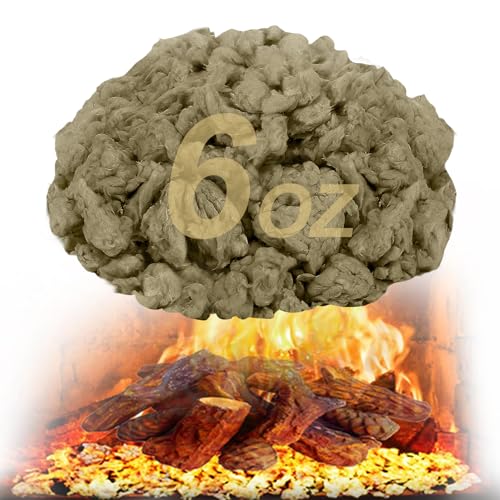
The Midwest Hearth Glowing Embers blend is a specialized hearth accessory designed to enhance the visual presentation of residential gas fireplaces. Formulated specifically for gas log sets and burner pans, this 6-ounce package combines high-temperature rock wool mineral fibers with vermiculite granules. It offers existing fireplace owners a focused, cost-effective way to refresh faded or depleted ember beds without altering the structural components of their firebox.
When flames make contact with the material, the mineral fibers heat up to produce an organic red-orange glow, while the vermiculite particles catch the light with a natural, subtle sparkle. This decorative media operates without producing supplemental heat of its own, serving strictly as a cosmetic enhancement to emulate the look of wood-burning coals. The blend is engineered for versatility, working across natural gas (NG) and liquid propane (LP) setups, and is compatible with vented gas fireplaces as well as select unvented (vent-free) units where the appliance manufacturer permits supplemental media.
In terms of composition and build, each bag contains 0.375 pounds (6 ounces) of gray, fibrous mineral material sourced from verified, contaminant-free deposits in the USA. Both rock wool and commercial vermiculite are naturally resistant to extreme operational temperatures, helping the embers retain their shape and glowing characteristics over sustained use. A single 6-ounce package is measured to dress typical burner pans supporting 18-inch to 24-inch gas log sets, making it easy to gauge how much material is necessary for common firebox footprints.
Proper placement is essential to achieving good visual results while preserving proper burner operation. The material should be pinched into small, wispy clumps and placed loosely around burner ports or lightly tucked against the bottom of ceramic logs where flames lick the surface. Compacting or piling the material tightly over gas outlets must be avoided, as restricted gas ports can cause incomplete combustion, flame lift, or unwanted soot accumulation. For vent-free appliances, reviewing the original fireplace manual is mandatory, as unvented systems have tight manufacturing tolerances and strict placement limitations.
While this blend substantially improves the appearance of an active flame, it has clear functional boundaries. It will not fix burner inefficiencies, unblock clogged ports, or alter the baseline heat output of the fireplace. In addition, fireplaces larger than 24 inches will require more than one package to achieve a full, continuous coal bed effect. Regular fireplace use may eventually lead to dust accumulation, meaning occasional light maintenance or periodic replacement is standard for maintaining an optimal glow.
For homeowners with compatible 18-inch to 24-inch natural gas or propane log sets, the Midwest Hearth Glowing Embers blend provides an accessible and well-made aesthetic upgrade. By combining high-grade rock wool with the textured depth of vermiculite, it successfully revitalizes flat or aging burner displays when installed in accordance with the appliance manufacturer's clearance and venting guidelines.
Prior to applying new glowing embers, ensure the gas supply is turned off and the entire firebox, logs, and burner pan have cooled completely. If removing older, deteriorated embers, gently clear away the compressed fibers and vacuum any loose dust from around the burner ports to provide a clean base for the fresh media.
When applying the Midwest Hearth blend, pull the material apart into loose, airy tufts rather than using dense wads. Scatter these light clusters along the burner pan near the gas ports, and gently position small wisps on the lower sections of the gas logs where the flame makes contact. Never smother the burner openings; gas must flow freely through the airy fiber mesh to maintain clean, balanced combustion.
Always verify placement instructions against your specific fireplace or log set user manual. This precaution is particularly important for vent-free appliances, where improper media positioning can disrupt precision air-fuel ratios, trigger oxygen depletion sensors, or lead to carbon buildup on logs and walls.
This glowing ember blend is compatible with both natural gas and liquid propane systems, making it suitable for a wide variety of standard indoor vented gas fireplaces, gas log sets, and outdoor gas burners designed to use mineral fiber media.
Use in unvented (vent-free) gas fireplaces is possible, but it is strictly subject to the appliance manufacturer's documentation. Because vent-free fireboxes operate under precise combustion parameters, some manufacturers permit small amounts of mineral wool only in designated zones, while others prohibit loose media entirely. Always consult the appliance rating plate and installation manual before adding decorative embers to any vent-free unit.
The short answer is that it depends on the venting system and the type of gas appliance you are installing. A hearth is a structural component, typically made of stone, brick, tile, or concrete, that extends beyond the fireplace opening to create a non-combustible barrier.
For sealed direct-vent gas fireplaces, the manufacturer often designs the unit to sit within a wood-framed surround, meaning a traditional masonry hearth extension may not be required if the unit is listed for such installation. However, for vented gas log sets installed in existing masonry fireplaces, a hearth extension is frequently required to protect the floor and adjacent materials from radiant heat.
| Appliance Type | Hearth Requirement | Typical Use Case |
|---|---|---|
| Direct-Vent Gas Fireplace | Often not required if listed for wood-framed installation | New construction, remodels with existing chimney |
| Vented Gas Log Set | Frequently required to extend beyond firebox opening | Existing masonry fireplaces |
| Vent-Free Gas Log Set | Required to protect surrounding combustibles | Existing fireplaces without chimney use |
| Freestanding Gas Stove | Required if not factory-built with non-combustible base | Rooms without existing fireplace |
Local building codes play a significant role in determining whether a hearth is mandatory. Many jurisdictions require a non-combustible hearth extension of a specific depth, often 16 to 20 inches, for vented appliances, even if the manufacturer’s minimum clearance is smaller. This is because codes are designed to protect the entire room, not just the immediate appliance.
Always check with your local building authority or a licensed installer to confirm the specific requirements for your area. The manufacturer’s installation manual is the primary source of truth for the appliance’s specific needs, but local codes can impose stricter standards.
Here is a checklist of what to verify before deciding if you need to build or modify a hearth:
- Check the manufacturer’s installation manual for minimum hearth extension requirements
- Verify local building codes for non-combustible floor protection standards
- Identify if the appliance is direct-vent, vented, or vent-free
- Measure the distance from the firebox opening to the nearest combustible material
- Confirm the material of the existing floor and whether it is non-combustible
Understanding Hearth Dimensions and Clearances
Hearth dimensions are not one-size-fits-all. The required extension is determined by the heat output of the appliance and the distance to the nearest combustible surface. For example, a high-output vented gas log set may require a hearth that extends 24 inches or more from the firebox opening, while a lower-output direct-vent unit may require little to no extension if installed in a non-combustible surround.
The width of the hearth is also critical; it must extend a certain distance beyond the sides of the firebox opening, typically 6 to 12 inches, to protect the sides of the fireplace structure.
It is crucial to distinguish between the hearth extension and the hearth pad. A hearth pad is a decorative element, often made of stone or tile, that sits in front of the fireplace for aesthetics. It does not necessarily meet the safety requirements for a hearth extension.
A proper hearth extension must be made of non-combustible materials such as brick, stone, concrete, or tile, and it must be structurally sound to support the weight of the materials and any potential impact. Using a decorative pad in place of a required structural hearth can create a serious fire hazard and violate building codes.
When measuring for a hearth, start from the front edge of the firebox opening, not the front of the fireplace surround. This is a common mistake that can lead to insufficient protection. The measurement should be taken to the nearest point of the floor that is not protected by a non-combustible material.
If the floor is already non-combustible, such as concrete or tile, the required extension may be reduced or eliminated, depending on the manufacturer’s specifications and local codes. Always use a tape measure and record the exact dimensions to share with your installer or building inspector.
Material Options for Hearth Extensions
The material chosen for a hearth extension must be non-combustible and able to withstand the radiant heat from the gas appliance. Common materials include brick, natural stone, concrete, and ceramic tile. Each material has its own advantages and considerations. Brick is a traditional choice that offers excellent heat resistance and durability.
Natural stone, such as granite or slate, provides a high-end aesthetic and is also non-combustible. Concrete is a cost-effective option that can be poured or precast to fit the required dimensions. Ceramic tile is a popular choice for its variety of colors and patterns, but it must be installed with a non-combustible substrate and proper mortar to prevent cracking.
It is important to ensure that the material is installed correctly to prevent heat transfer to the underlying structure. For example, if using tile, it should be installed over a non-combustible backer board or directly on a concrete subfloor. Avoid using materials that are combustible, such as wood, drywall, or carpet, in the hearth extension area.
Even if the material is non-combustible, it should be installed in a way that allows for thermal expansion and contraction to prevent cracking or damage over time. A professional installer can advise on the best materials and installation methods for your specific situation.
Here are some key points to consider when selecting hearth materials:
- Brick offers classic look and high heat resistance for long-term durability
- Natural stone provides premium aesthetic appeal and non-combustible protection
- Concrete is a budget-friendly option that can be customized to fit spaces
- Ceramic tile offers variety in design but requires proper non-combustible substrate
Code Compliance and Safety Standards
Building codes are designed to ensure the safe installation and operation of gas appliances. These codes vary by location, so it is essential to check with your local building authority to understand the specific requirements for your area. Many codes require a non-combustible hearth extension for vented gas appliances, even if the manufacturer’s manual does not explicitly state it.
This is because codes are based on a broad understanding of fire safety and are designed to protect the entire home, not just the immediate appliance. Ignoring code requirements can lead to failed inspections, potential fire hazards, and liability issues.
When working with a licensed installer, they will typically handle the code compliance process, including obtaining permits and scheduling inspections. If you are doing the installation yourself, it is your responsibility to ensure that the hearth extension meets all local code requirements.
This may involve submitting plans for review, obtaining a permit, and scheduling an inspection after the installation is complete. Failing to comply with local codes can result in fines, required corrections, and potential insurance issues in the event of a fire. Always prioritize safety and compliance over cost or convenience.
If you are unsure about the code requirements in your area, consult with a local building official or a licensed fireplace installer. They can provide guidance on the specific dimensions, materials, and installation methods required for your gas fireplace.
They can also advise on any additional safety features that may be needed, such as a fireplace screen or damper. flame gas fireplace installations often require specific safety clearances that align with local codes. By working with a professional, you can ensure that your hearth extension is installed correctly and safely, protecting your home and family.
Common Mistakes to Avoid
One of the most common mistakes homeowners make is assuming that a decorative hearth pad is sufficient for safety. A hearth pad is designed for aesthetics, not for heat protection. If your gas fireplace requires a hearth extension, a decorative pad will not meet the safety requirements and can create a fire hazard. Always check the manufacturer’s manual and local codes to determine if a structural hearth extension is required. Do not rely on the appearance of the pad to determine its safety function.
Another common mistake is measuring from the wrong point. The hearth extension should be measured from the front edge of the firebox opening, not the front of the fireplace surround. Measuring from the surround can result in an insufficient extension, leaving the floor and adjacent materials exposed to radiant heat. Always use the firebox opening as your reference point when measuring for a hearth extension. This ensures that the extension covers the area where heat is most likely to be emitted.
Finally, some homeowners ignore the width of the hearth extension. The extension must not only extend forward but also to the sides of the firebox opening. A narrow hearth extension can leave the sides of the fireplace structure exposed to heat, creating a potential fire hazard. Ensure that the hearth extension extends the required distance beyond the sides of the firebox opening, as specified by the manufacturer and local codes. This provides comprehensive protection for the surrounding area and ensures safe operation of your gas fireplace.
Always consult the manufacturer’s installation manual and local building codes to determine the specific hearth requirements for your gas fireplace. If you are unsure, hire a licensed installer to assess your situation and provide guidance. Proper hearth installation is a critical component of safe gas fireplace operation and should not be overlooked.


Write Your Review
No reviews yet. Be the first to share your experience!