
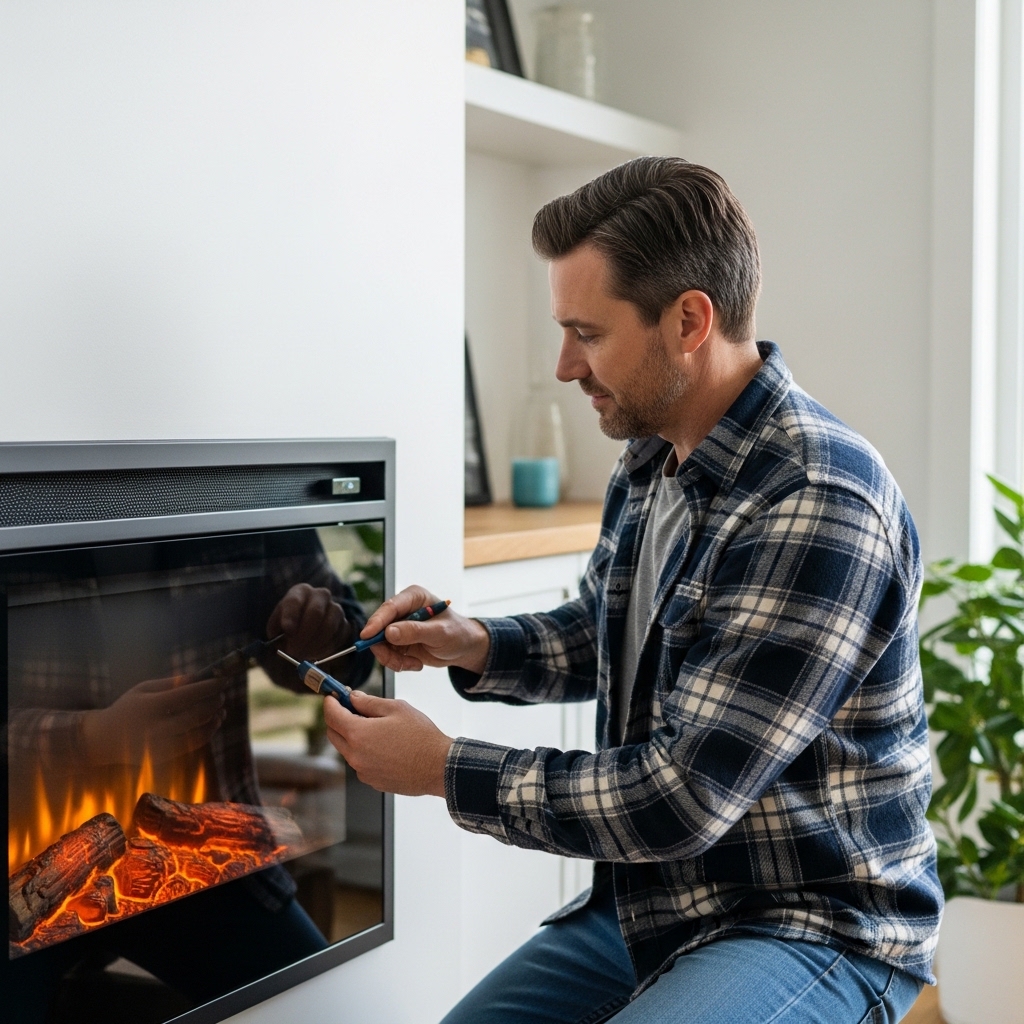

Installing a gas fireplace insert typically involves a significant investment that varies widely based on venting requirements and fuel type. The cost is not a single fixed figure but depends on whether you choose a ventless unit, which is generally more affordable, or a direct-vent model that requires professional installation. Understanding these price drivers helps you budget accurately and avoid unexpected expenses during the upgrade process.
For most homeowners, the total expense includes the unit price, necessary gas line modifications, and labor for installation.
- Ventless inserts offer a lower upfront cost because they do not require chimney modifications, while vented systems provide better air quality.
- Vented systems demand more complex setup, and you should also factor in local building codes and permit fees, which can vary by region.
- This guide breaks down the key components that influence the final price tag for your new heating solution.

Pros
- Integrated thermostat remote makes it simple to regulate room temperatures from across the room
- Vent-free burner design keeps generated heat inside the home rather than losing it up a chimney flue
- Oxygen depletion sensor provides an automated safety shutdown if ambient oxygen drops
- Includes essential setup media including realistic ceramic logs, burner assembly, receiver box, and lava rocks
Cons
- Engineered exclusively for natural gas lines and does not support liquid propane fuel or conversion kits
- Requires existing fireplace glass doors to remain completely open during operation to prevent overheating
- Ventless gas appliances are subject to regional building code restrictions and may not be permitted in all jurisdictions
The EROMMY 24-Inch Ventless Fireplace Log Set is designed for existing masonry or factory-built fireboxes that already have access to a plumbed natural gas supply. It suits homeowners who want the warmth and visual ambiance of a log fire without the labor, ash cleanup, or chimney maintenance of burning real wood. Because this system is engineered strictly for natural gas, it cannot be adapted or converted for use with propane, making fuel verification a critical first step.
Heating performance relies on a 32,000 BTU vent-free gas burner that the manufacturer rates at 99.9 percent efficiency. Since the set does not vent through an open chimney flue, most generated warmth remains inside the living area, with coverage listed for areas up to 1,100 square feet. Operation is managed through an electronic pulse ignition system and a multifunctional wireless remote. The remote features both manual and thermostat modes, customizable temperature targets, Fahrenheit or Celsius displays, a child lock, and a failsafe timer that shuts down the burner after two hours if signal transmission ceases for fifteen minutes.
Visually, the arrangement includes six hand-painted ceramic logs styled after South American silk floss wood. These logs are engineered to withstand high firebox temperatures without breaking down or burning away. The package also includes a bag of decorative lava rock to dress the burner base and conceal the underlying pan, along with the wireless remote transmitter and receiver box.
Fit and installation require careful planning before purchase. The manufacturer specifies minimum firebox dimensions of 14 inches deep, 32 inches wide at the front opening, 22 inches wide across the rear wall, and 24 inches high. Measuring your firebox taper and clearance is essential to ensure the assembly fits properly and allows adequate combustion air circulation. Additionally, manufacturer safety guidelines state that any glass doors on the fireplace must remain wide open during operation to prevent severe heat buildup within the enclosure.
Prospective buyers should check local municipal codes and homeowner association rules before investing in any vent-free gas appliance, as some jurisdictions restrict or prohibit unvented indoor burners. For homes that meet code requirements and have the necessary natural gas line and firebox dimensions, this EROMMY set provides a capable, supplemental zone-heating option backed by essential automated safety shutoffs.
This 24-inch log set requires a minimum firebox footprint of 32 inches across the front opening, tapering to at least 22 inches at the rear wall.
A minimum interior depth of 14 inches and an interior height of at least 24 inches are mandatory to maintain proper combustion airflow and clearance around the burner assembly.
Always verify your existing firebox measurements, damper condition, and nearby wall clearances against the manufacturer installation manual before purchasing.
An integrated oxygen depletion sensor (ODS) serves as a core safety mechanism, cutting off gas delivery immediately if room oxygen levels decrease below safe thresholds.
The unit features a pulse ignition system and an automatic failsafe that shuts the gas valve off if remote signal communication drops for 15 minutes.
Glass doors on the fireplace must remain completely open during use to maintain required ventilation and prevent thermal damage to the surrounding enclosure.

Pros
- Asbestos-free basalt and diabase mineral composition ensures non-toxic fireplace ember effects
- Dual-media blend includes vermiculite flakes that add shimmer and help distribute gas across the burner
- Broad compatibility covering both natural gas and liquid propane fuel systems across vented and ventless fireplaces
- Supplies 10 ounces of lightweight media, providing ample volume for standard residential burner pans
Cons
- Requires careful, loose placement during setup, as packing embers too densely over gas ports can obstruct burner ventilation
- Restricted strictly to gas fireplace ember simulation and cannot be used as thermal insulation or in wood-burning fireboxes
The GASPRO 10-ounce rock wool glowing embers and vermiculite blend is designed for homeowners and fireplace owners who want to enhance the visual appeal of their existing gas log sets. Over time, original glowing embers in a gas fireplace can deteriorate or lose their visual impact. This replacement media provides a fresh ember bed that simulates glowing coals, giving natural gas and propane fireplaces a more authentic appearance without requiring structural hearth modifications.
Constructed from selected basalt and diabase rock wool alongside natural vermiculite flakes, the mixture is asbestos-free and non-toxic. When exposed to gas flames, the fine rock wool fibers glow brightly to mimic burning embers. The included vermiculite flakes, which resemble mica, serve a functional purpose by helping disperse fuel evenly across the burner pan. This dispersion promotes a more consistent flame pattern and helps minimize noticeable cold spots across the log set.
Compatibility is a key consideration for decorative hearth media, and this blend is formulated for versatile fuel and venting setups. It functions with both natural gas and liquid propane burners, and it is suitable for installation in vented or ventless gas fireplaces. Beyond aesthetic ember glowing, the media can also be scattered lightly across the base of the hearth to conceal metal burner pans and plumbing connections, creating a cleaner finished look beneath ceramic or refractory logs.
Proper installation is essential for both appearance and safe fireplace operation. The manufacturer notes that embers should never be packed tightly or piled into dense mounds over burner ports, as gas flames require adequate airflow and ventilation to breathe correctly. Placing embers too densely can disrupt fuel flow or cause improper combustion. Homeowners should always review their gas appliance manual to confirm decorative media guidelines and ensure burner openings remain unobstructed.
This media is engineered exclusively for decorative ember simulation in gas fireplaces and gas log sets. It is not designed to serve as an insulation blanket, stove liner, or fire-pit thermal barrier, nor should it be used in wood-burning fireplaces. For buyers seeking an economical aesthetic refresh that improves flame glow and conceals bare burner pans in vented or unvented gas appliances, this 10-ounce rock wool and vermiculite package offers a practical solution.
This glowing ember blend is specified for use in gas fireplaces and decorative gas log sets. It is compatible with both vented and ventless configurations, accommodating systems plumbed for either natural gas or liquid propane fuel.
Because it is designed strictly for gas-fueled hearth appliances, this media should not be added to wood-burning fireplaces, pellet stoves, or outdoor charcoal setups. It is also not rated as thermal insulation for wood stoves or fire pits.
Before applying new glowing embers, turn off the gas supply and ensure the fireplace and burner pan are completely cool. Remove old, degraded media and clean any loose dust from the burner area according to your fireplace manufacturer guidelines.
Gently pull apart the rock wool into light, wispy tufts rather than leaving it in dense clumps. Scatter the tufts and vermiculite flakes loosely around the burner ports. Avoid covering ports too thickly so fuel and combustion air can circulate freely.


Pros
- Dual-fuel flexibility allows switching between natural gas and propane based on fuel availability.
- Ventless design avoids the expense and structural modifications of chimney installation.
- Zero-clearance firebox allows straightforward integration into custom mantels or recessed wall cavities.
- Comes complete with ceramic log set, iron grate, mesh screen doors, and remote receiver.
Cons
- Ventless gas appliances are subject to regional building code restrictions and may be prohibited in specific jurisdictions or bedrooms.
- Flame height modulation must be adjusted manually on the firebox valve rather than through the remote control.
The Duluth Forge FDF400RT-ZC is a dual-fuel ventless gas fireplace insert engineered to serve as a supplemental heat source or visual centerpiece in residential living areas. Designed for homeowners seeking the ambiance and heat of a traditional hearth without venting through an exterior chimney or flue, this insert fits well into custom recessed wall framing, prefabricated cabinetry, or existing masonry openings with access to a gas supply line. Because vent-free appliances release combustion byproducts into the living area, buyers must always verify local municipal codes and room-size guidelines before selecting a ventless model.
At the core of the insert is a burner rated by the manufacturer at 32,000 BTU, with a listed heating capability of up to 1,500 square feet. The unit features patented dual-fuel technology, allowing it to burn either natural gas or liquid propane depending on household utility connections. Starting the appliance relies on a push-button piezo ignition that lights a standing pilot. From there, users can turn the main flame on or off using the included handheld remote control with an LCD display, while flame height adjustments are handled manually at the control valve.
Visually, the insert replicates the look of an established hearth through six hand-painted ceramic fiber logs arranged over an iron grate, complemented by an interior sprayed brick liner. The black exterior measures approximately 29.1 inches wide, 29.5 inches deep, and 15.6 inches high, weighing roughly 70 pounds. Protective mesh double doors enclose the firebox face, creating a classic screened finish while maintaining an unobstructed view of the fire. The package also includes the remote receiver and a AAA battery to get the remote operational right away.
The zero-clearance construction permits the firebox to sit directly against framing studs or non-combustible materials when installed according to the manual. However, specific spatial clearances must be maintained, including a minimum of 42 inches between the top of the fireplace and the ceiling. Because proper gas line hookups, pressure regulation, and leak checks are vital for safe gas operation, hiring a qualified, licensed gas technician is strongly advised. Routine maintenance involves dusting the ceramic logs, clearing the burner ports of debris, and replacing remote batteries as needed.
Overall, the Duluth Forge FDF400RT-ZC presents an adaptable option for property owners wanting powerful supplemental heat and fuel flexibility in an all-in-one package. Its lack of required chimney venting can significantly streamline renovation budgets compared to vented alternatives. Prospective buyers should confirm their local building codes regarding ventless combustion appliances, ensure their room volume matches manufacturer minimums, and review gas line access before finalizing their purchase.
The zero-clearance firebox design allows this insert to be recessed into standard framing or built directly into a wall cavity, provided a qualified gas supply is available. The manufacturer specifies a mandatory clearance of at least 42 inches from the top of the appliance to the ceiling to ensure adequate thermal dispersion and prevent heat damage to surrounding finishes.
Because ventless appliances operate without an exhaust duct or chimney, they utilize room air for combustion. Prospective installers should verify that the room provides adequate cubic volume and ventilation as dictated by manufacturer instructions and local regulations. Gas line connections, fuel type configuration, and initial pressure testing should always be performed by a licensed professional.
Featuring dual-fuel capability, this insert can be connected to either an existing natural gas supply or a dedicated liquid propane tank line. The internal system operates at up to 32,000 BTU, providing high-efficiency zone heating directly into the living space without the draft losses associated with open chimneys.
Ignition is initiated via a push-button piezo system that activates a standing pilot. Once the pilot is established, the included remote control can cycle the main burner on and off. Users can fine-tune flame intensity and heat output using the manual control knob located behind the unit access panel.
The Duluth Forge FDF400RT-ZC arrives with the zero-clearance black firebox, integrated burner assembly, and an internal sprayed brick liner. Decorative components include six hand-painted ceramic fiber faux logs, an iron grate, and protective mesh double doors.
For operational control, the package contains a handheld remote control with an LCD screen, a corresponding remote receiver, and a single AAA battery to power the handheld transmitter.

Pros
- Zero-clearance design provides flexible installation options for wall framing or cabinet mantels.
- Vent-free configuration eliminates the need for expensive exterior chimneys or flue piping.
- Integrated thermostat manages room temperature automatically without constant manual monitoring.
- Comes equipped with an essential Oxygen Depletion Sensor for unvented indoor safety protection.
Cons
- Designed strictly for natural gas connections and cannot be used with liquid propane.
- Unvented gas appliances are subject to regional building codes that may restrict installation in certain areas or bedrooms.
The Duluth Forge FNF300T is a ventless natural gas fireplace insert designed for homeowners seeking supplemental heat and the classic ambiance of an active hearth without chimney construction. Built with a customizable zero-clearance chassis, this unit can be recessed flush into standard framing or enclosed within a matching fireplace mantel surround. It serves as a practical option for new construction projects, room renovations, or retrofits where routing direct-vent flue piping is impractical or cost-prohibitive.
Operating exclusively on natural gas, this insert generates up to 26,000 BTUs of heat. The manufacturer rates this thermal output for spaces measuring up to 1,350 square feet under optimal conditions. To help manage energy usage and comfort, the unit features an integrated thermostat control that cycles the main burner on and off to maintain a preselected room temperature. Starting the appliance is handled through a battery-assisted Piezo ignition system, eliminating the need for matches or manual continuous lighting while keeping startup straightforward.
Inside the firebox, visual appeal is provided by five hand-painted ceramic fiber logs arranged over a dual precision ported burner system. This design distributes the gas flame across multiple ports to create a realistic, full-bodied burn pattern. Because the system is vent-free, it operates at a manufacturer-rated 99.9 percent efficiency, meaning virtually all the heat produced stays inside the living space rather than escaping through an exterior draft.
Measuring approximately 29.1 inches wide, 13.9 inches deep, and 23.9 inches high, the insert requires careful planning regarding existing wall cavities or mantel dimensions. Safe operation is reinforced by an Oxygen Depletion Sensor (ODS) paired with an automatic gas shut-off valve. If oxygen levels in the room drop below a safe threshold, the sensor automatically cuts the gas supply. Homeowners must verify that room size guidelines and adequate fresh air intake requirements from the manufacturer manual are observed during installation.
Before selecting this model, buyers should account for infrastructure constraints and regional regulations. Because ventless gas appliances release combustion byproducts and water vapor directly into the home, certain state or municipal building codes restrict or prohibit unvented heating units in bedrooms or specific jurisdictions. In addition, this unit is engineered exclusively for natural gas and does not document liquid propane compatibility. A plumbed gas supply line is essential, making professional gas line installation and verification strongly recommended.
For properties with an active natural gas hookup where vent-free appliances are fully code-compliant, the Duluth Forge FNF300T provides a dependable, high-output zone heating solution. Its zero-clearance enclosure and realistic ceramic log arrangement deliver significant design flexibility for custom cabinetry or wall builds. Ensuring proper spatial clearance, checking local code compliance, and securing professional installation will ensure this insert performs reliably as a supplemental heating centerpiece.
Because the Duluth Forge FNF300T is designed as a ventless natural gas appliance, it does not require a chimney, flue, or direct-vent pipe system to operate. This unvented configuration delivers an advertised 99.9 percent heating efficiency by releasing all generated heat directly into the living space. However, operating an unvented gas appliance requires strict adherence to manufacturer room-volume minimums and combustion air guidelines.
The unit features zero-clearance construction, allowing it to be framed into wall cavities or placed against approved non-combustible materials and specialized fireplace mantels. Installers must always consult the official product manual to confirm mandatory clearances to walls, combustible mantels, and flooring. Local municipal codes, homeowner associations, or state regulations may restrict or prohibit vent-free gas appliances in certain residential areas or confined spaces such as bedrooms.
The Duluth Forge FNF300T uses a built-in thermostat control designed to modulate operation based on your desired ambient temperature. Once a target comfort setting is dialed in, the smart thermostat automatically cycles the dual burner on and off to maintain steady room conditions, reducing manual adjustments and unnecessary fuel consumption.
Ignition is powered by a reliable, battery-assisted Piezo spark system. This setup produces a quick, dependable spark to light the pilot and burner without requiring an external electrical outlet connection. Routine operation involves setting your temperature preference and monitoring the flame presentation across the five included ceramic fiber logs.
Safety management on this model relies on an integrated Oxygen Depletion Sensor (ODS). This safety pilot mechanism constantly monitors the surrounding room atmosphere during combustion. If ambient oxygen levels drop below acceptable safety standards, the ODS system automatically shuts off the gas supply to prevent hazardous operating conditions.
As with all indoor combustion appliances, ventless natural gas inserts release moisture and combustion trace elements into the room. Maintaining proper room ventilation, following all air volume specifications in the manual, and installing functional carbon monoxide and smoke detectors in the home are vital safety measures when operating any unvented gas hearth product.
Pros
- Flexible dual-fuel capability allows operation with either natural gas or liquid propane lines.
- Thermostatic cycling helps regulate room comfort automatically without continuous manual adjustments.
- Zero-clearance design provides flexible installation options for recessed framing or custom mantel cabinets.
- Ventless configuration eliminates the need for an external chimney, flue, or venting ductwork.
Cons
- Ventless gas appliances are subject to regional and local code restrictions that must be verified prior to installation.
- Requires a minimum 42-inch clearance from the top of the unit to the ceiling, which may restrict placement in rooms with low ceiling heights.
The Duluth Forge FDF400T-ZC is a zero-clearance, ventless gas fireplace insert engineered for homeowners seeking powerful supplemental heat without the structural demands of an exterior chimney or flue. Designed for indoor installation in rooms with accessible gas piping, this unit functions effectively as a replacement insert inside a suitable fireplace opening or as the core component of a custom-built mantel enclosure. Its dual-fuel configuration makes it an adaptable option for property owners utilizing either utility natural gas or bottled liquid propane.
At the center of its operation is a dual-fuel burner capable of producing up to 32,000 BTUs, operating with a manufacturer-stated 99.9% vent-free efficiency rating. Duluth Forge rates this heat output for living spaces up to 1,500 square feet under typical residential conditions. The built-in thermostat control continuously monitors ambient room temperature, cycling the gas burner on and off to maintain a consistent comfort level rather than requiring ongoing manual flame adjustments. Ignition is managed by a battery-operated push-button piezo system that uses a single included AAA battery, allowing reliable startup without requiring an electrical outlet or household wiring.
Visually, the insert features a traditional fireplace appearance centered on six hand-painted ceramic fiber faux logs positioned on a heavy iron grate. The interior of the firebox features a sprayed brick liner for added depth, while the exterior presents a clean black finish accented by operable mesh double doors. Listed dimensions measure 29.1 inches wide, 29.5 inches deep, and 15.6 inches high, with a total weight of approximately 70 pounds, providing a solid footprint intended to fill standard hearth openings or custom framing cavities.
Installation requires careful review of framing clearances, gas supply requirements, and local code restrictions. Because this is a zero-clearance firebox, it is designed for recessed installation against standard wall framing or into an enclosure accessible to a gas supply. However, the manufacturer dictates that clearance between the top of the firebox and the ceiling must not be less than 42 inches. Because vent-free gas appliances release combustion byproducts directly into the room, prospective buyers should always confirm that local building codes and municipal regulations permit unvented gas appliances in their specific area prior to purchase.
The Duluth Forge FDF400T-ZC serves as an efficient heating solution for homeowners looking for substantial zone heat and versatile fuel compatibility. The absence of exterior venting simplifies placement in homes lacking an existing flue, provided that room dimensions and required ceiling clearances are strictly respected. For households with accessible gas lines seeking a dependable, thermostatically controlled hearth appliance, this model combines practical heating performance with classic fireplace aesthetics.
The zero-clearance firebox design of the Duluth Forge FDF400T-ZC enables flexible installation, whether recessed into standard interior wall framing or housed inside a compatible fireplace mantel surround. Because it does not require an external chimney, chimney liner, or exterior ducting, installation focuses primarily on proper gas line connections and structural clearance compliance.
A critical manufacturer specification is the required clearance to combustible ceilings, which must be a minimum of 42 inches measured from the top of the fireplace insert. Adequate room volume is also necessary to support proper combustion for unvented appliances. Homeowners should consult the manufacturer manual and work with a licensed gas technician to ensure correct piping, pressure regulation, and adherence to municipal codes regarding vent-free indoor heating appliances.
Featuring patented dual-fuel technology, the FDF400T-ZC is engineered to operate on either natural gas or liquid propane without requiring separate conversion kits. This versatility allows homeowners to select the most economical or available fuel source for their household setup.
The burner produces up to 32,000 BTUs of supplemental heat with a 99.9% efficiency rating, as no thermal energy escapes through an exhaust vent. Duluth Forge rates this appliance to heat areas up to 1,500 square feet. An integrated thermostat automates the heating cycle to maintain target room temperatures, while the piezo ignition provides straightforward startup without relying on household electrical power.
Understanding Gas Fireplace Insert Costs
The price of a gas fireplace insert is primarily driven by the heating output, fuel compatibility, and venting configuration. Higher BTU units that heat larger spaces generally command a premium due to larger burners and more robust safety features. You should evaluate your room’s square footage to determine the necessary output, as buying a unit that is too small or too large can affect both performance and efficiency.
| Feature | Impact on Cost |
|---|---|
| Ventless Design | Lower unit price, no chimney mods |
| Direct Vent | Higher unit price, requires ducting |
| Dual Fuel Capability | Premium pricing for flexibility |
| Smart Controls | Added cost for thermostats/remotes |
Ventless inserts are often the most budget-friendly option because they operate without an external exhaust system. These units rely on indoor air for combustion and release byproducts into the room, which necessitates specific safety sensors. The absence of chimney work significantly reduces labor costs, making this a popular choice for renters or those with existing masonry fireplaces that are not currently in use. However, local codes may restrict ventless options in certain jurisdictions, so you must verify local regulations before purchasing.
Direct-vent inserts, on the other hand, require a sealed combustion system that draws air from outside and exhausts byproducts directly out. This configuration improves indoor air quality but adds complexity to the installation process. The cost includes the unit itself, the venting kit, and professional labor to drill through exterior walls or utilize existing flues. While the upfront cost is higher, many homeowners find the cleaner burn and consistent heat worth the investment for long-term use.
Key Factors Influencing the Final Price
Several specific components contribute to the total expenditure when upgrading to a gas insert. These factors range from the physical dimensions of the unit to the technological features included in the package. Understanding each element helps you prioritize features that matter most to your living situation.
- Venting type: Ventless units are cheaper than direct-vent systems.
- Fuel source: Natural gas lines may require modification for propane.
- Heating capacity: Higher BTU outputs increase the unit price.
- Control systems: Remote controls and thermostats add to cost.
- Installation labor: Professional setup varies by region and complexity.
Fuel compatibility is a critical consideration that can impact both the unit price and installation labor. Dual-fuel inserts that accept both natural gas and liquid propane offer flexibility but come at a higher price point. If your home currently lacks a gas line, the cost of running one can be substantial, potentially exceeding the price of the insert itself. You should consult with a licensed plumber or HVAC technician to assess the feasibility of gas line extensions before committing to a purchase.
The size and dimensions of the insert must match your existing fireplace opening. Custom-sized units or those requiring significant masonry work will increase labor costs. Standard sizes are more widely available and often cheaper, but they may not fit all hearths. Measuring your firebox accurately ensures you select a unit that fits without expensive modifications. This step is crucial for both safety and aesthetic integration into your home design.
Hidden Costs and Installation Requirements
Beyond the sticker price of the unit, several hidden costs can affect your total budget. Professional installation is mandatory in most areas to ensure compliance with safety standards and local building codes. Labor rates vary by location, but you should expect to pay for inspection, gas line connection, and final certification. These services are essential for safe operation and may be required for insurance purposes.
Permit fees are another potential expense that varies by municipality. Some localities require permits for any gas appliance installation, while others may waive fees for minor updates. It is wise to check with your local building department early in the process to understand the regulatory landscape. Failure to obtain necessary permits can result in fines or the requirement to remove the installation, which is a costly mistake to avoid.
Venting materials and hardware also contribute to the overall cost. Direct-vent systems require specific venting kits that may not be included with the base unit. These kits include pipes, seals, and exterior terminators that must be compatible with the insert. The length and complexity of the vent run can also impact labor time and material costs. Planning the vent path in advance helps you estimate these expenses more accurately.
Comparing Ventless and Vented Options
Choosing between ventless and vented inserts involves balancing cost, air quality, and local regulations. Ventless units are generally less expensive and easier to install because they do not require external venting. They are ideal for homes without existing chimneys or where chimney modification is impractical. However, they release combustion byproducts into the room, which can be a concern for households sensitive to indoor air quality.
Vented inserts provide a cleaner burn by exhausting all byproducts outside. This option is preferred for homes with existing chimneys or for those who prioritize indoor air quality. The higher cost is justified by the improved air quality and the ability to use the fireplace more frequently without accumulating indoor pollutants. Many homeowners find that the peace of mind and health benefits outweigh the additional installation expense.
The decision often comes down to your specific home structure and local code requirements. Some jurisdictions ban ventless gas fireplaces entirely, while others allow them with specific safety features. You should verify local regulations before making a final decision. This step ensures that your investment is both legal and safe for long-term use in your home.
Safety Features and Their Cost Impact
Safety features are non-negotiable in modern gas fireplace inserts, but they can influence the price. Oxygen Depletion Sensors (ODS) are standard in ventless units and automatically shut off the gas supply if oxygen levels drop. This feature is critical for preventing carbon monoxide buildup and is required by many safety standards. The inclusion of an ODS is a baseline expectation, not a premium add-on.
Advanced safety features like automatic shut-off timers, child locks, and remote control safety protocols may add to the cost. These features enhance user convenience and safety, particularly in households with children or pets. While not always mandatory, they provide an extra layer of protection and can be a valuable addition for peace of mind. You should consider these features when comparing different models within your budget range.
Proper installation is the most critical safety factor, regardless of the unit’s built-in features. A poorly installed insert can pose serious risks, including gas leaks and fire hazards. Investing in a qualified professional for installation is not optional; it is a safety necessity. The cost of professional installation is a small fraction of the potential damage from a faulty setup. Always hire a licensed technician with experience in gas appliance installation.
Long-Term Value and Maintenance Costs
While the initial cost is a major consideration, long-term value should also factor into your decision. Gas fireplace inserts are generally more energy-efficient than traditional wood-burning fireplaces, leading to lower operating costs over time. The convenience of gas fuel also eliminates the need for wood storage, ash disposal, and chimney sweeping. These savings can offset the higher upfront cost over the lifespan of the unit.
Maintenance requirements vary by venting type. Ventless units require regular inspection of the ODS and burner ports to ensure proper function. Vented units need periodic cleaning of the vent line to prevent blockages. Annual professional inspections are recommended for both types to ensure safe operation and optimal performance. Budgeting for these maintenance tasks ensures your insert continues to provide reliable heat for years to come.
The durability of the insert also impacts its long-term value. High-quality materials and construction can extend the lifespan of the unit, reducing the need for early replacement. Look for inserts with robust burner designs and durable glass or ceramic components. These features contribute to the overall value proposition and help you make a more informed investment decision.
Ultimately, the cost of a gas fireplace insert is an investment in comfort, safety, and home value. By understanding the various cost factors and planning for installation and maintenance, you can make a confident decision that meets your needs and budget. Always prioritize safety and compliance with local codes to ensure a successful and enjoyable experience with your new heating solution.



Write Your Review
No reviews yet. Be the first to share your experience!