


Whether are ventless fireplaces legal depends entirely on your local building codes and state regulations. While many jurisdictions permit direct-vent or vent-free gas units, others ban them for indoor residential use due to air quality concerns. You must verify your specific municipal code before purchasing or installing any unit, as compliance varies significantly by region. Understanding these legal boundaries helps you avoid costly removals or failed inspections later in your home project.
Regulations typically focus on oxygen depletion, carbon monoxide production, and indoor humidity levels. Modern units include safety sensors, but local authorities may still restrict their use in bedrooms, bathrooms, or small enclosed spaces. A homeowner should always check with their local building department to confirm whether a ventless fireplace is allowed in their specific zip code. This guide outlines the key factors that determine legality and safety for your home.

Pros
- Dual-fuel flexibility allows switching between natural gas and propane based on fuel availability.
- Ventless design avoids the expense and structural modifications of chimney installation.
- Zero-clearance firebox allows straightforward integration into custom mantels or recessed wall cavities.
- Comes complete with ceramic log set, iron grate, mesh screen doors, and remote receiver.
Cons
- Ventless gas appliances are subject to regional building code restrictions and may be prohibited in specific jurisdictions or bedrooms.
- Flame height modulation must be adjusted manually on the firebox valve rather than through the remote control.
The Duluth Forge FDF400RT-ZC is a dual-fuel ventless gas fireplace insert engineered to serve as a supplemental heat source or visual centerpiece in residential living areas. Designed for homeowners seeking the ambiance and heat of a traditional hearth without venting through an exterior chimney or flue, this insert fits well into custom recessed wall framing, prefabricated cabinetry, or existing masonry openings with access to a gas supply line. Because vent-free appliances release combustion byproducts into the living area, buyers must always verify local municipal codes and room-size guidelines before selecting a ventless model.
At the core of the insert is a burner rated by the manufacturer at 32,000 BTU, with a listed heating capability of up to 1,500 square feet. The unit features patented dual-fuel technology, allowing it to burn either natural gas or liquid propane depending on household utility connections. Starting the appliance relies on a push-button piezo ignition that lights a standing pilot. From there, users can turn the main flame on or off using the included handheld remote control with an LCD display, while flame height adjustments are handled manually at the control valve.
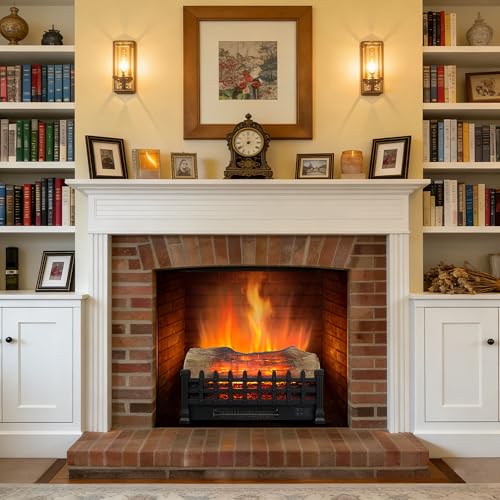
Visually, the insert replicates the look of an established hearth through six hand-painted ceramic fiber logs arranged over an iron grate, complemented by an interior sprayed brick liner. The black exterior measures approximately 29.1 inches wide, 29.5 inches deep, and 15.6 inches high, weighing roughly 70 pounds. Protective mesh double doors enclose the firebox face, creating a classic screened finish while maintaining an unobstructed view of the fire. The package also includes the remote receiver and a AAA battery to get the remote operational right away.
The zero-clearance construction permits the firebox to sit directly against framing studs or non-combustible materials when installed according to the manual. However, specific spatial clearances must be maintained, including a minimum of 42 inches between the top of the fireplace and the ceiling. Because proper gas line hookups, pressure regulation, and leak checks are vital for safe gas operation, hiring a qualified, licensed gas technician is strongly advised. Routine maintenance involves dusting the ceramic logs, clearing the burner ports of debris, and replacing remote batteries as needed.
Overall, the Duluth Forge FDF400RT-ZC presents an adaptable option for property owners wanting powerful supplemental heat and fuel flexibility in an all-in-one package. Its lack of required chimney venting can significantly streamline renovation budgets compared to vented alternatives. Prospective buyers should confirm their local building codes regarding ventless combustion appliances, ensure their room volume matches manufacturer minimums, and review gas line access before finalizing their purchase.
The zero-clearance firebox design allows this insert to be recessed into standard framing or built directly into a wall cavity, provided a qualified gas supply is available. The manufacturer specifies a mandatory clearance of at least 42 inches from the top of the appliance to the ceiling to ensure adequate thermal dispersion and prevent heat damage to surrounding finishes.
Because ventless appliances operate without an exhaust duct or chimney, they utilize room air for combustion. Prospective installers should verify that the room provides adequate cubic volume and ventilation as dictated by manufacturer instructions and local regulations. Gas line connections, fuel type configuration, and initial pressure testing should always be performed by a licensed professional.
Featuring dual-fuel capability, this insert can be connected to either an existing natural gas supply or a dedicated liquid propane tank line. The internal system operates at up to 32,000 BTU, providing high-efficiency zone heating directly into the living space without the draft losses associated with open chimneys.
Ignition is initiated via a push-button piezo system that activates a standing pilot. Once the pilot is established, the included remote control can cycle the main burner on and off. Users can fine-tune flame intensity and heat output using the manual control knob located behind the unit access panel.
The Duluth Forge FDF400RT-ZC arrives with the zero-clearance black firebox, integrated burner assembly, and an internal sprayed brick liner. Decorative components include six hand-painted ceramic fiber faux logs, an iron grate, and protective mesh double doors.
For operational control, the package contains a handheld remote control with an LCD screen, a corresponding remote receiver, and a single AAA battery to power the handheld transmitter.
Understanding Ventless Fireplace Legality and Safety
Legality is not a national standard but a local one. State and municipal codes dictate whether vent-free gas appliances are permitted in residential homes. Some areas allow them in living rooms but prohibit them in sleeping areas, while others ban them entirely. The primary concern for regulators is the accumulation of combustion byproducts, including carbon monoxide and nitrogen dioxide, which can degrade indoor air quality over time.
| Factor | Impact on Legality |
|---|---|
| Local Building Code | Determines if vent-free units are permitted at all |
| Room Size | May require minimum square footage for safe operation |
| Vent Type | Vent-free vs. Direct-vent vs. Natural Draft |
| Safety Sensors | Required ODS and CO sensors may be mandatory |
Before you invest in a unit, you need to understand the specific technical requirements that make a fireplace legal in your area. Most jurisdictions require that the appliance meets specific federal or state safety standards, such as those set by ANSI or CSA. These standards ensure that the unit produces acceptable levels of emissions and includes necessary safety shutoffs. If your local code references a specific standard, your unit must be certified to meet it.
- Check local municipal codes for vent-free gas appliance restrictions
- Verify the unit has an Oxygen Depletion Sensor (ODS)
- Confirm the room meets minimum square footage requirements
- Ensure the unit is certified by a recognized safety body
How Local Codes Govern Indoor Combustion
Building departments enforce codes to protect public health and safety. For gas appliances, these codes often reference the International Residential Code (IRC) or local amendments. The IRC generally allows vent-free gas appliances in living areas but restricts them in bedrooms and bathrooms. Some cities have stricter rules that ban vent-free units altogether, citing long-term air quality studies. You must consult your local authority having jurisdiction (AHJ) to know the exact rules that apply to your property.
The distinction between vent-free and direct-vent is critical for compliance. A direct-vent unit draws air from outside and exhausts combustion gases outside, which is almost always legal. A vent-free unit burns fuel inside the room and releases byproducts into the living space. Because of this, vent-free units face stricter scrutiny. If you are in a region with strict air quality laws, a direct-vent option may be your only legal choice for a gas fireplace.
Safety Sensors and Certification Requirements
Modern ventless fireplaces must include an Oxygen Depletion Sensor (ODS) to prevent dangerous oxygen levels. This sensor shuts off the gas supply if oxygen drops below a safe threshold. Additionally, many units include a Carbon Monove (CO) sensor to detect dangerous levels of exhaust gas. These sensors are critical for legal operation in many jurisdictions. Without them, the unit may not pass inspection or may be illegal to use indoors.
Certification by organizations like UL, ETL, or CSA is also a key factor. These bodies test appliances for safety and emissions performance. A unit without proper certification may not be legal, even if it has safety sensors. When purchasing a fireplace, look for the certification label on the unit or in the manual. This label confirms that the product has been tested and meets recognized safety standards. Using a non-certified unit can void insurance coverage and result in failed inspections.
Room Size and Clearance Specifications
Even if ventless fireplaces are legal in your area, they must be installed in a room that meets specific size requirements. Combustion consumes oxygen, and a room that is too small may not have enough air supply. Manufacturer instructions specify the minimum square footage for safe operation. For example, a 30,000 BTU unit may require a minimum of 400 square feet of room space. You must measure your room and compare it to the manufacturer’s requirements before installation.
Clearance requirements also play a role in legal installation. The unit must be installed at a specific distance from combustible materials, such as walls, ceilings, and furniture. These clearances are listed in the manufacturer’s installation manual and are often stricter than general building codes. Ignoring these clearances can create a fire hazard and result in a failed inspection. Always follow the specific clearance instructions provided by the manufacturer for your model.
Comparison of Venting Options for Compliance
Understanding the differences between venting types helps you choose a legal option for your home. Vent-free units are the most restrictive, while direct-vent units offer the most flexibility. Natural draft units require a chimney and are generally legal but have their own installation requirements. Each type has different implications for air quality, energy efficiency, and code compliance. Choosing the right venting type is essential for ensuring your fireplace is both legal and safe.
- Vent-free: No external vent, strict room size and sensor requirements
- Direct-vent: Sealed system, draws and exhausts air outside, widely legal
- Natural Draft: Uses chimney, relies on natural convection, requires flue
- Outdoor Vent: For exterior use, not suitable for indoor residential heating
Practical Steps for Homeowners Verifying Legality
Verifying the legality of a ventless fireplace involves a few key steps that ensure compliance and safety. First, contact your local building department to ask about vent-free gas appliance regulations. Ask specifically about any restrictions on bedrooms, bathrooms, or small rooms. Get the answer in writing if possible, as this documentation can be useful during inspections. This step helps you avoid purchasing a unit that cannot be legally installed in your home.
Next, review the manufacturer’s installation manual for your specific model. Look for the minimum room size, clearance requirements, and safety features included. Compare these specifications to your room’s dimensions and layout. If your room is too small or lacks the required clearances, you may need to choose a different venting type. This careful planning ensures that your fireplace installation meets both manufacturer guidelines and local codes.
If you are unsure about the legal status of a ventless fireplace in your area, consider consulting a licensed HVAC professional or chimney sweep. These experts can assess your home’s specific conditions and provide guidance on compliant installation. They can also help you understand the implications of different venting options for your home. Professional advice can save you from costly mistakes and ensure your fireplace operates safely and legally.
For more information on heating options that may offer greater code flexibility, see our guide to gas fireplace options that discuss various venting configurations and their benefits. Understanding these alternatives can help you make an informed decision that aligns with your local regulations and home layout.
Ultimately, the legality of a ventless fireplace is determined by local codes, manufacturer specifications, and safety features. By verifying these factors before purchase, you ensure a compliant and safe installation. Always prioritize safety and compliance when choosing a heating solution for your home. This approach protects your investment and ensures a pleasant, worry-free heating experience for years to come.




Write Your Review
No reviews yet. Be the first to share your experience!